40 Natural Wood Transitional Dining Room Decor Ideas
Transforming your dining room into a stylish and inviting space can be achieved with the beauty of natural wood elements. The transitional style blends classic and contemporary aesthetics, allowing for a versatile and welcoming atmosphere. In this article, we’ll explore ten decor ideas that will help you create a warm and inviting dining room, focusing on the rich textures and tones of natural wood.
From layered textures to minimalist accessories, each idea emphasizes the importance of harmony and functionality within your dining area. Whether you’re looking to enhance a cozy nook or incorporate statement lighting, these suggestions will inspire you to elevate your dining room decor.
Get ready to embrace the beauty of natural materials while creating a serene and stylish environment perfect for gatherings and intimate meals alike.
Layered Textures
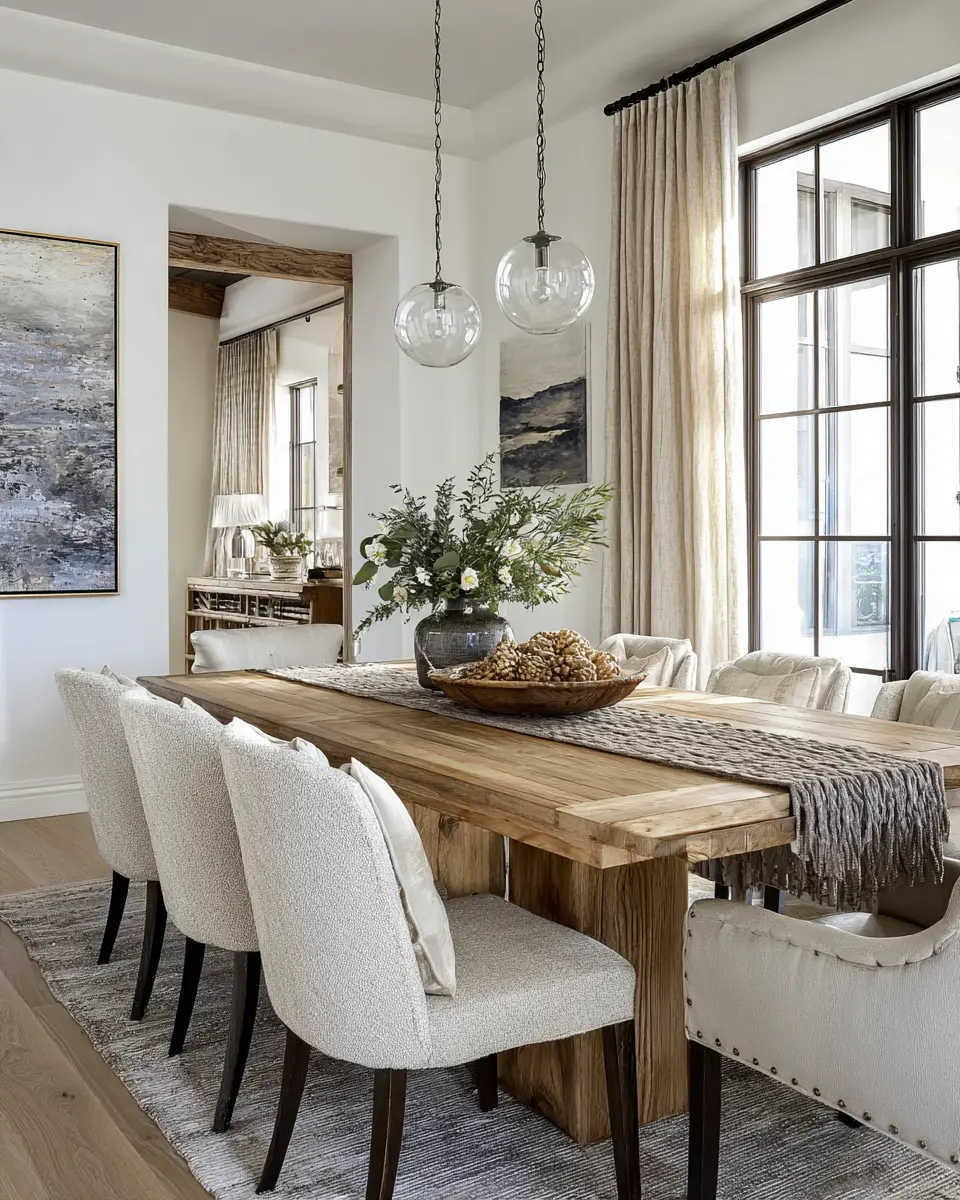
Creating a tactile experience in your dining room is essential for a warm and inviting atmosphere. Start by mixing smooth wood surfaces with plush fabrics that add comfort and elegance. Consider incorporating velvet seat cushions that contrast beautifully with the solid wood of your dining chairs.
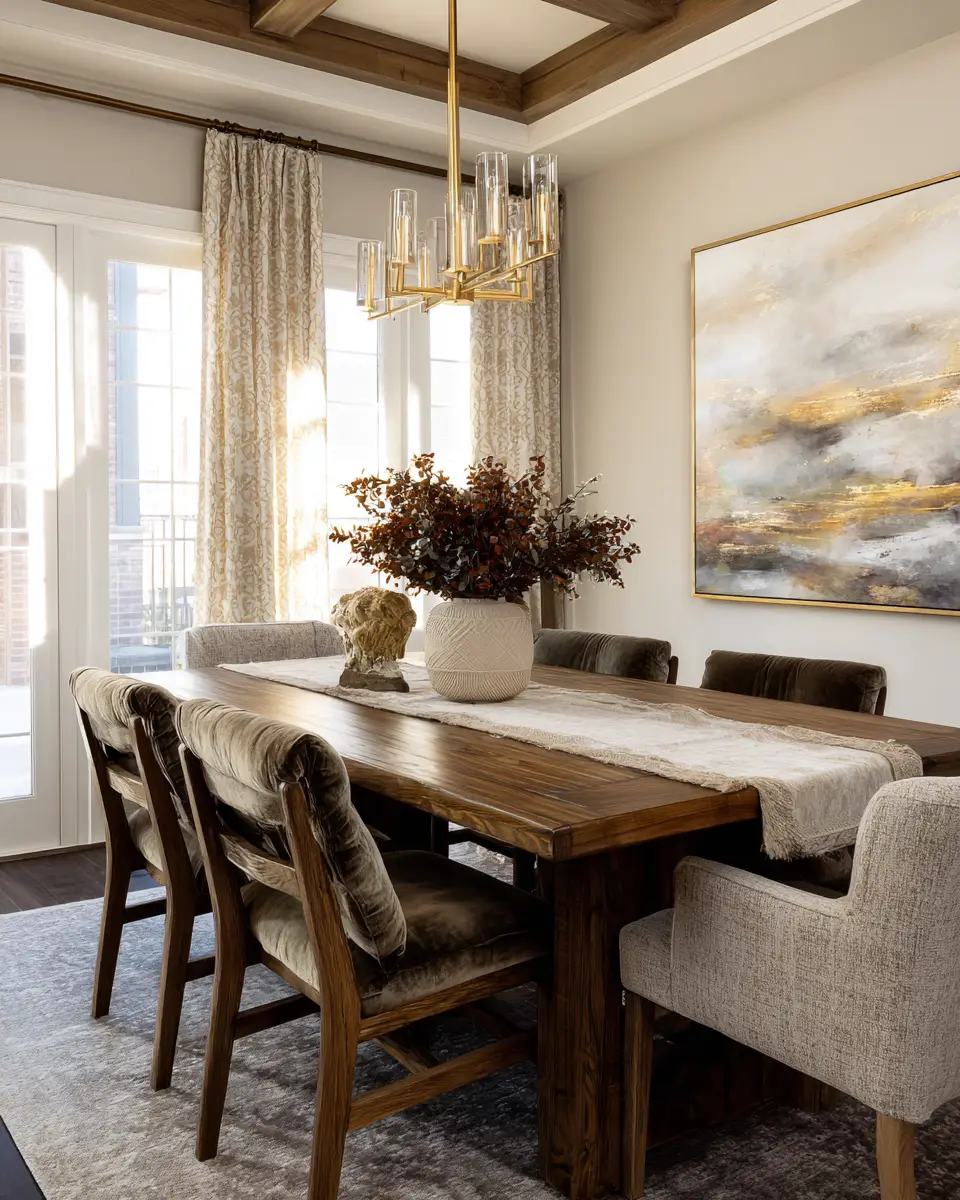
A linen table runner can further enhance the layered look, offering a soft touch against the natural grain of a wooden table. Don’t shy away from adding various textures, such as woven placemats or knitted throws, to create visual interest and depth in your decor.
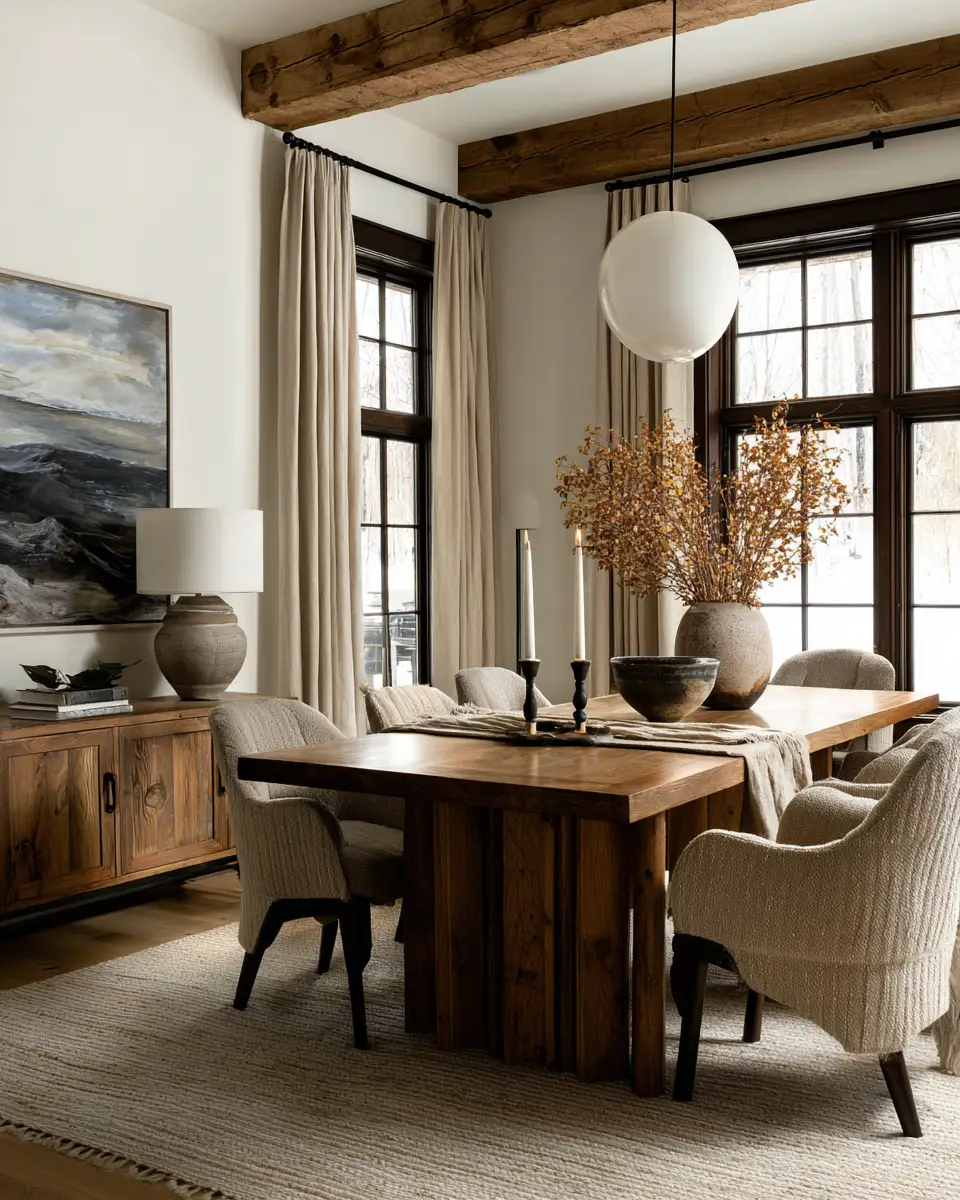
By carefully selecting fabrics that complement your wood elements, you can draw the eye around the room, inviting guests to feel at home in this cozy space.
Minimalist Accessories
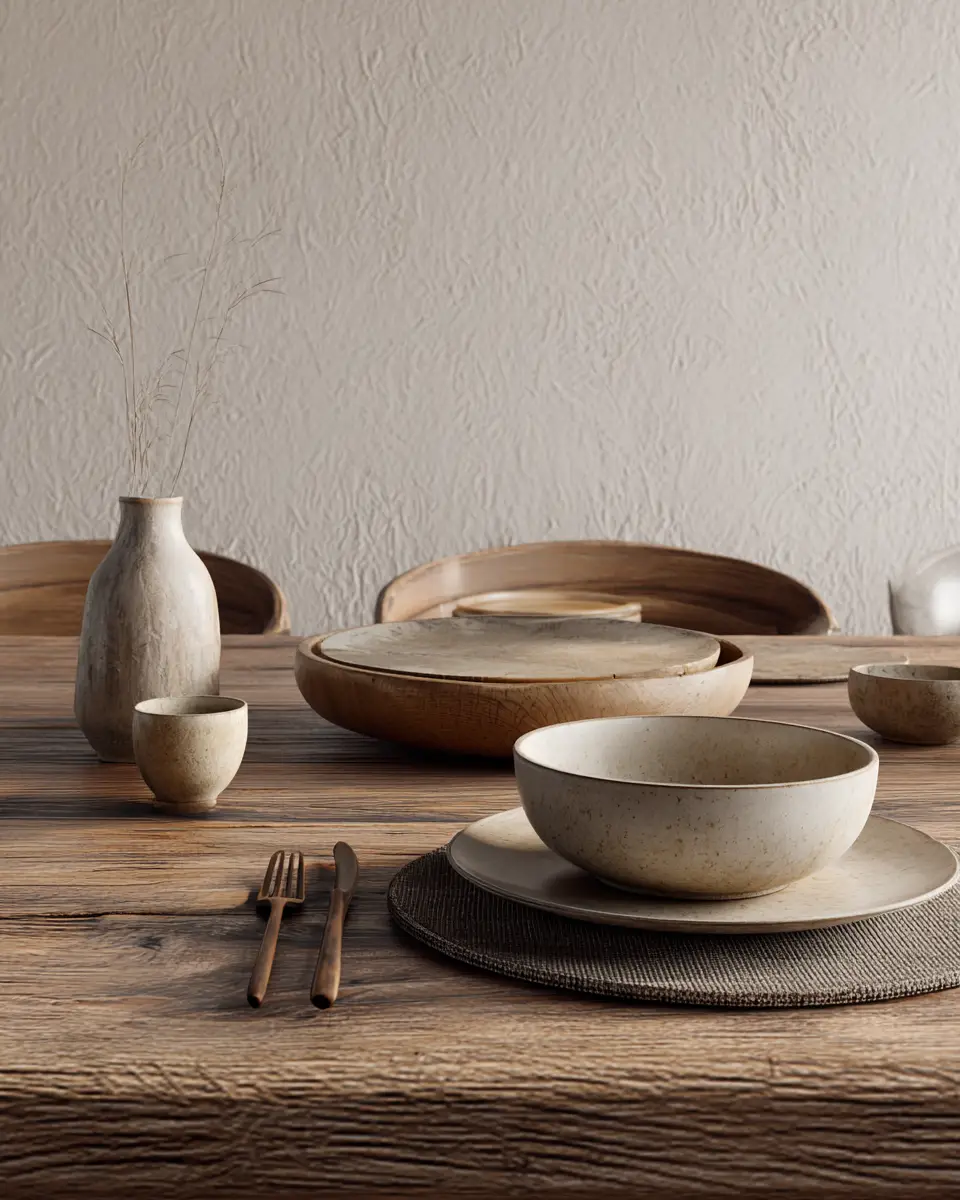
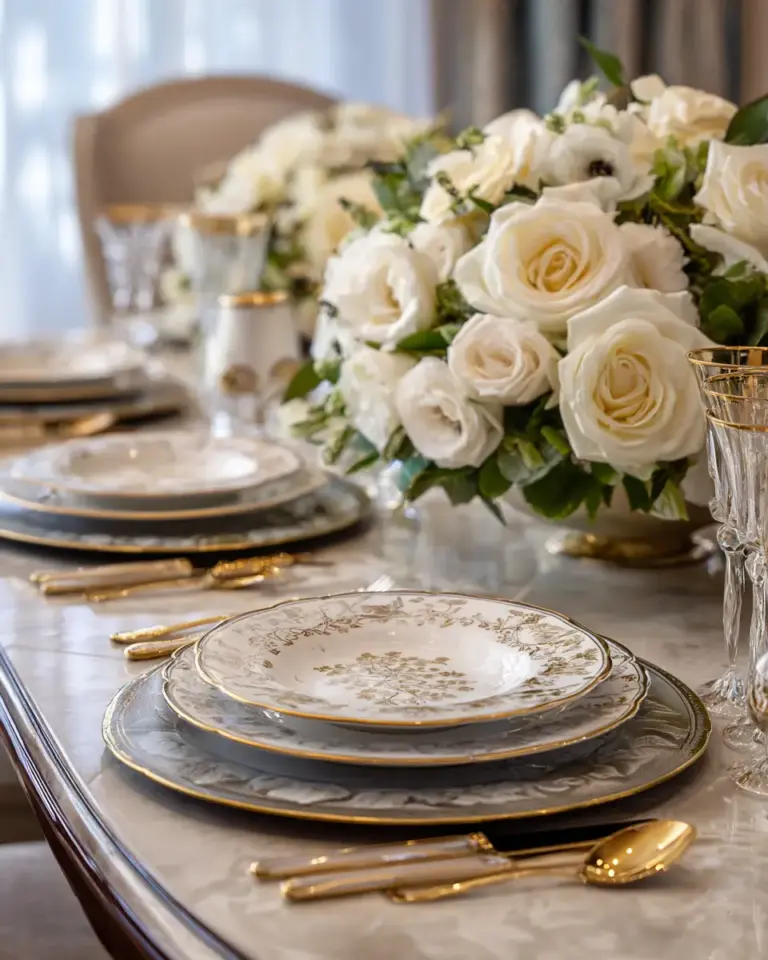
Simplicity is key when it comes to accessorizing your dining table. Opt for simple yet striking tableware that highlights the beauty of natural materials. Ceramic plates and wooden serving bowls create a seamless blend of elegance and functionality.
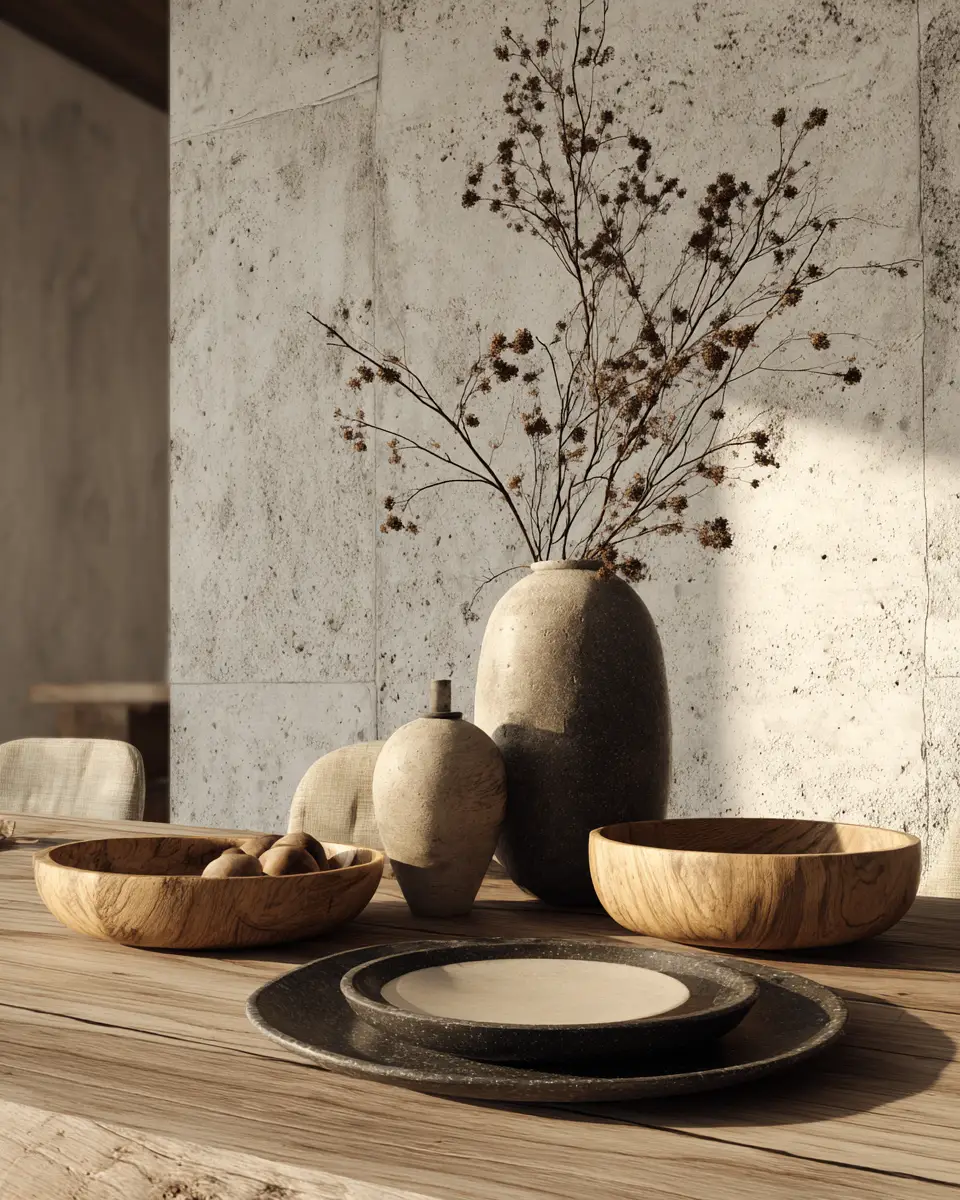
Avoid overcrowding your table with too many decorative items. Instead, focus on a few carefully chosen pieces that enhance the overall aesthetic. A single, well-placed centerpiece, such as a small vase with seasonal blooms, can elevate the dining experience without overwhelming the visual space.
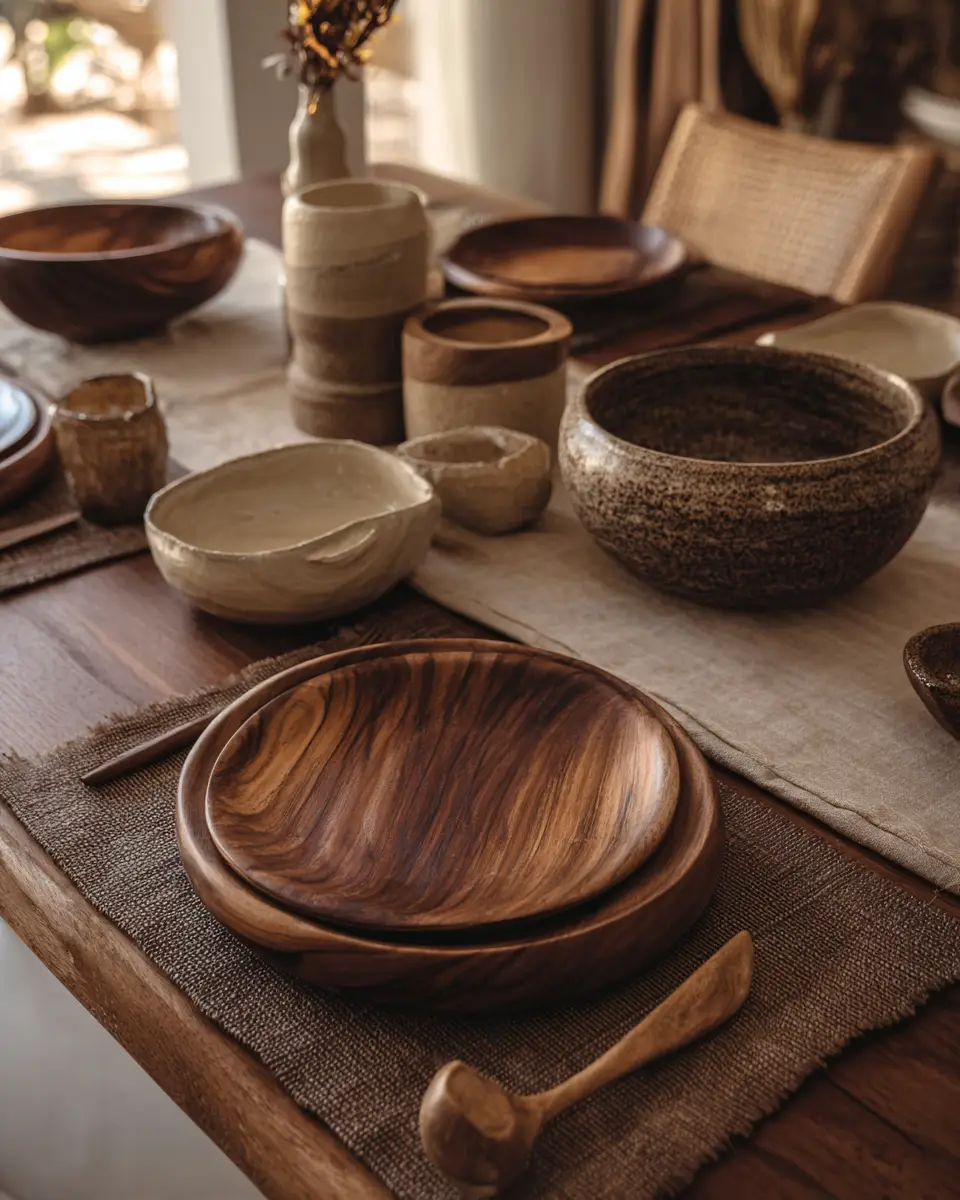
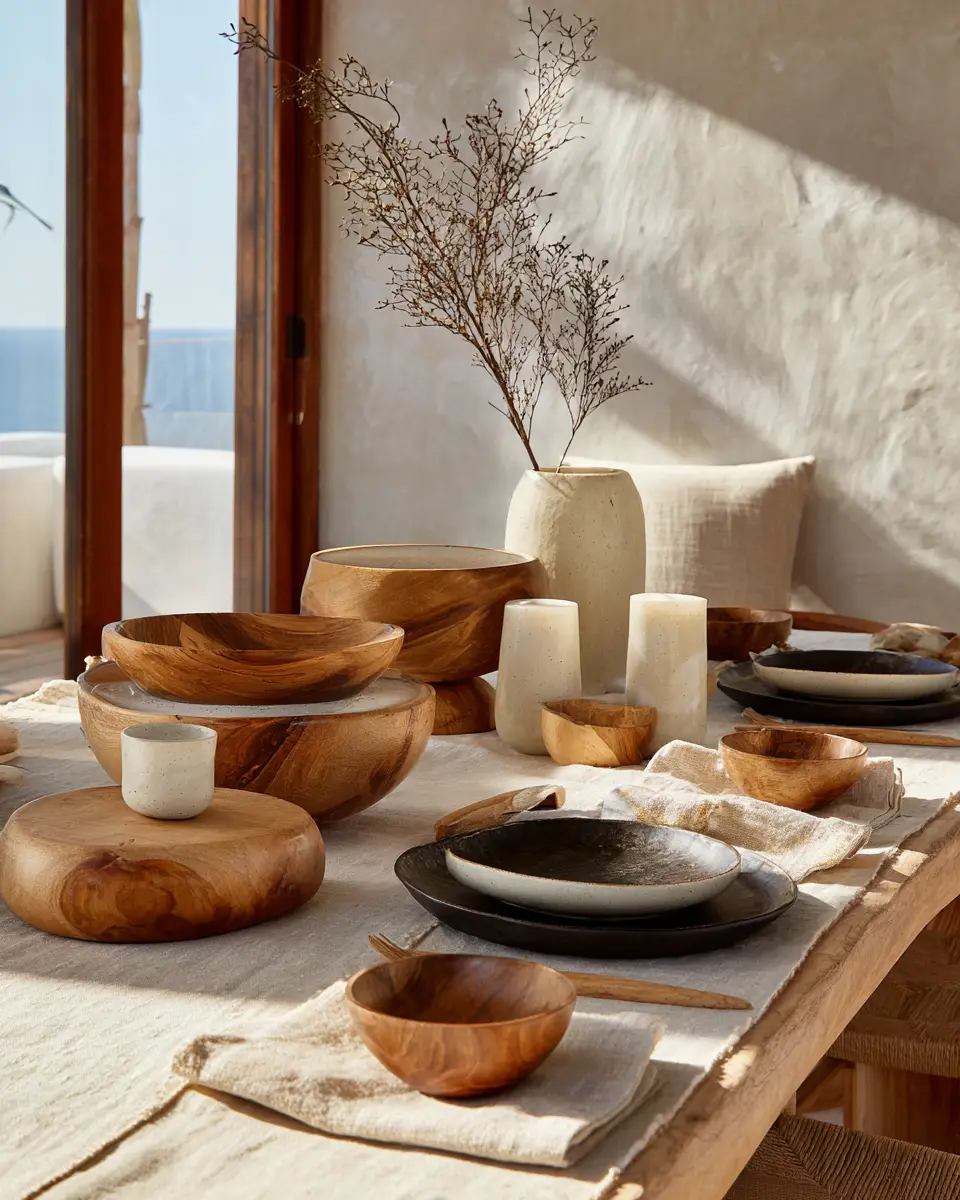
This minimalist approach allows the natural wood elements to shine while maintaining a serene and uncluttered atmosphere in your dining room.
Warm Earthy Tones
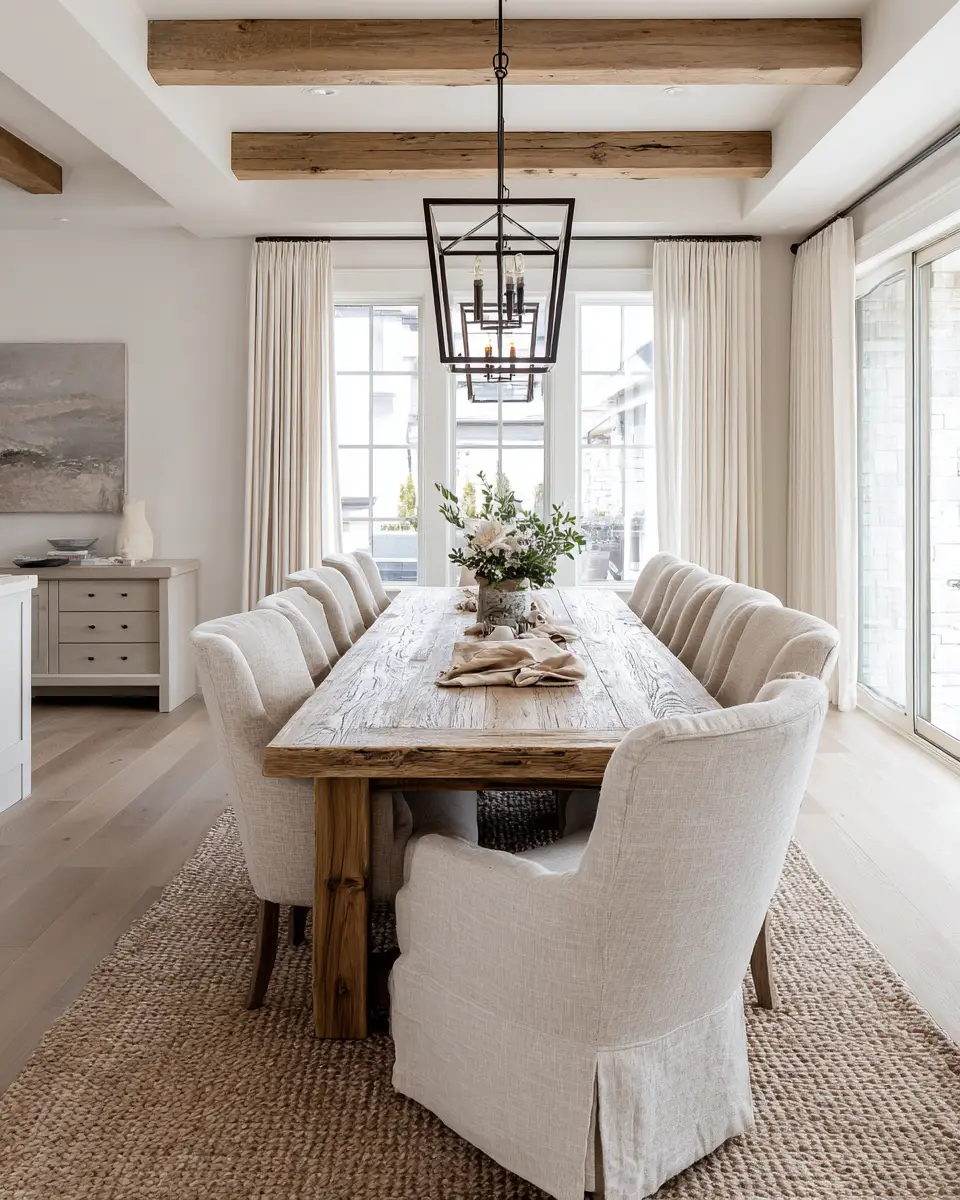
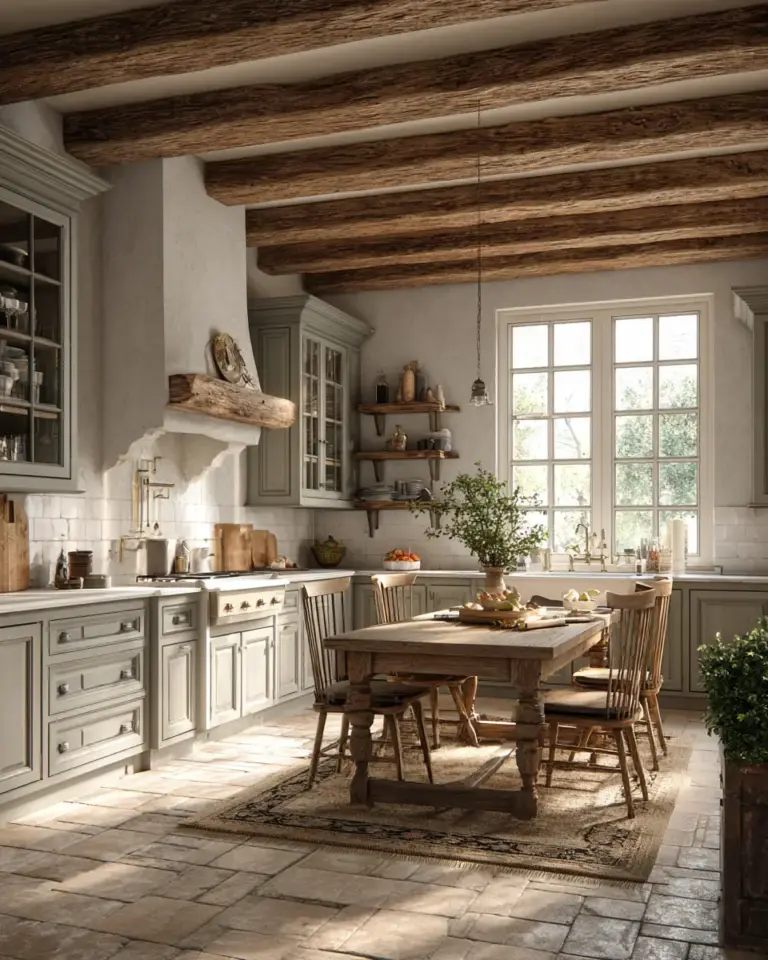
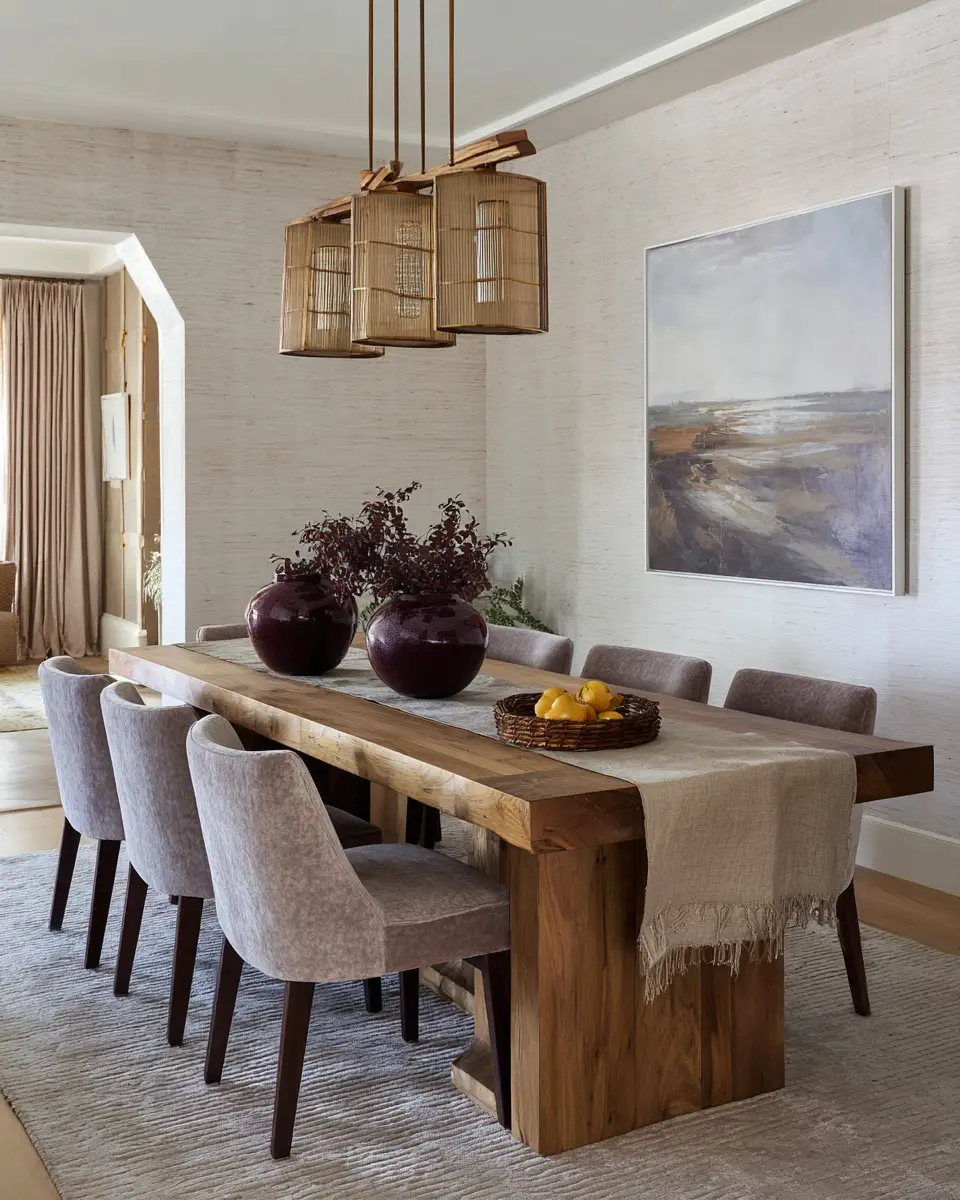
Incorporating warm earthy tones in your dining room can create a cozy yet elegant ambiance. Consider a large reclaimed wood table as the focal point, surrounded by upholstered chairs in soft beige or muted colors that complement the wood.
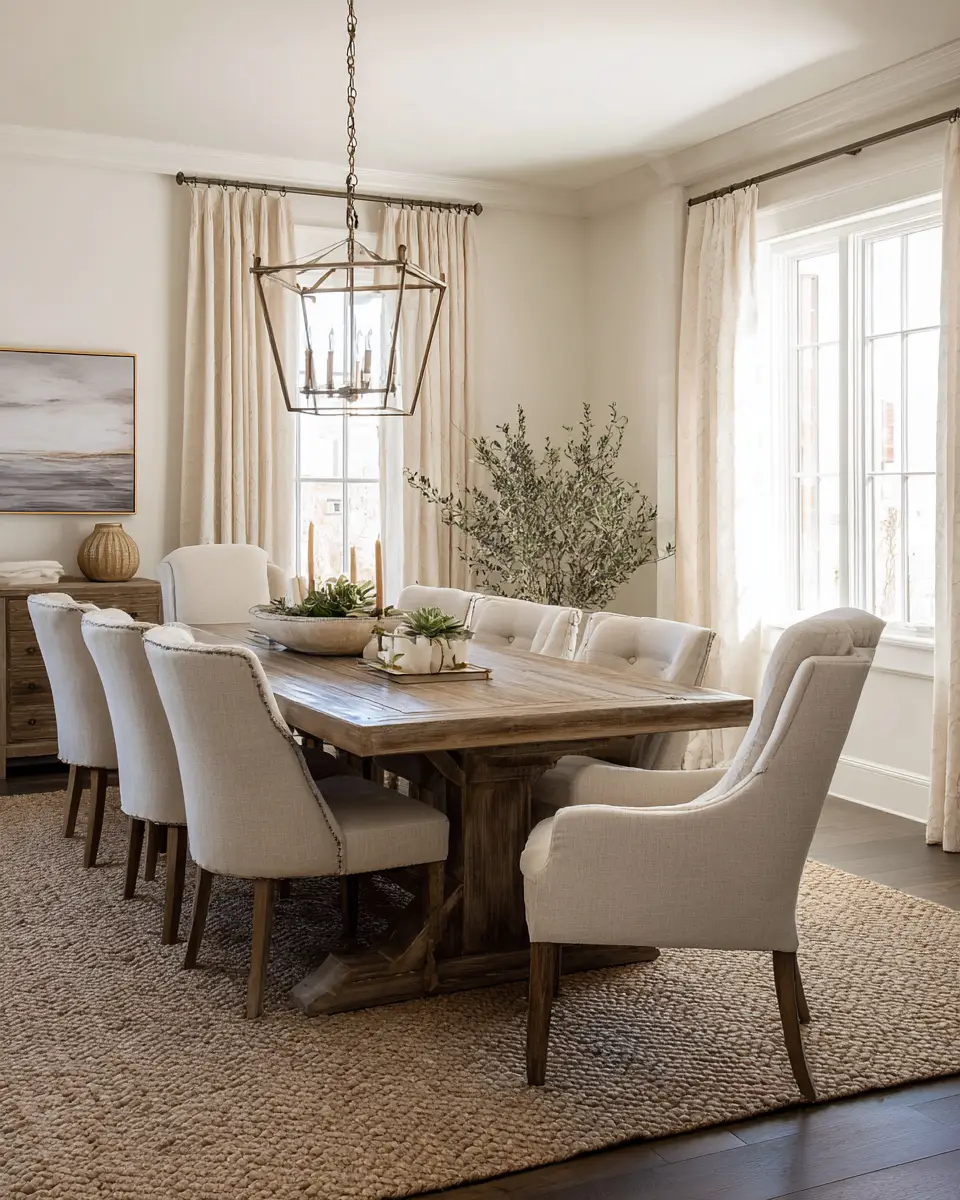
A textured jute rug can tie the room together, adding warmth underfoot and enhancing the organic feel of the space. By uniting these earthy tones, you invite a sense of harmony that encourages gatherings and shared meals.
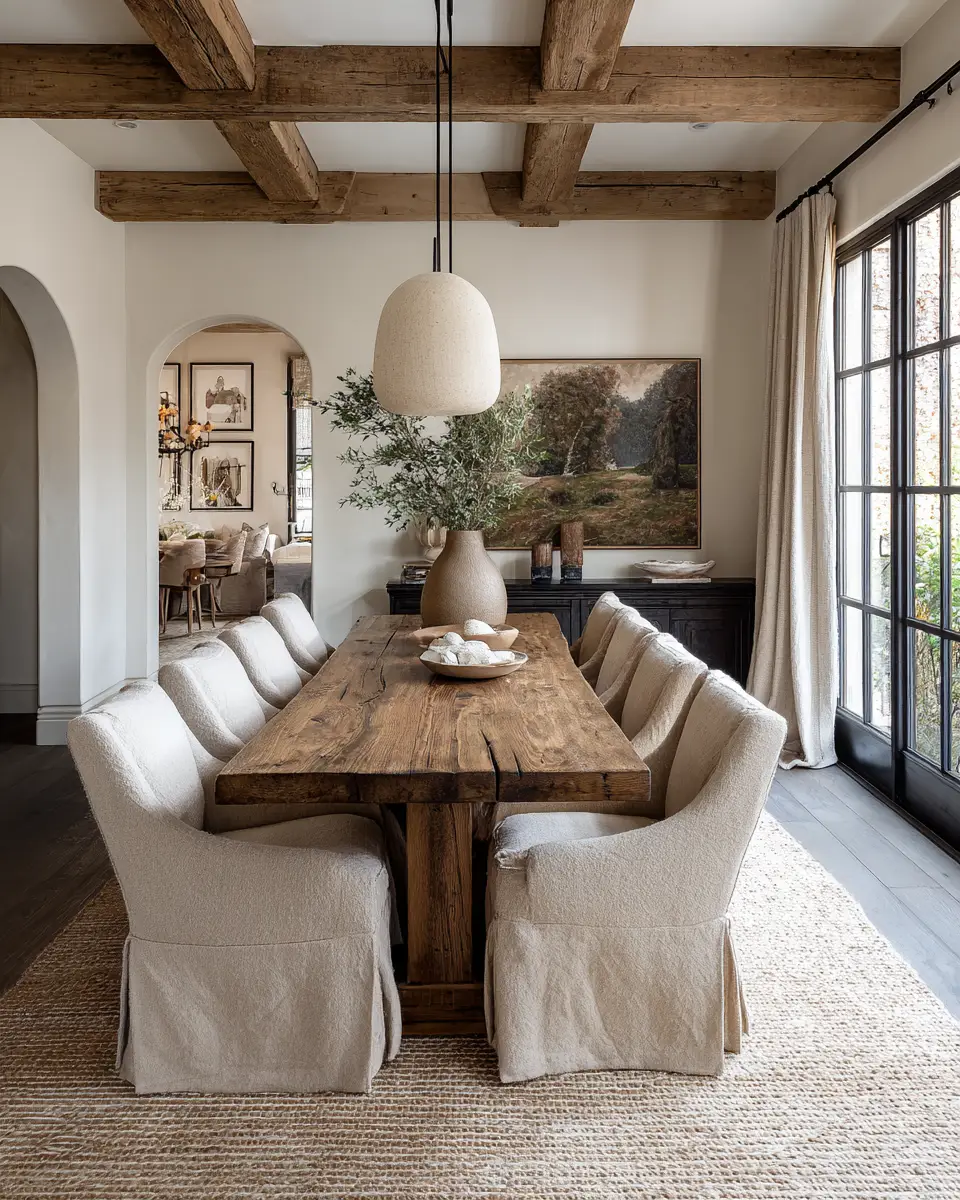
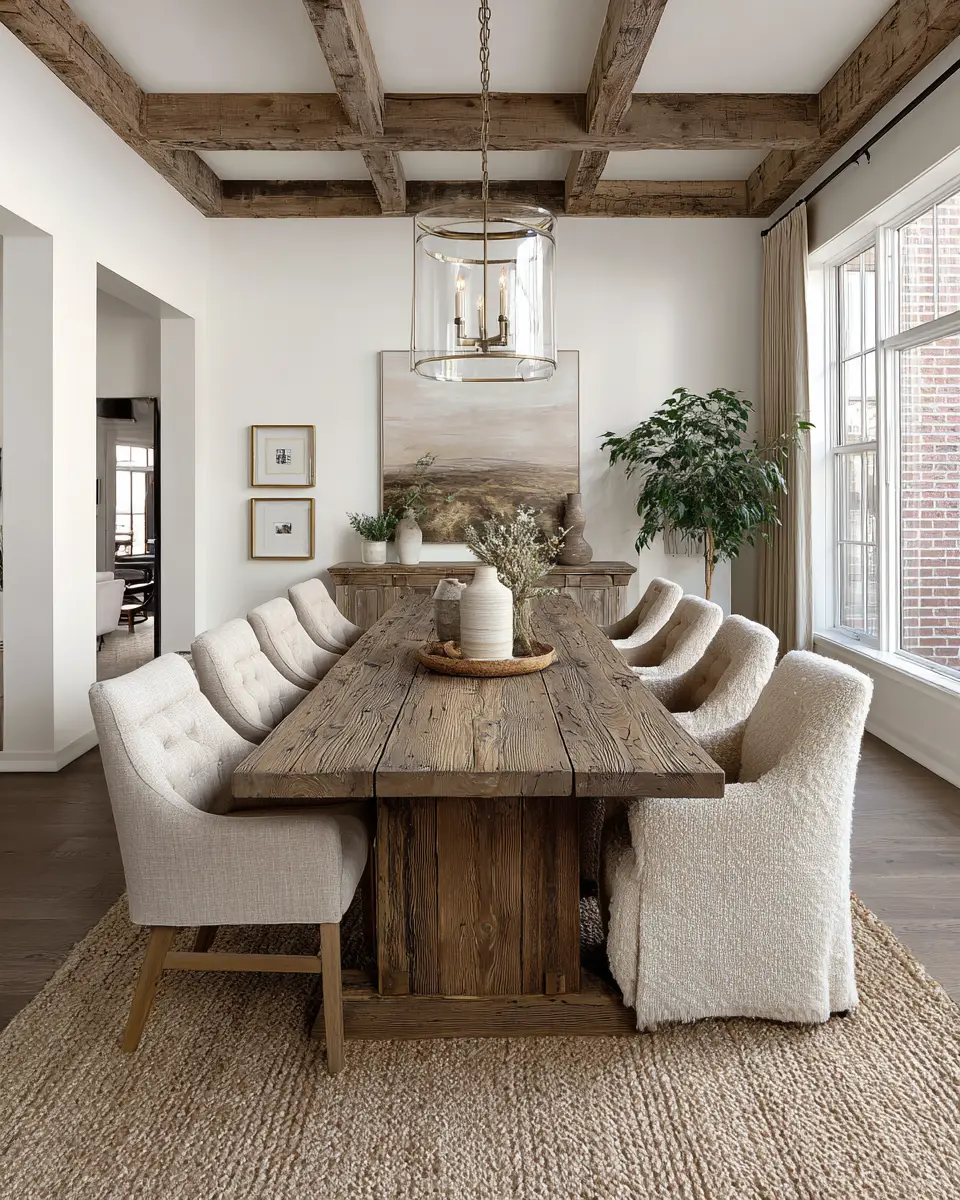
When choosing paint colors or accent decor, stick to warm browns and soft whites to create a peaceful environment that accentuates the beauty of the wood elements.
Cozy Nook
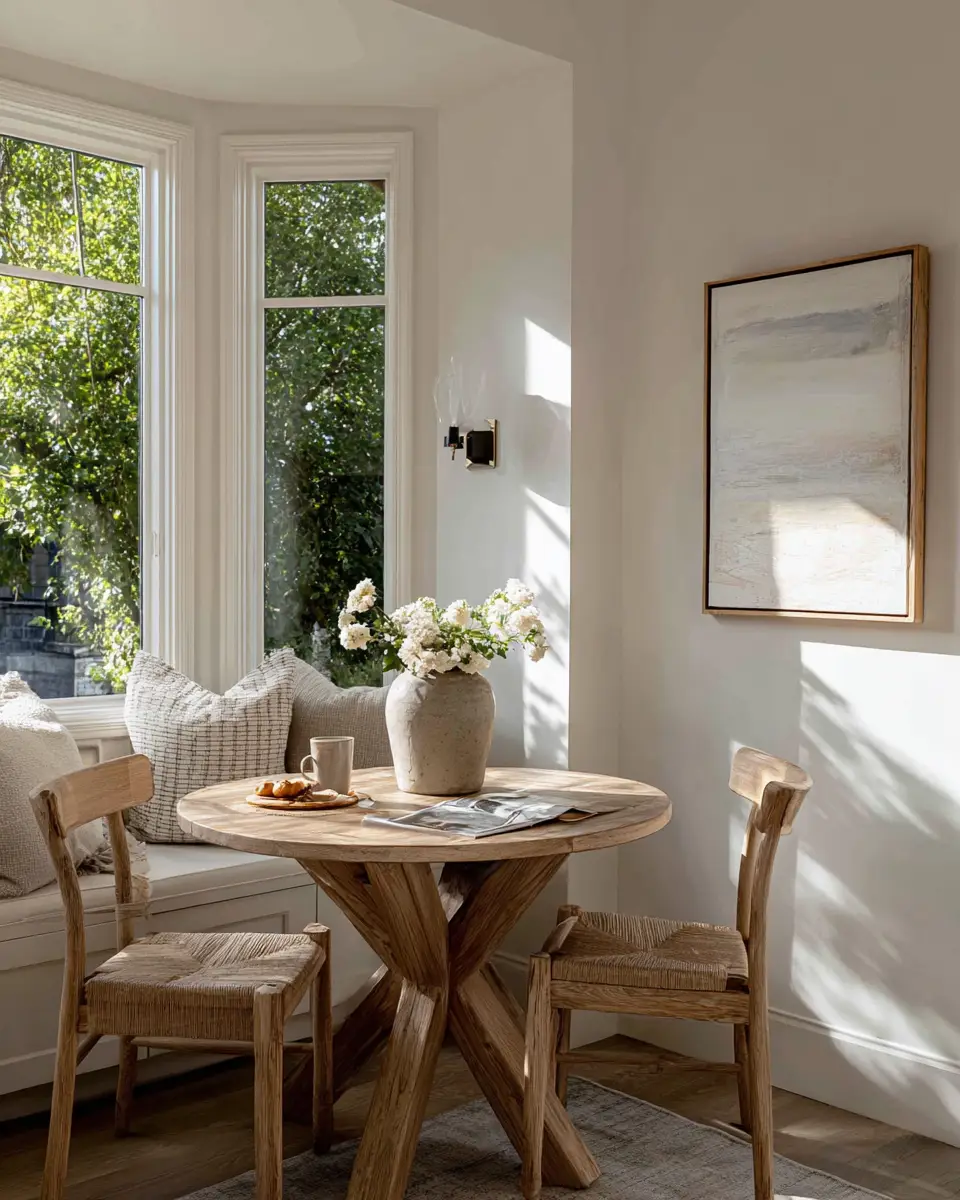
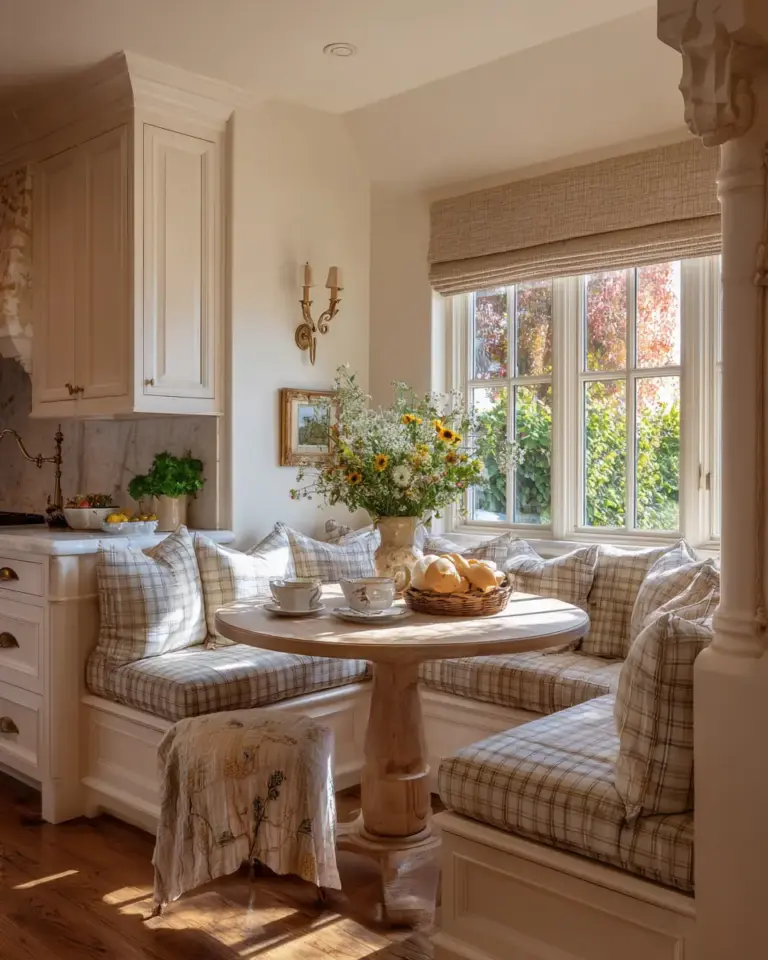
Creating a cozy nook in your dining room can provide an intimate setting for casual meals or morning coffee. Consider placing a small wooden bistro table in a corner, ideally near a window where natural light can flood in.
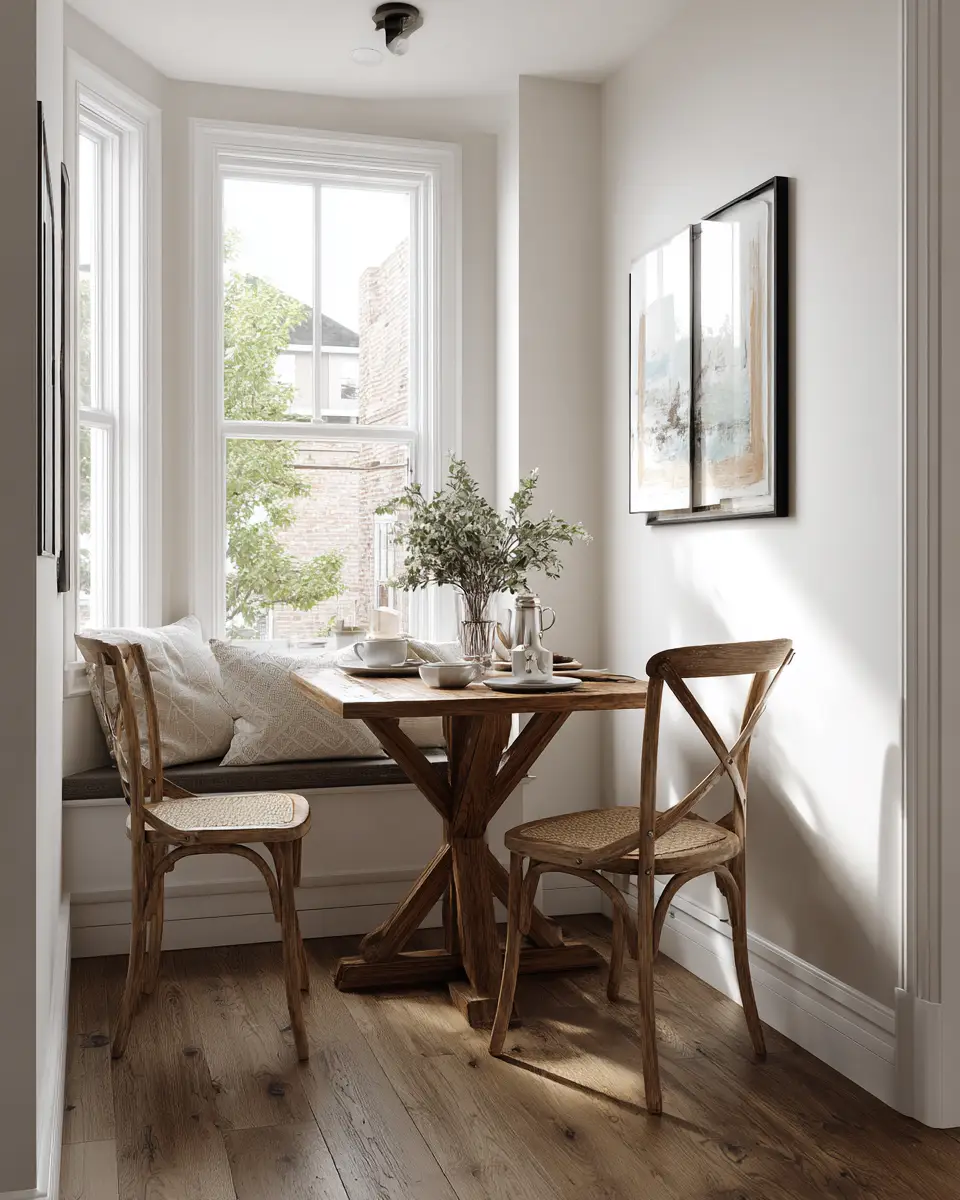
Pair the table with two comfortable chairs that invite relaxation and conversation. A few decorative cushions can enhance comfort while adding a pop of color or pattern that complements the overall decor.
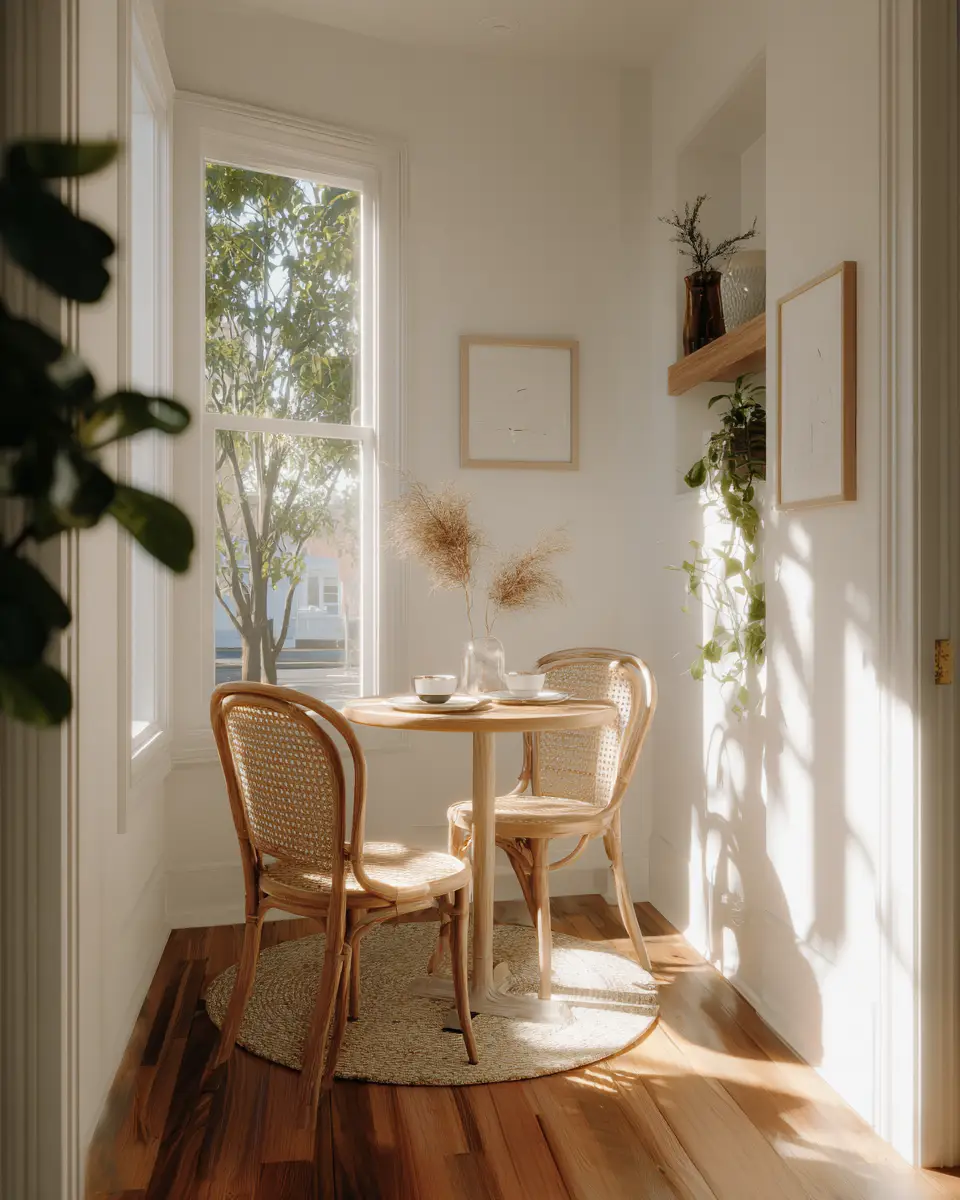
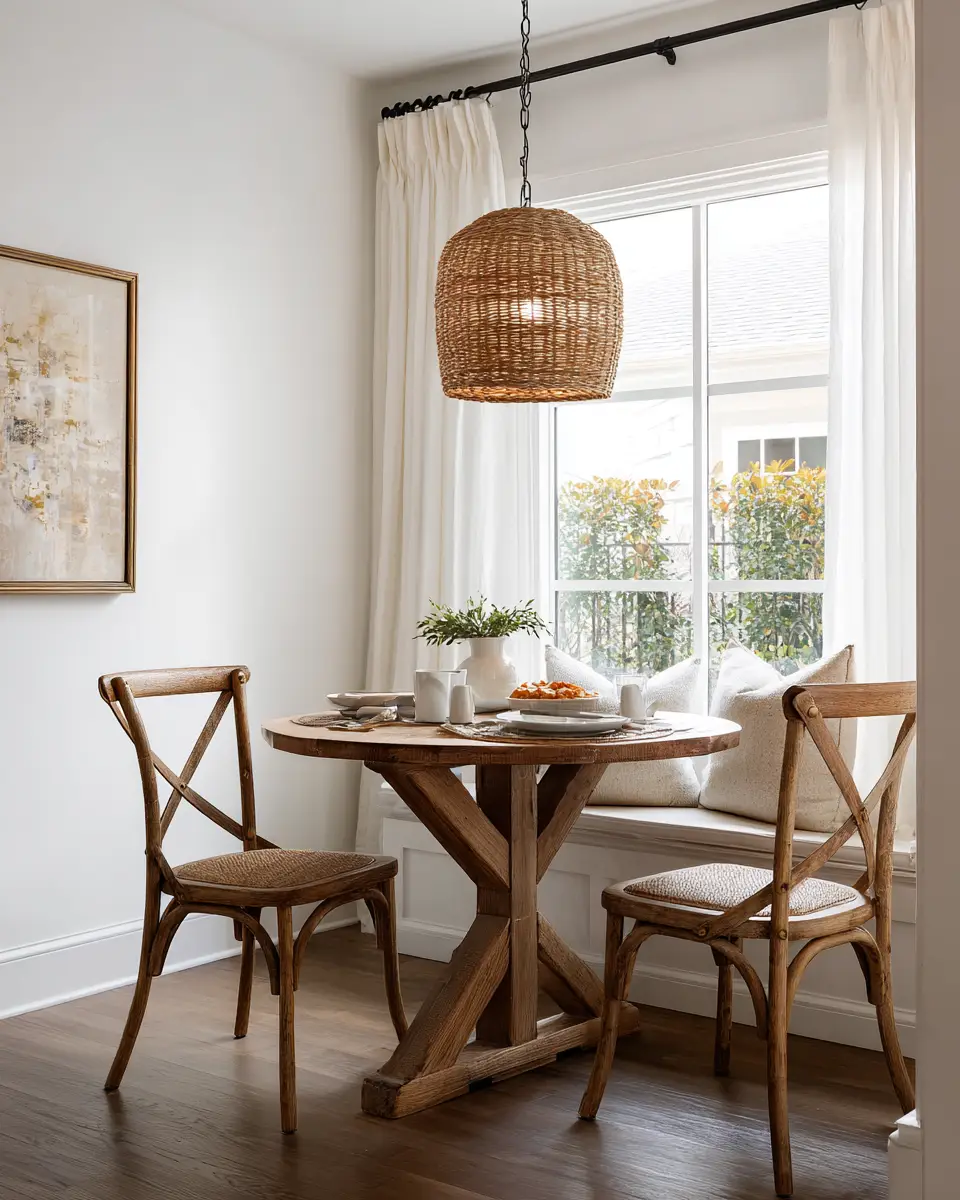
By designing this cozy corner, you create a special spot in your dining room, perfect for enjoying quiet moments or engaging in lively discussions with family and friends.
Functional Storage Solutions
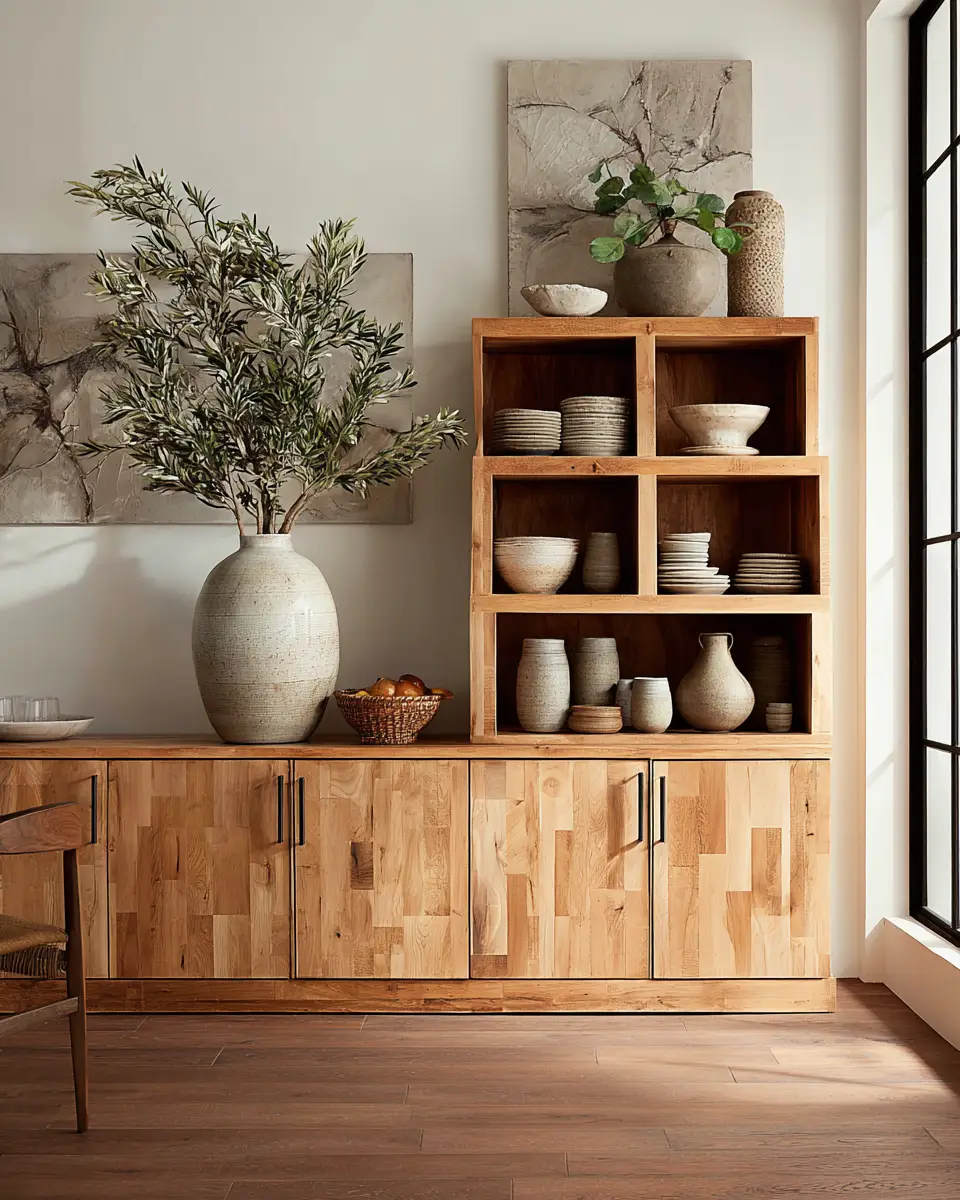
In a well-designed dining room, functionality should never take a backseat to style. A built-in wooden sideboard can serve as both storage and display space, allowing you to keep your dining area organized and clutter-free.
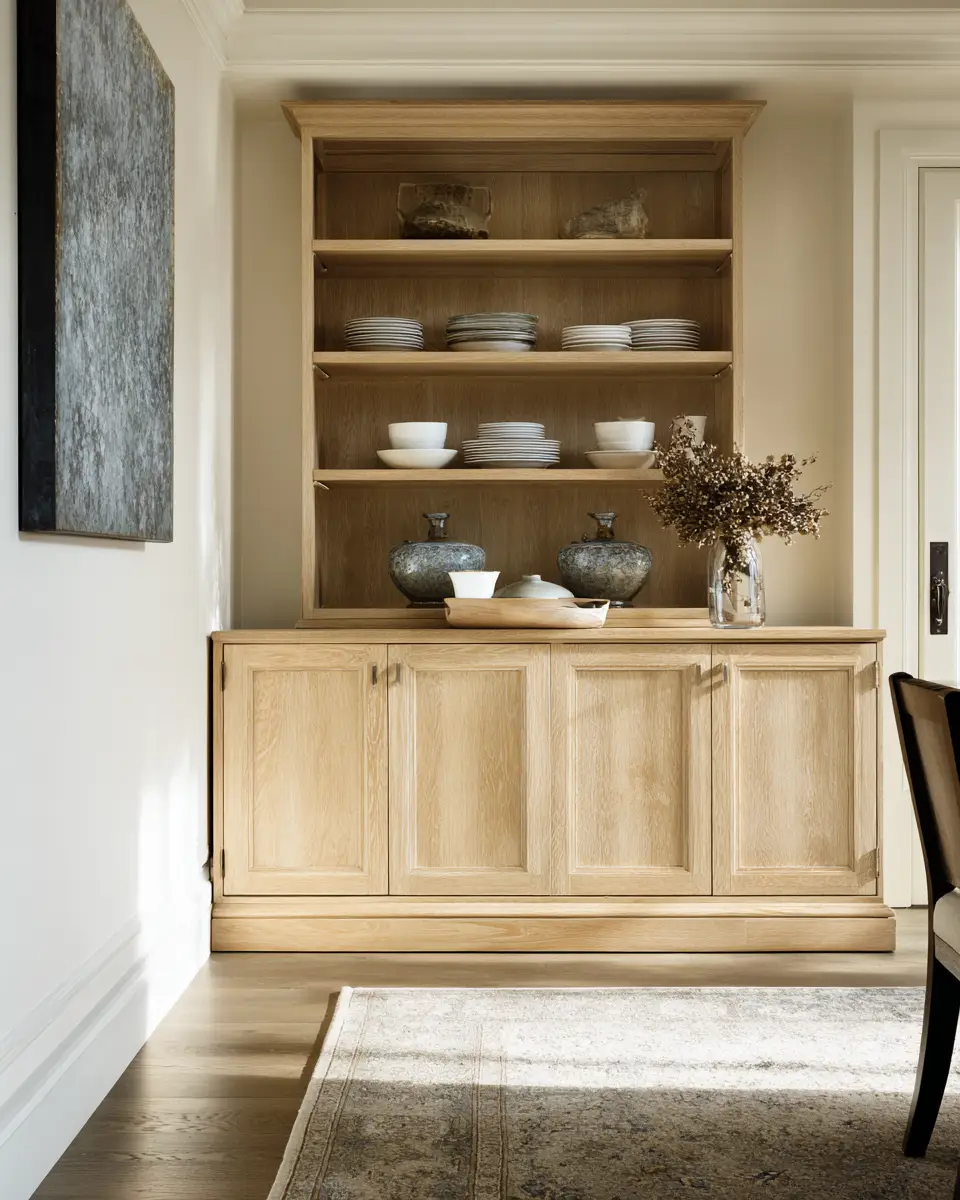
Choose a sideboard that matches the wood tones of your dining table to maintain a cohesive look. Use it to store dishes, utensils, and linens while also showcasing decorative items such as candles or framed photos.
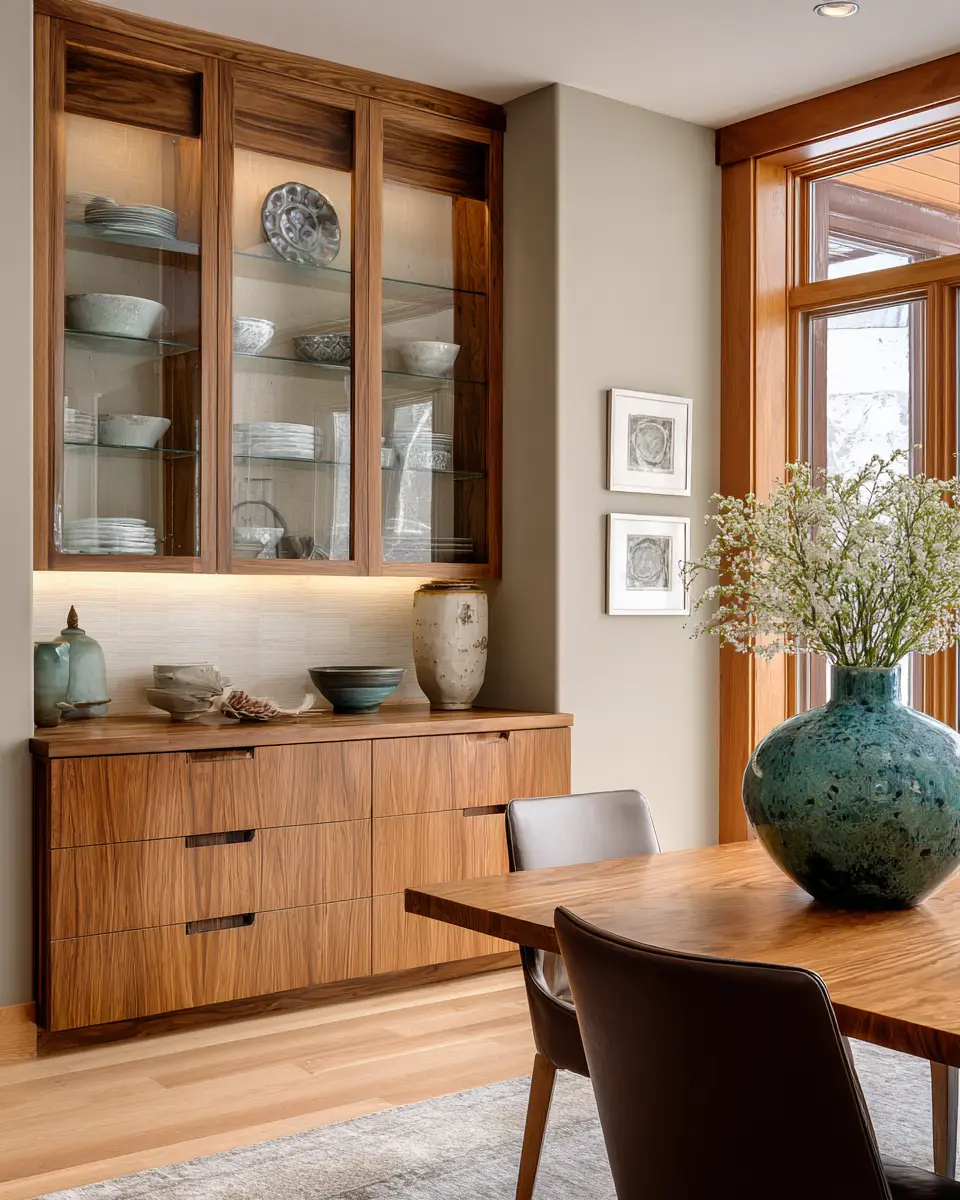
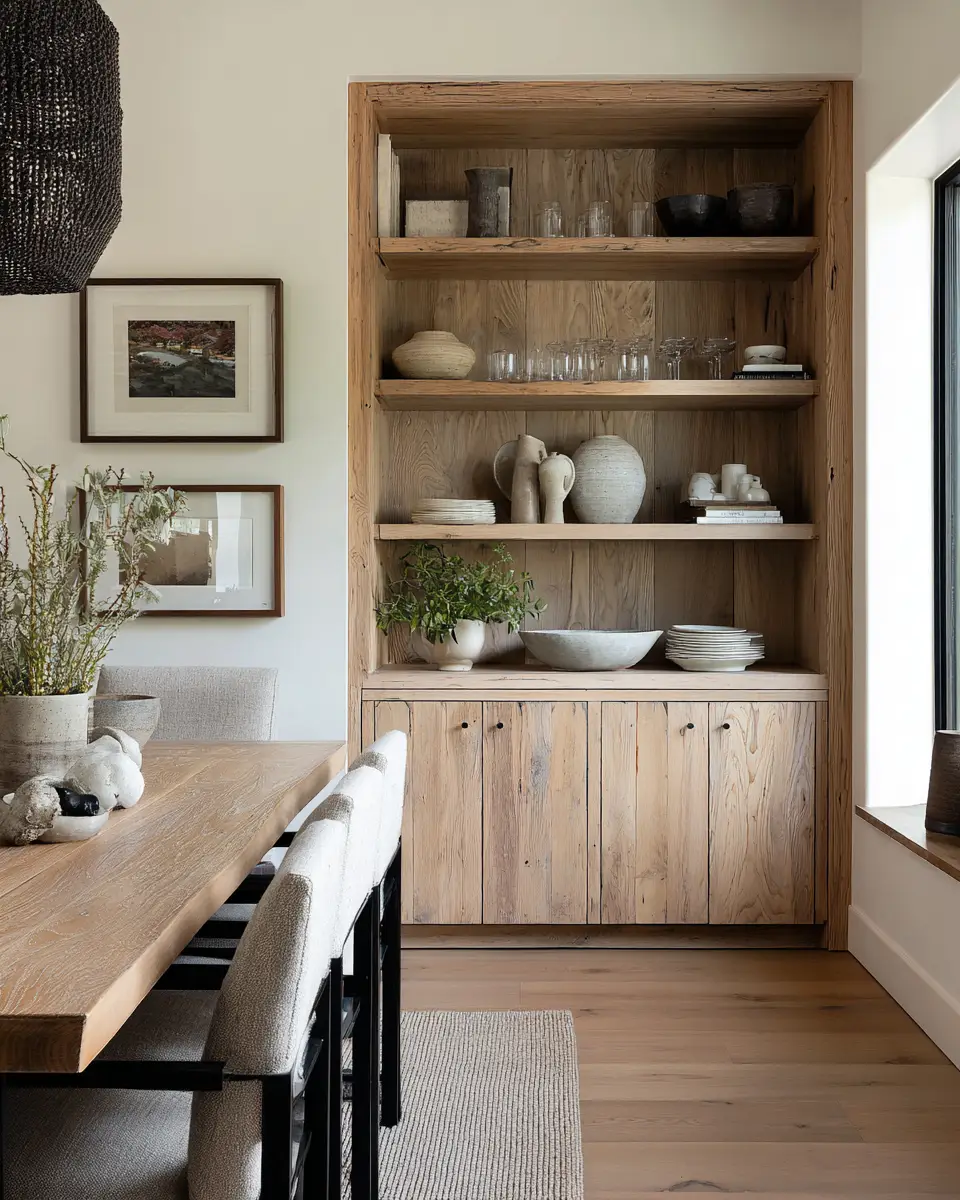
This blend of practicality and aesthetics ensures that your dining room remains stylish and functional, creating a space that’s perfect for entertaining and everyday use.
Open Space Concept
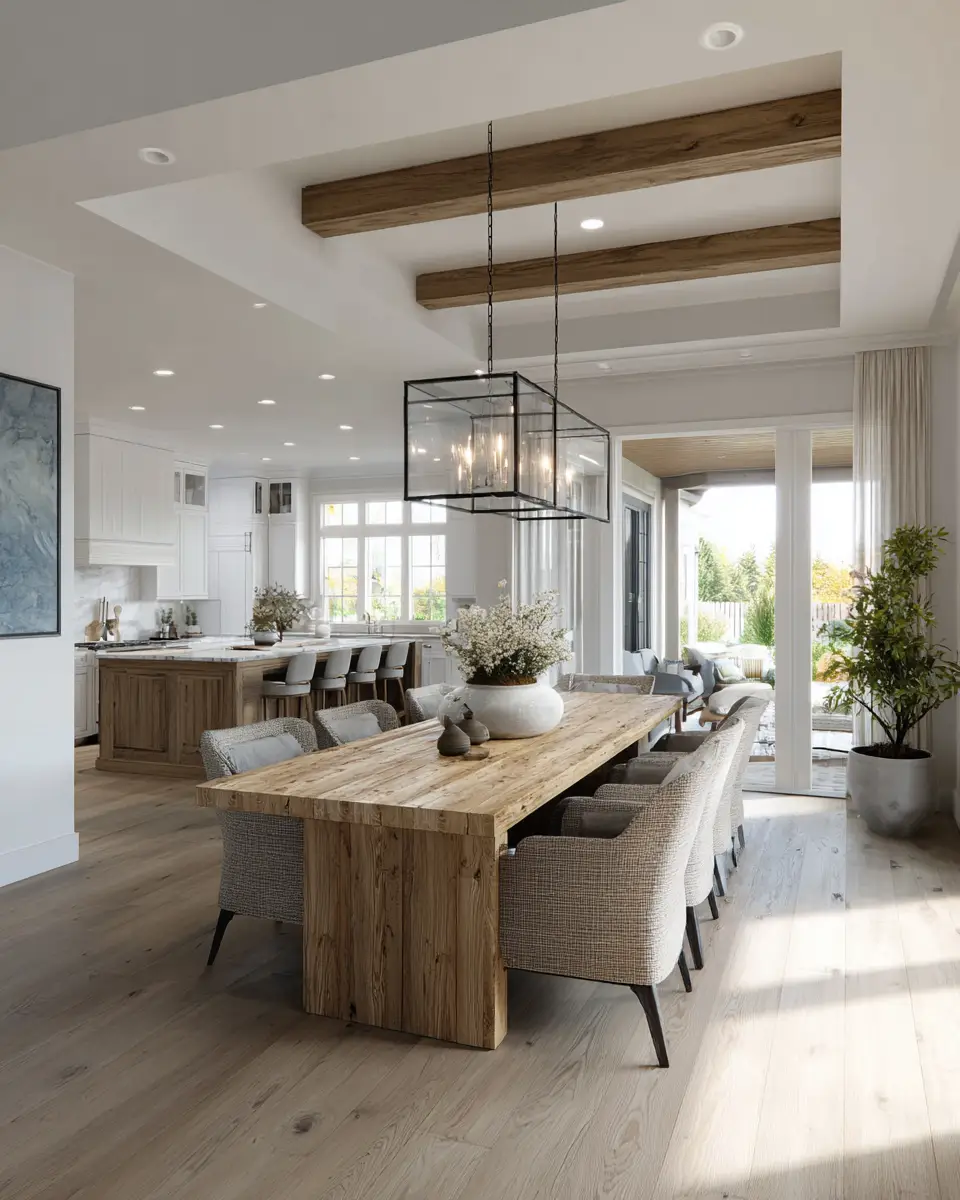
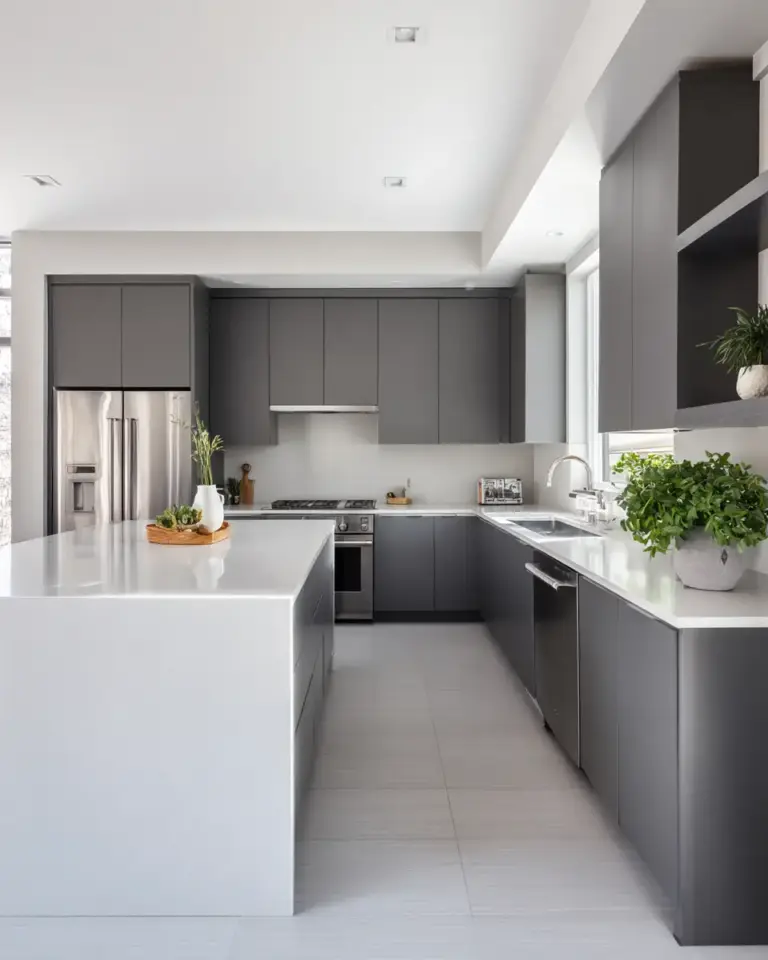
An open space concept can enhance the flow and functionality of your dining area. By creating a seamless connection to the kitchen, you can promote interaction while maintaining a cohesive design language.
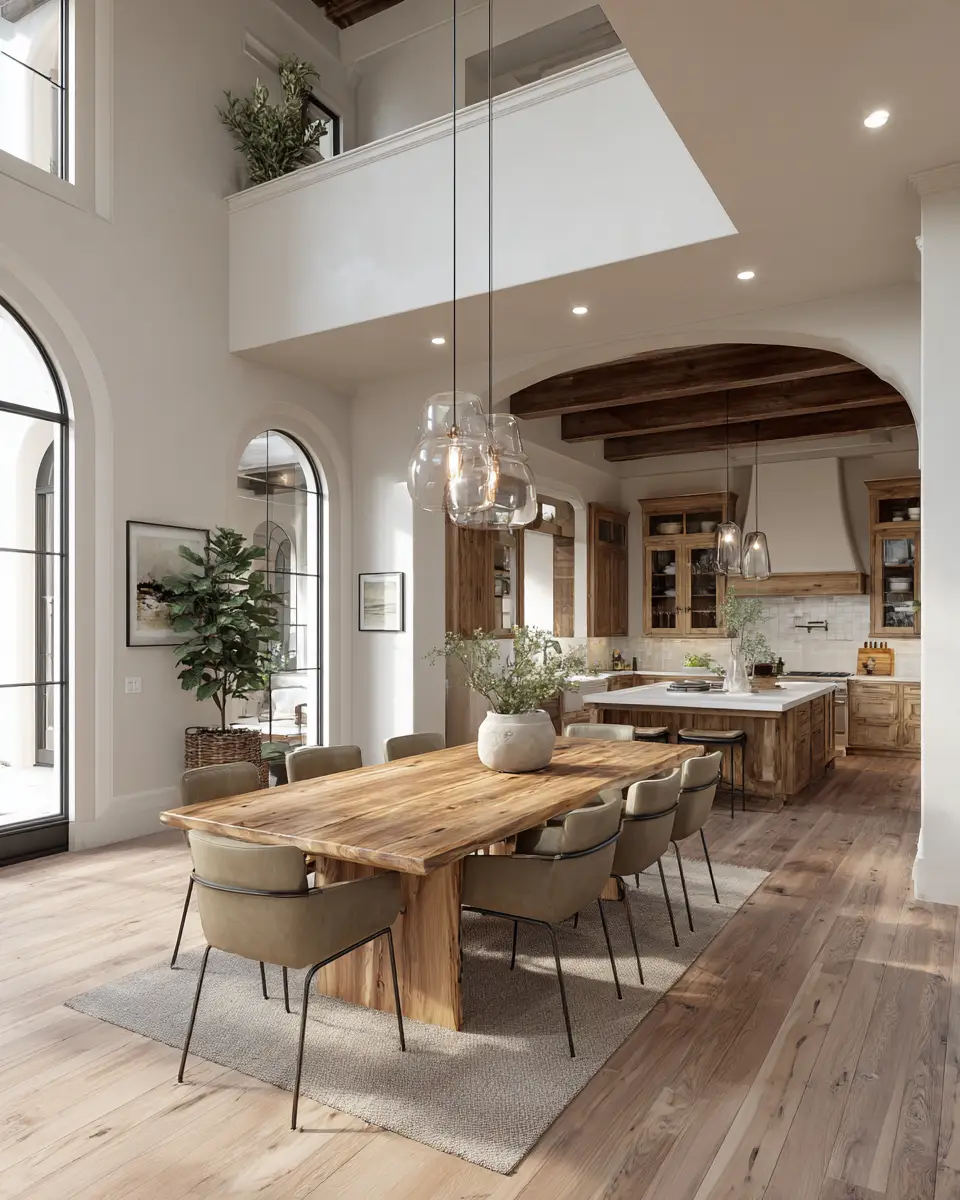
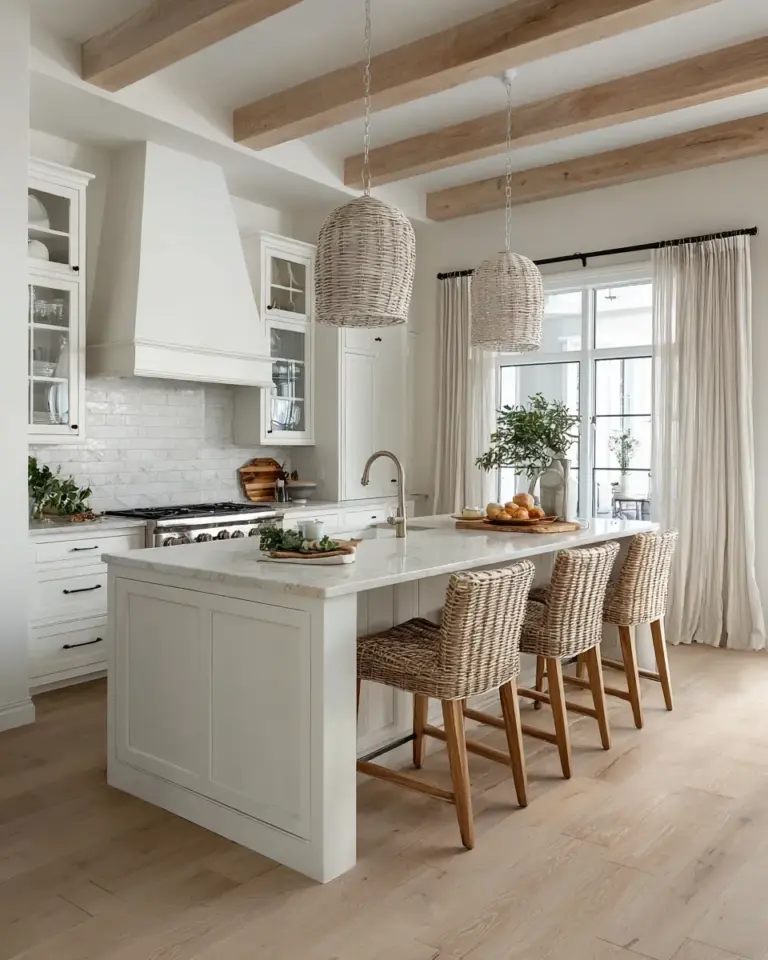
Consider incorporating a large island that mirrors the finish of your dining table, providing additional seating and workspace. This layout encourages gatherings and ensures that the dining room feels spacious and welcoming.
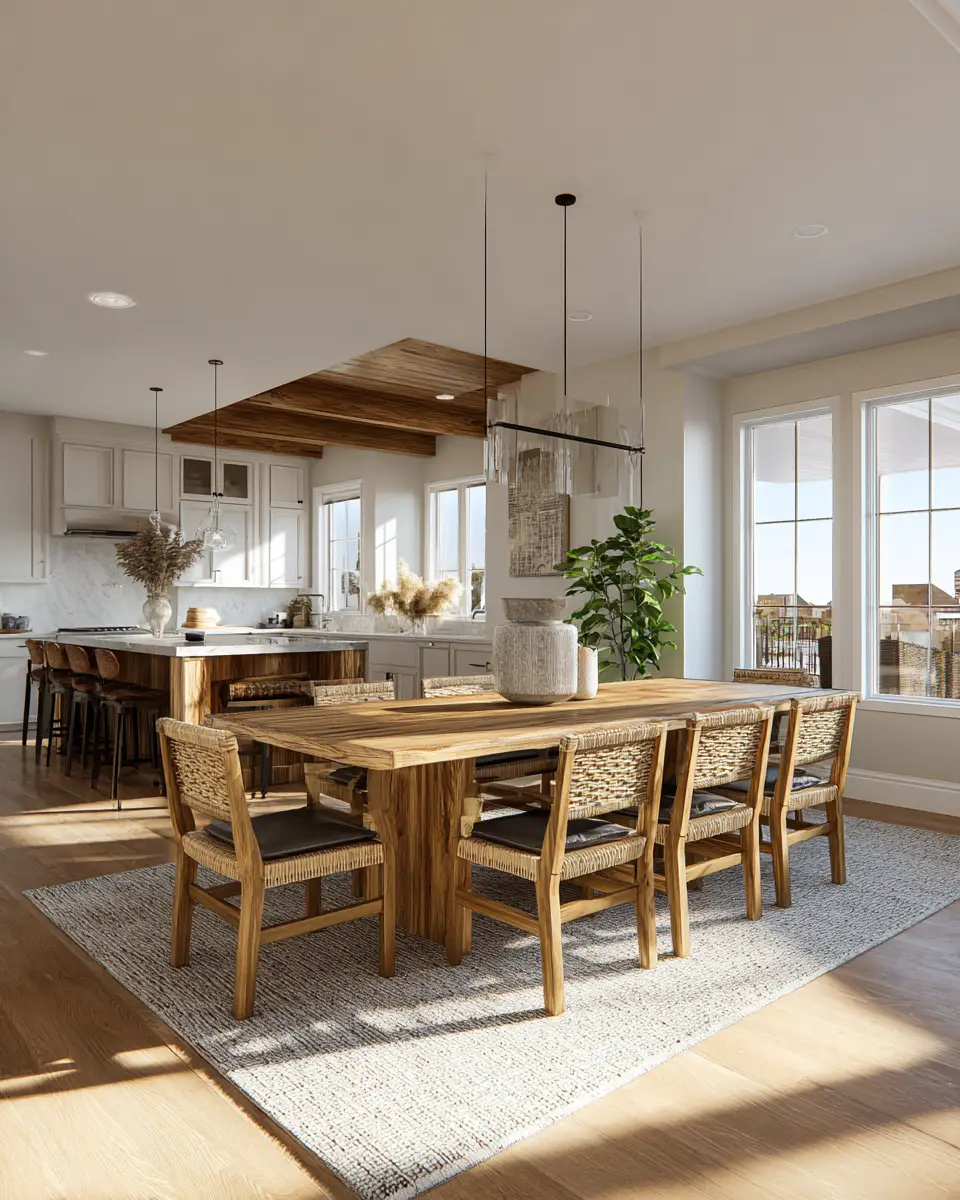
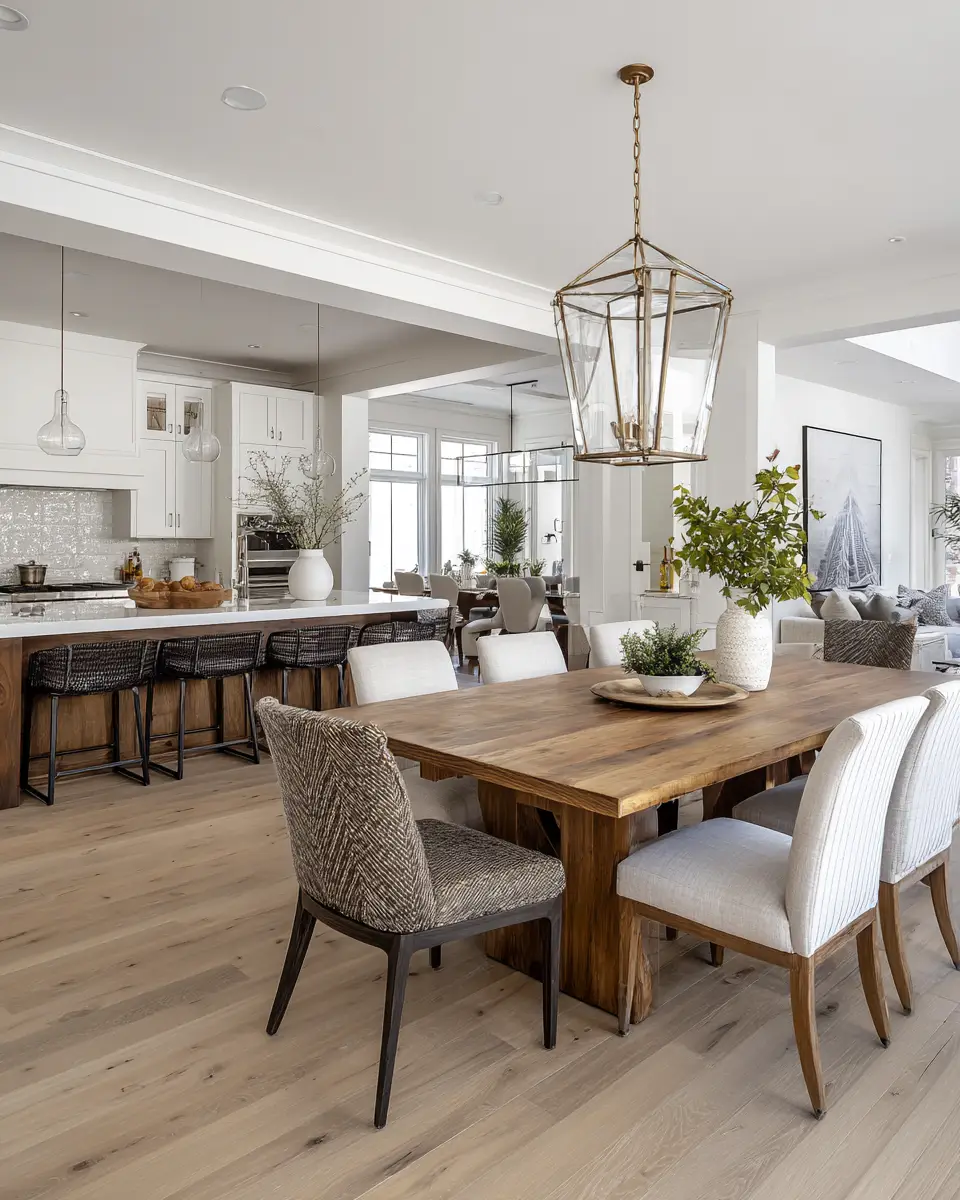
To maintain visual continuity, use similar materials and color palettes throughout the space, uniting the dining room and kitchen in a harmonious way.
Greenery Accents
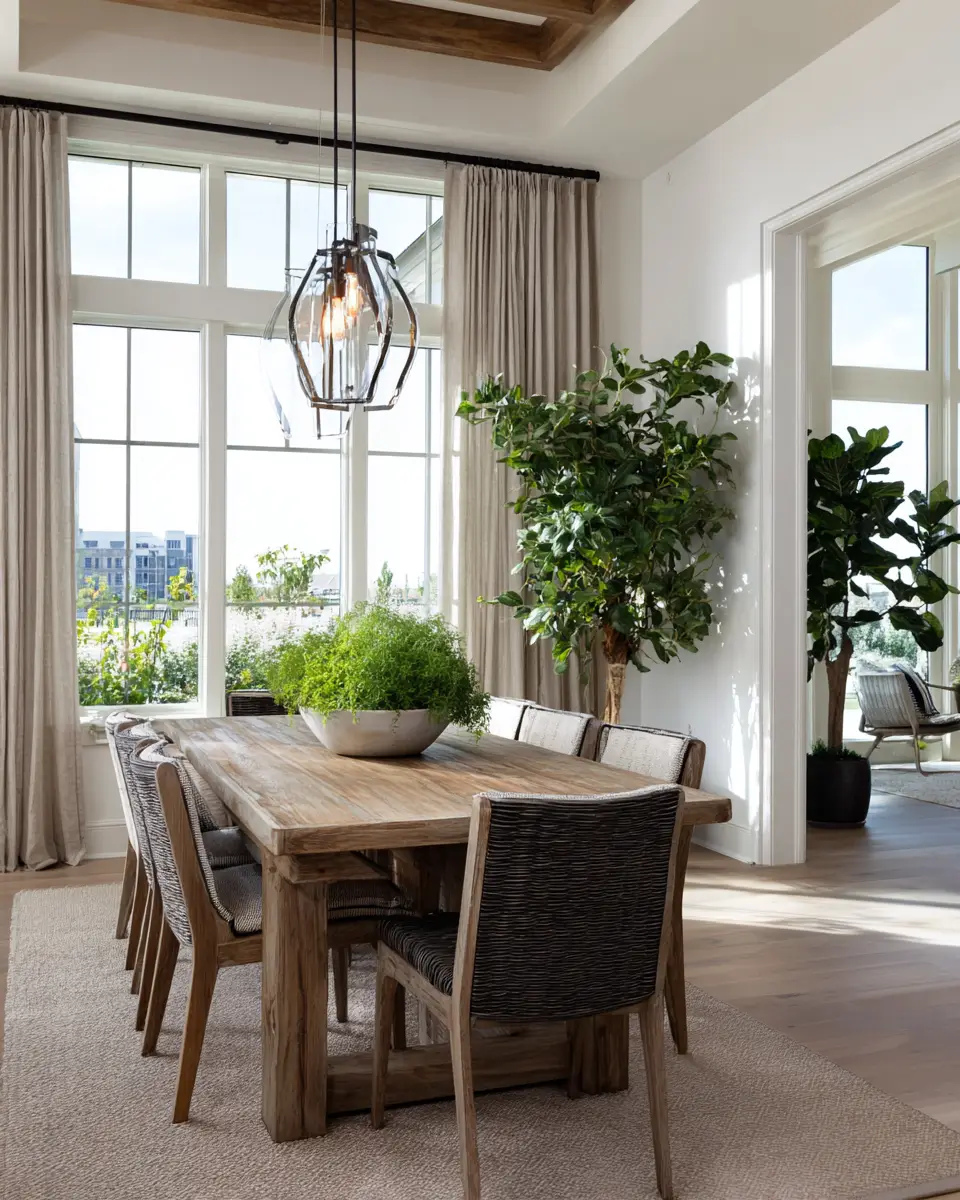
Bringing nature indoors can significantly enhance the ambiance of your dining room. Incorporate lush potted plants and a fresh herb centerpiece on the dining table to add life and color to the space.
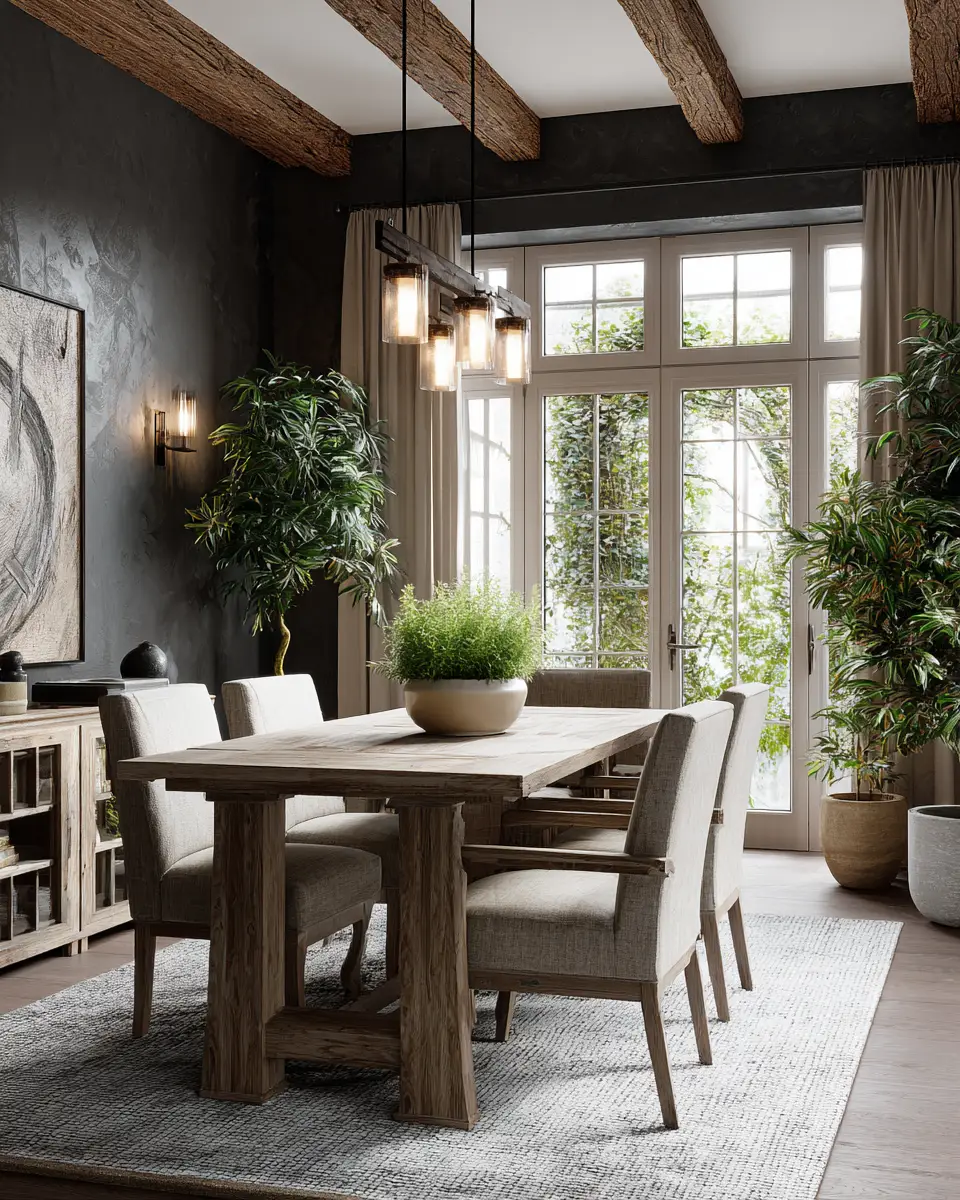
Choose plants that thrive in indoor environments, such as ferns or snake plants, which can complement the wood tones beautifully. A small herb garden not only adds greenery but also provides fresh ingredients for cooking, making it a practical addition.
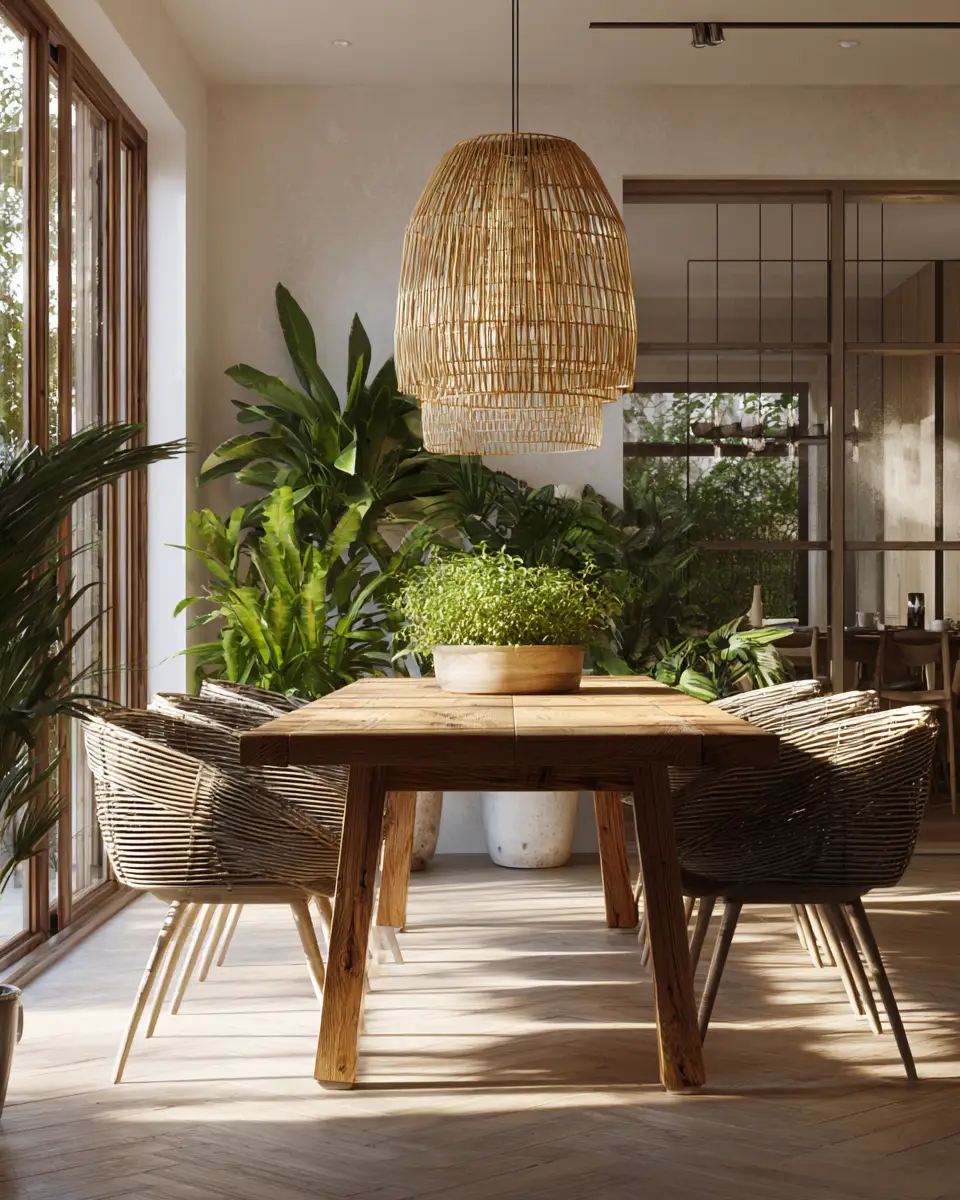
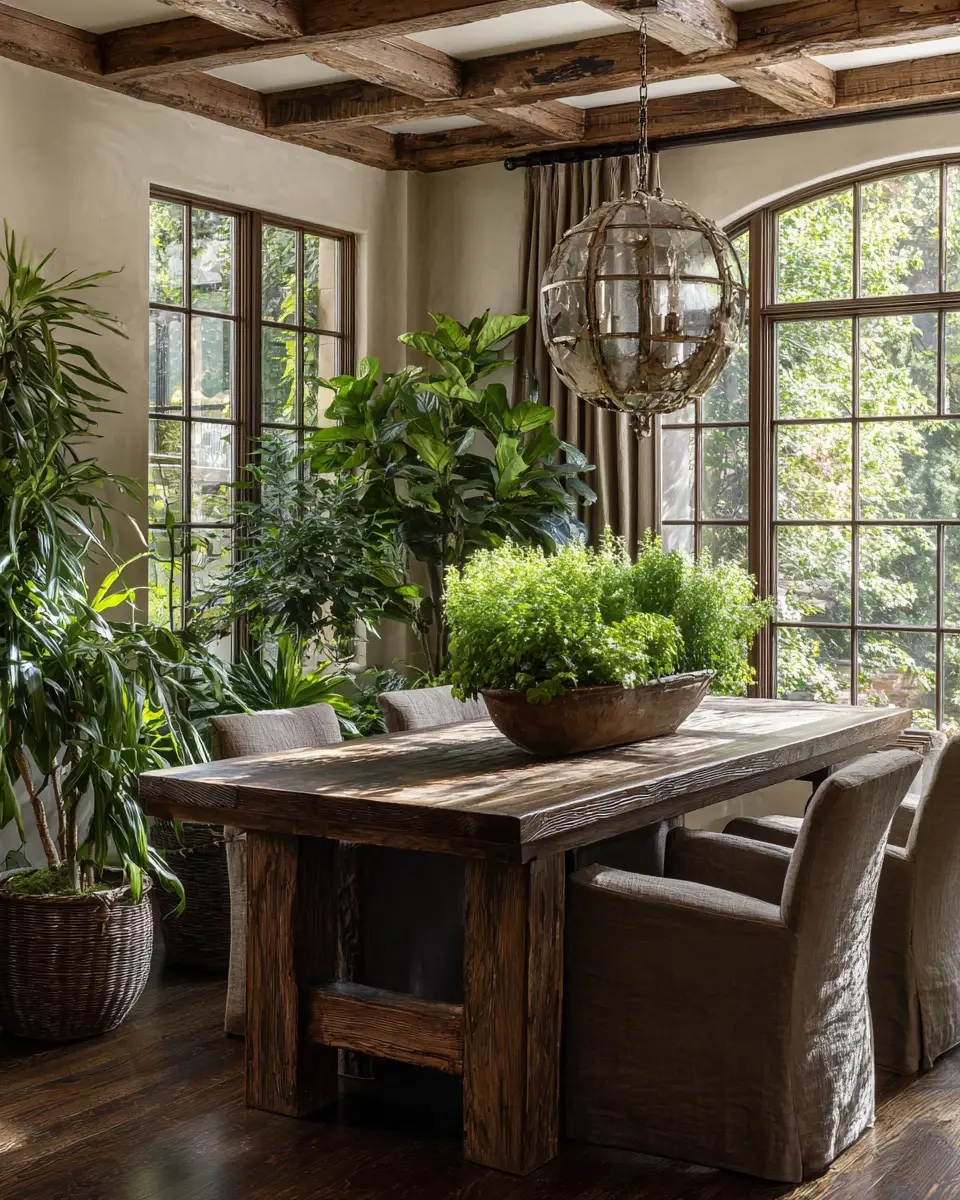
These greenery accents create a refreshing contrast with the wood elements and infuse the room with a sense of vitality and connection to nature.
Artistic Wall Decor
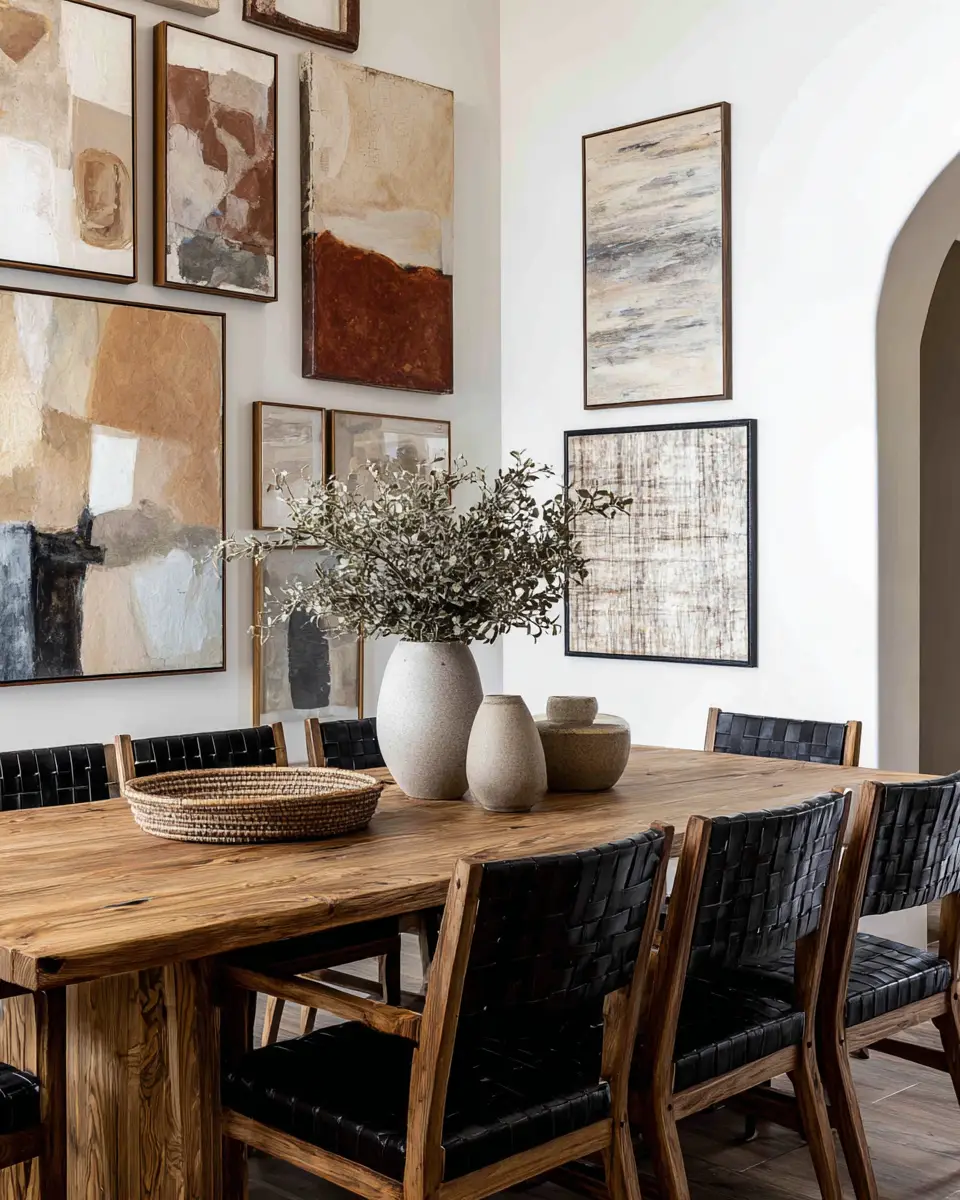
Adding artistic wall decor can elevate the design of your dining room while harmonizing with the natural wood elements. Consider creating a gallery wall of abstract art pieces in earthy palettes that resonate with the hues of the wood.
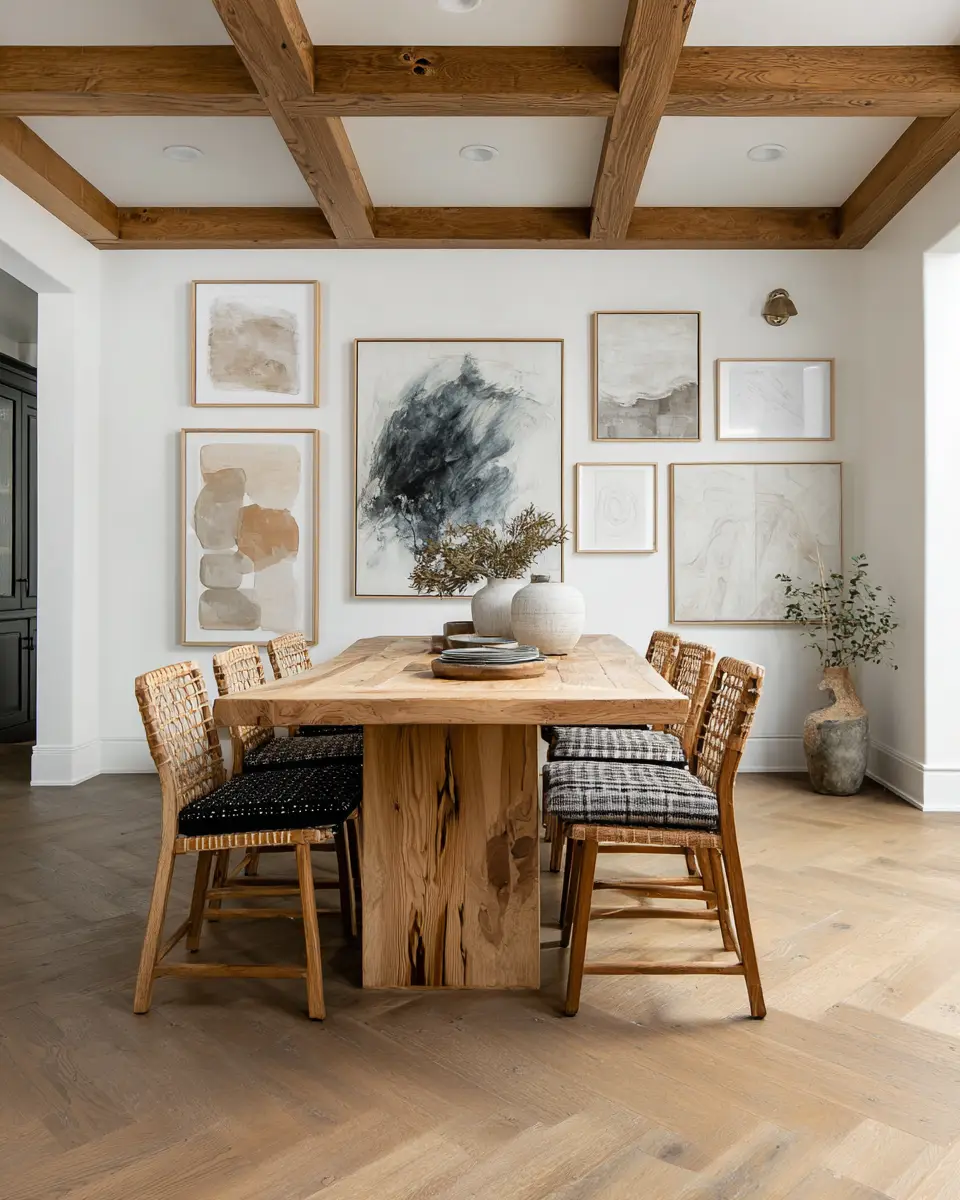
This modern touch provides visual interest and becomes a conversation starter during gatherings. Choose frames that complement the wood finishes in your dining area for a cohesive look.
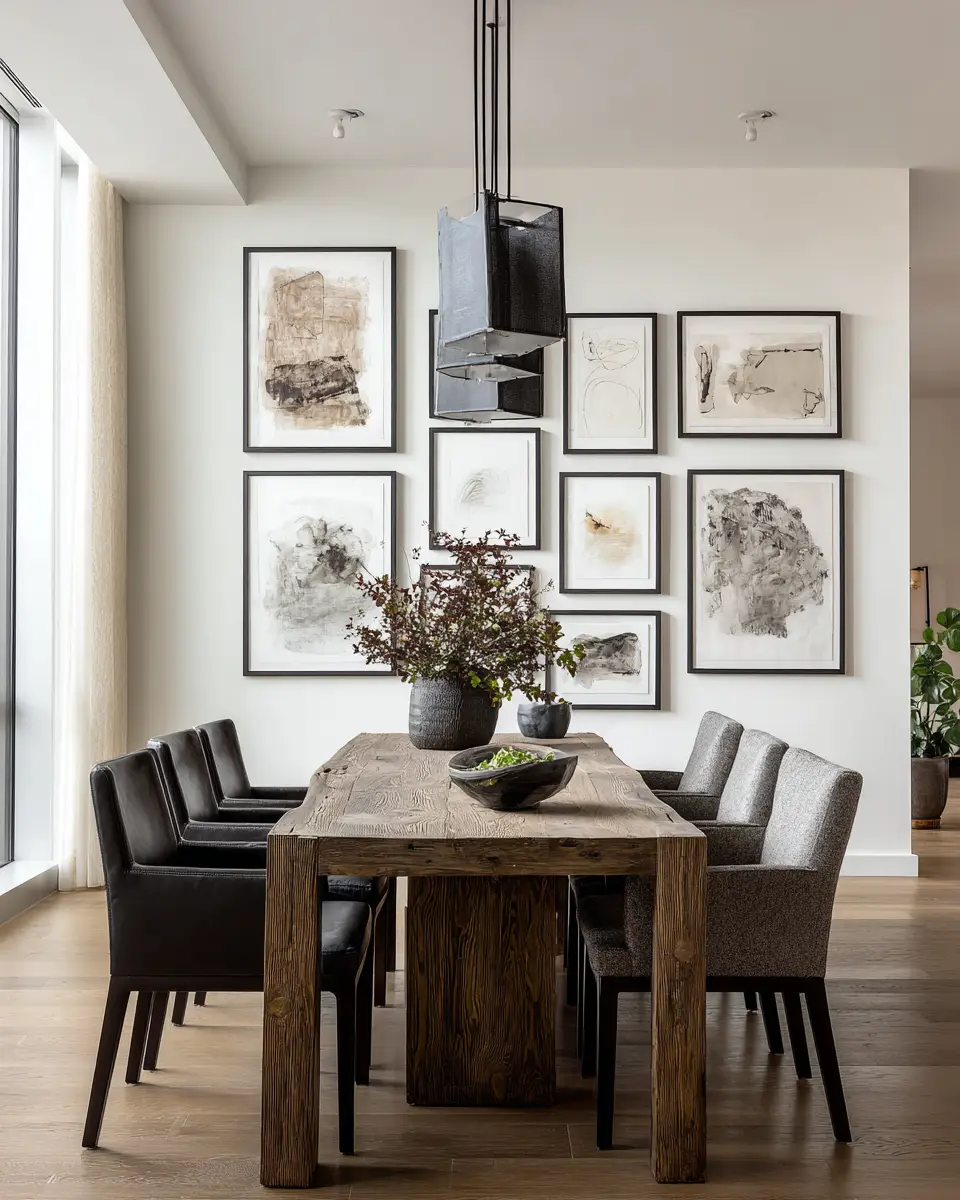
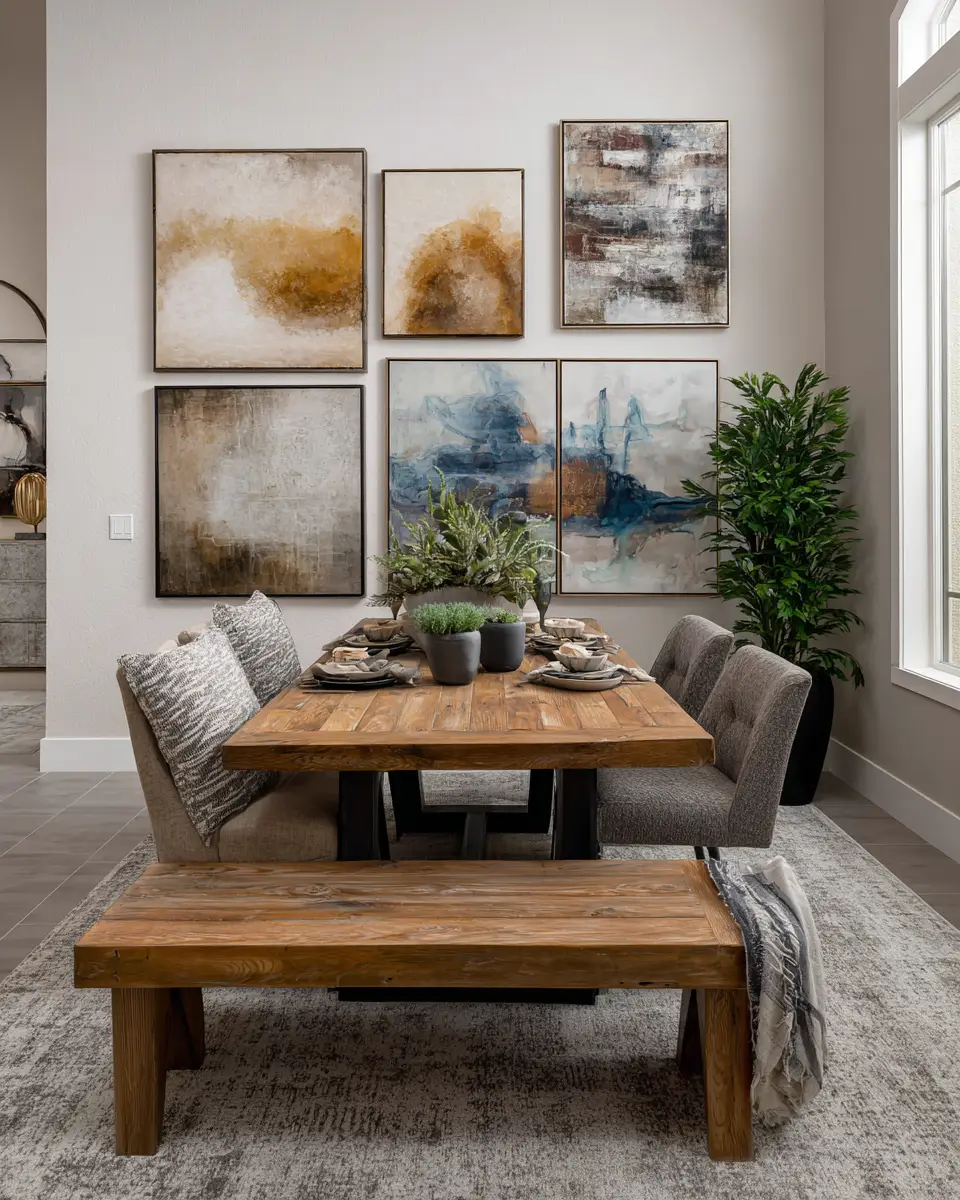
By thoughtfully selecting artwork that reflects your style and enhances the overall decor, you can create a dynamic backdrop that enriches the dining experience.
Statement Lighting
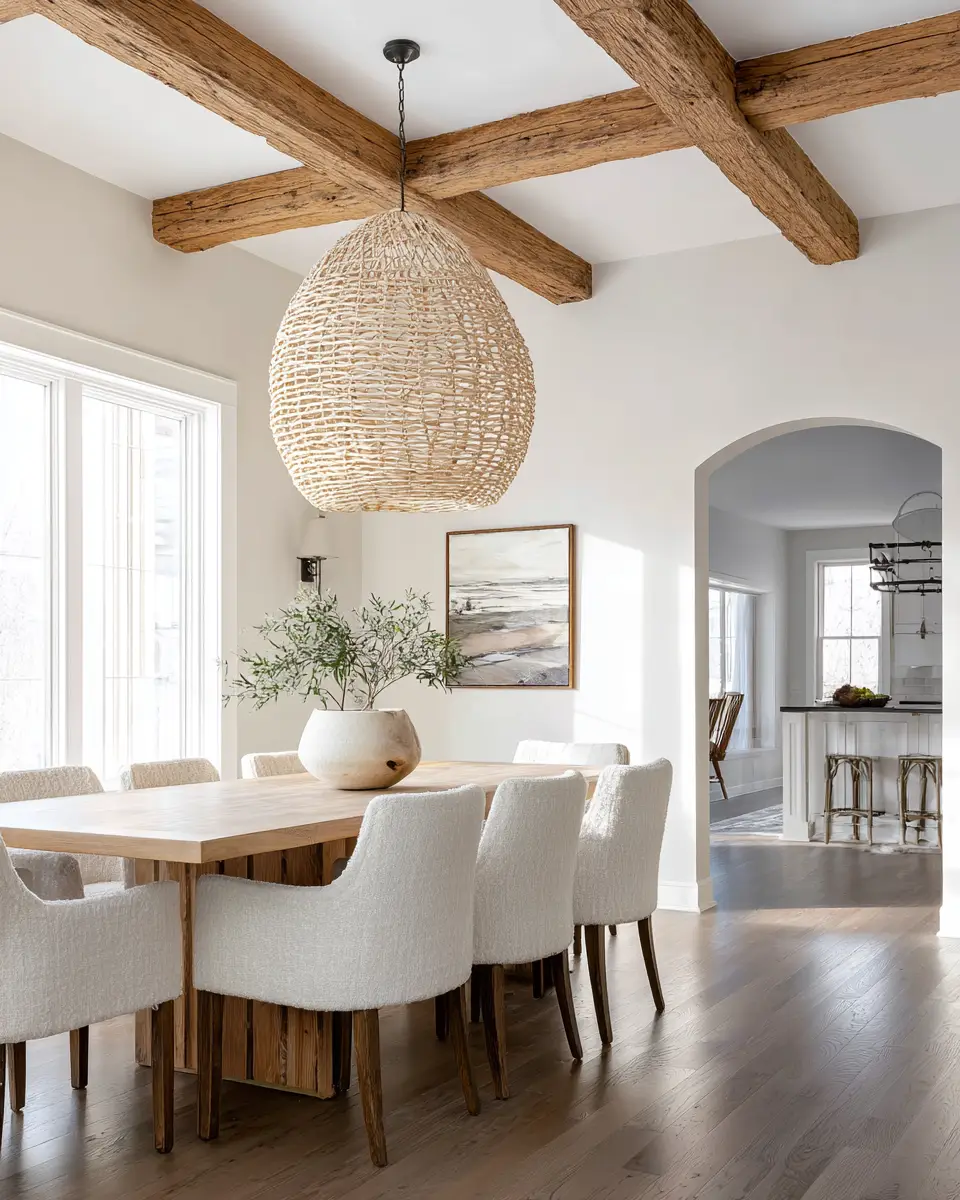
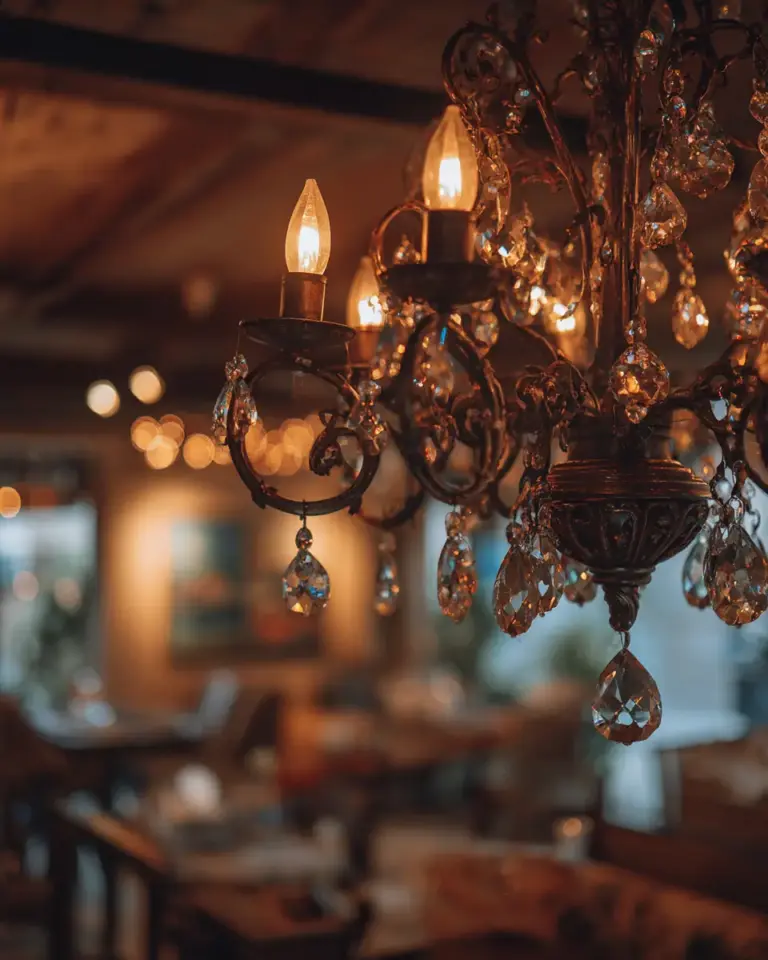
Lighting plays a crucial role in setting the mood for your dining room. Consider an oversized woven pendant light that hangs gracefully above the dining table, casting a warm, inviting glow.
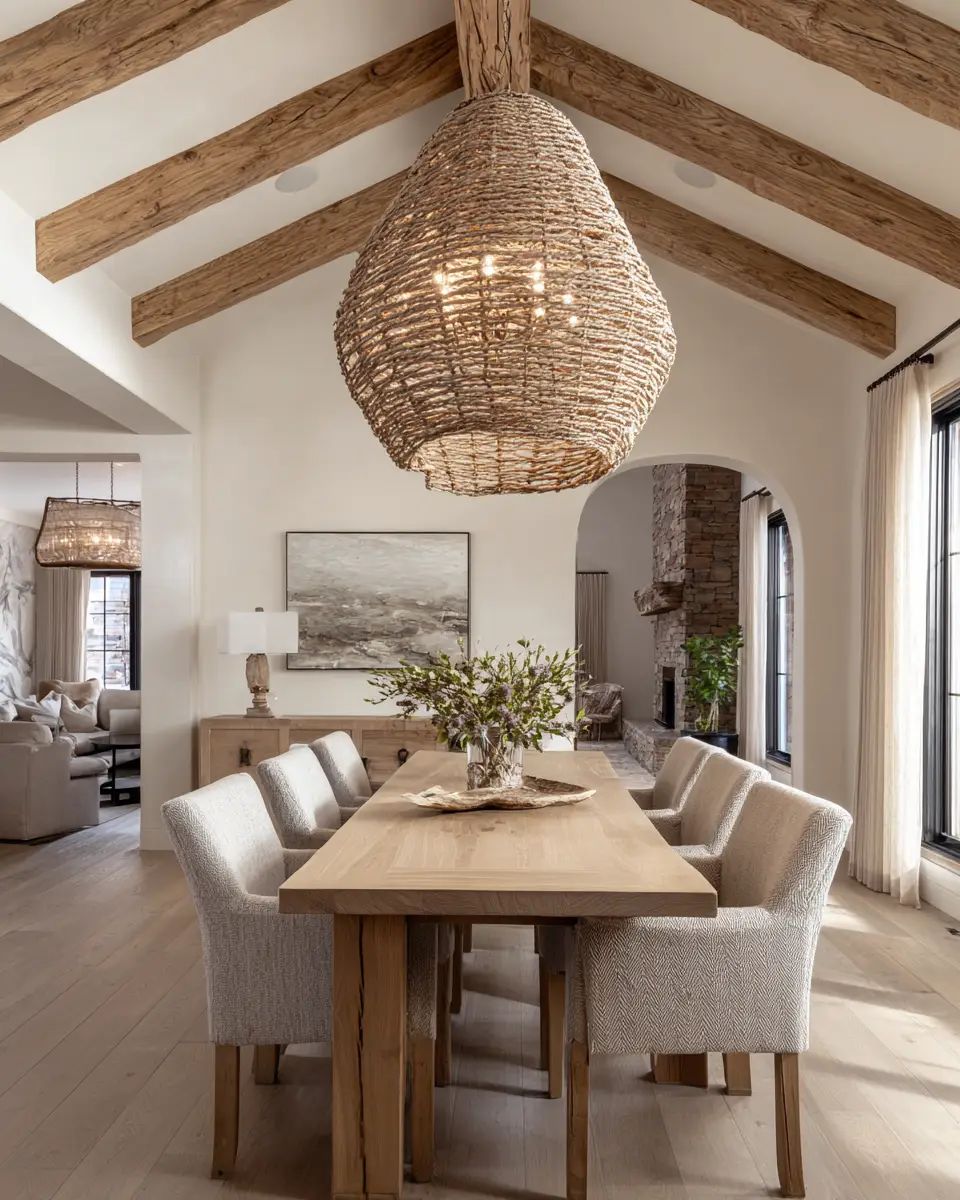
The natural wood beams on the ceiling can enhance the rustic charm of the space, adding visual interest and warmth. Ensure that the lighting complements the overall style of your decor while providing adequate illumination for meals and gatherings.
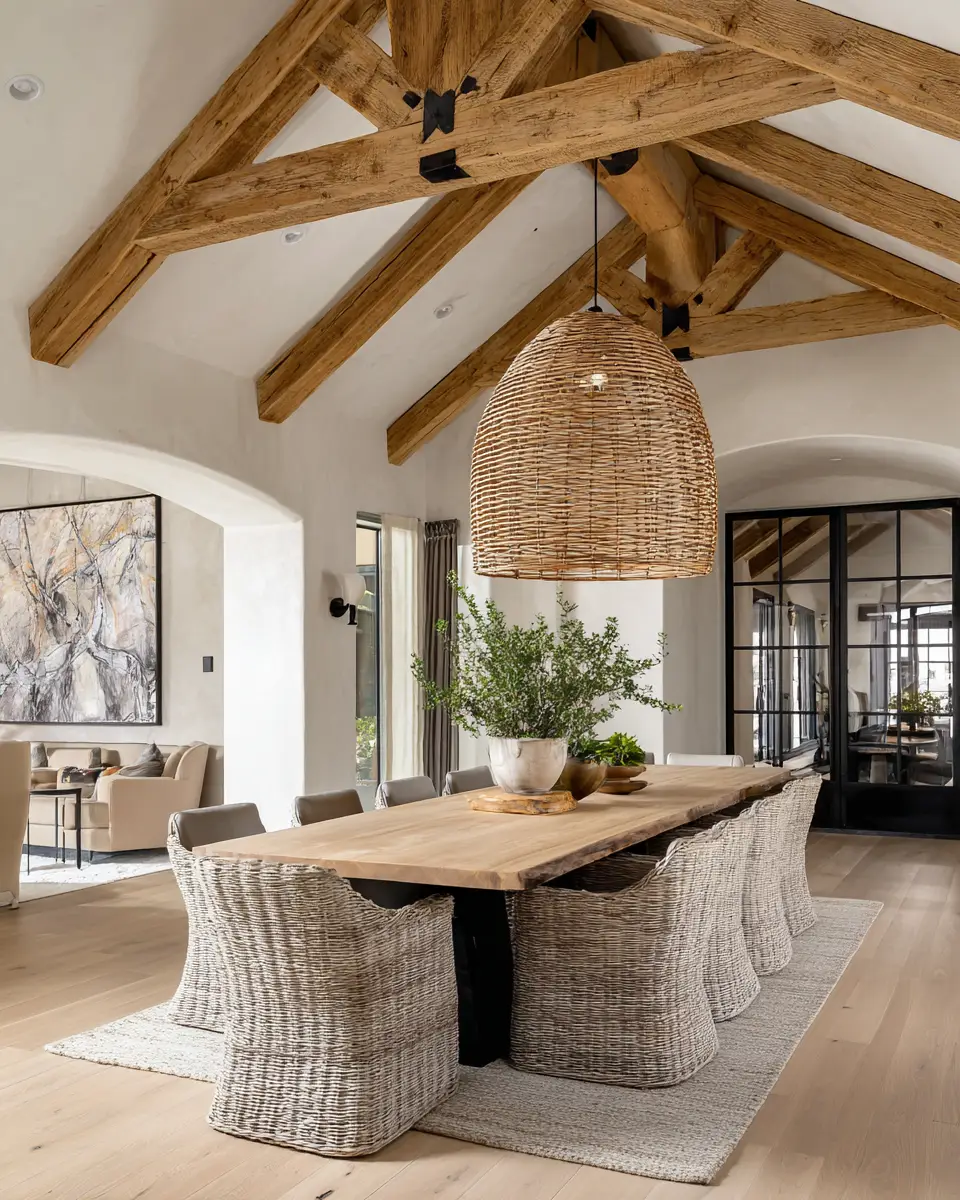
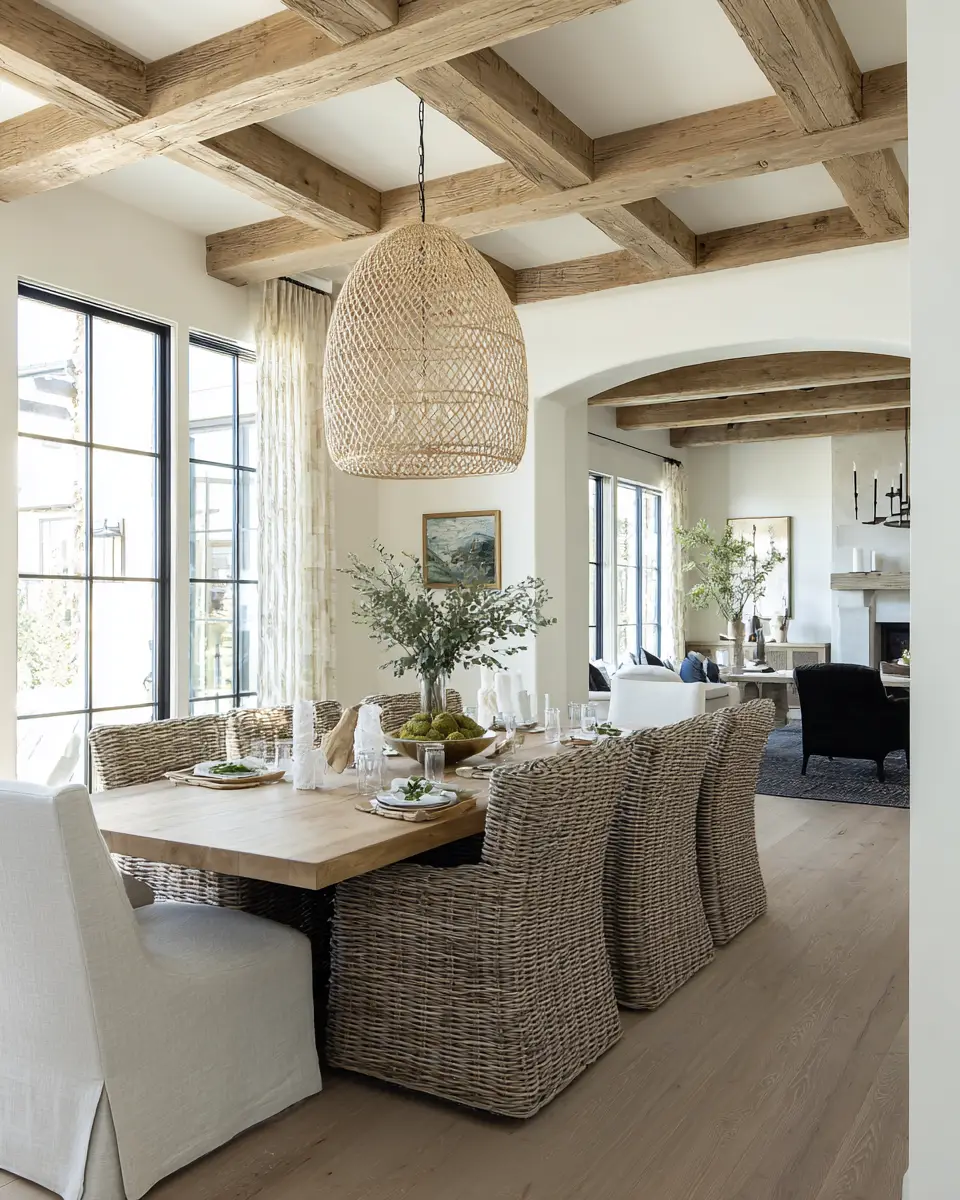
By incorporating statement lighting, you can create a focal point that draws attention and enhances the atmosphere of your dining room.
Color Palette Harmony
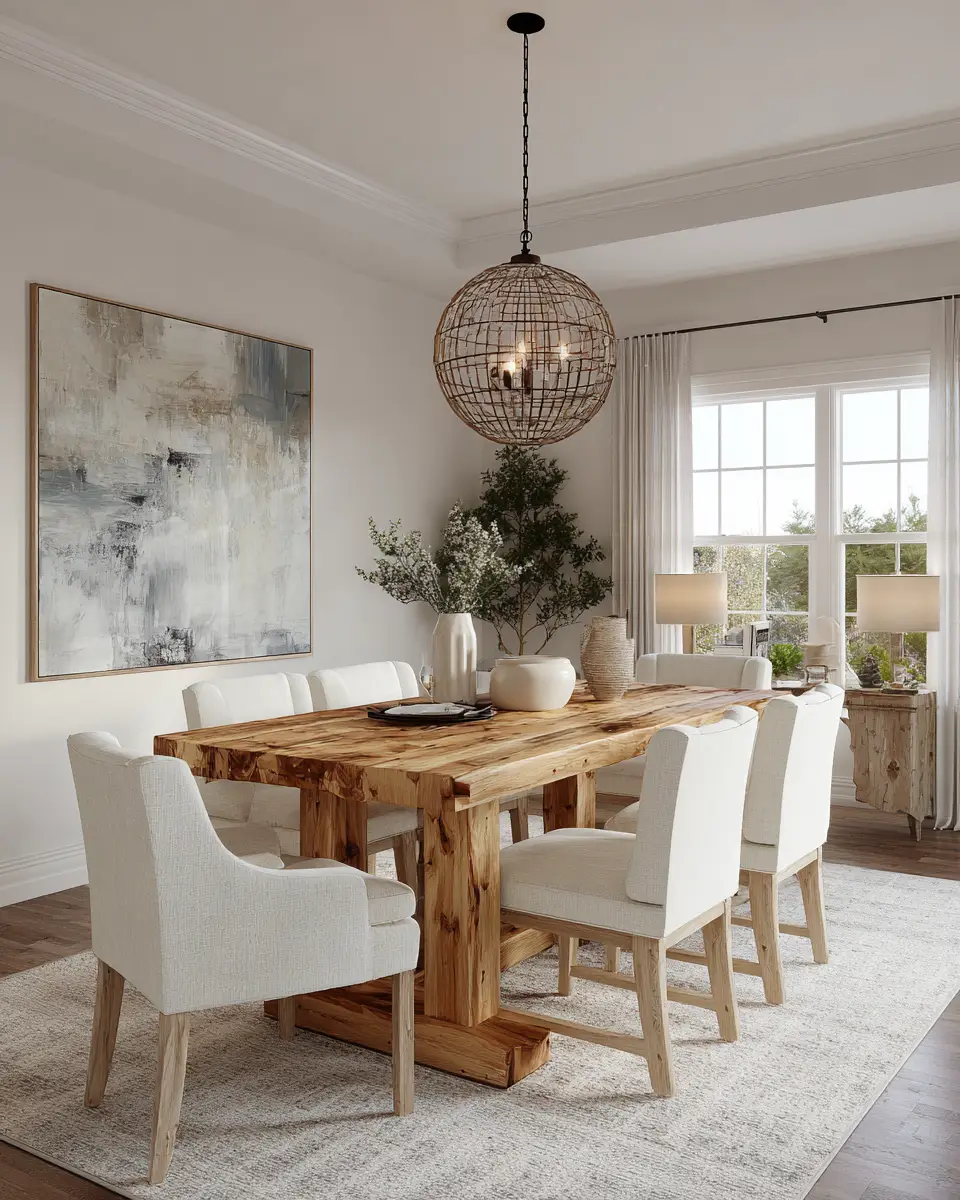
A harmonious color palette is essential for creating a peaceful environment in your dining room. Aim for a blend of soft whites, warm browns, and muted greens throughout the space.
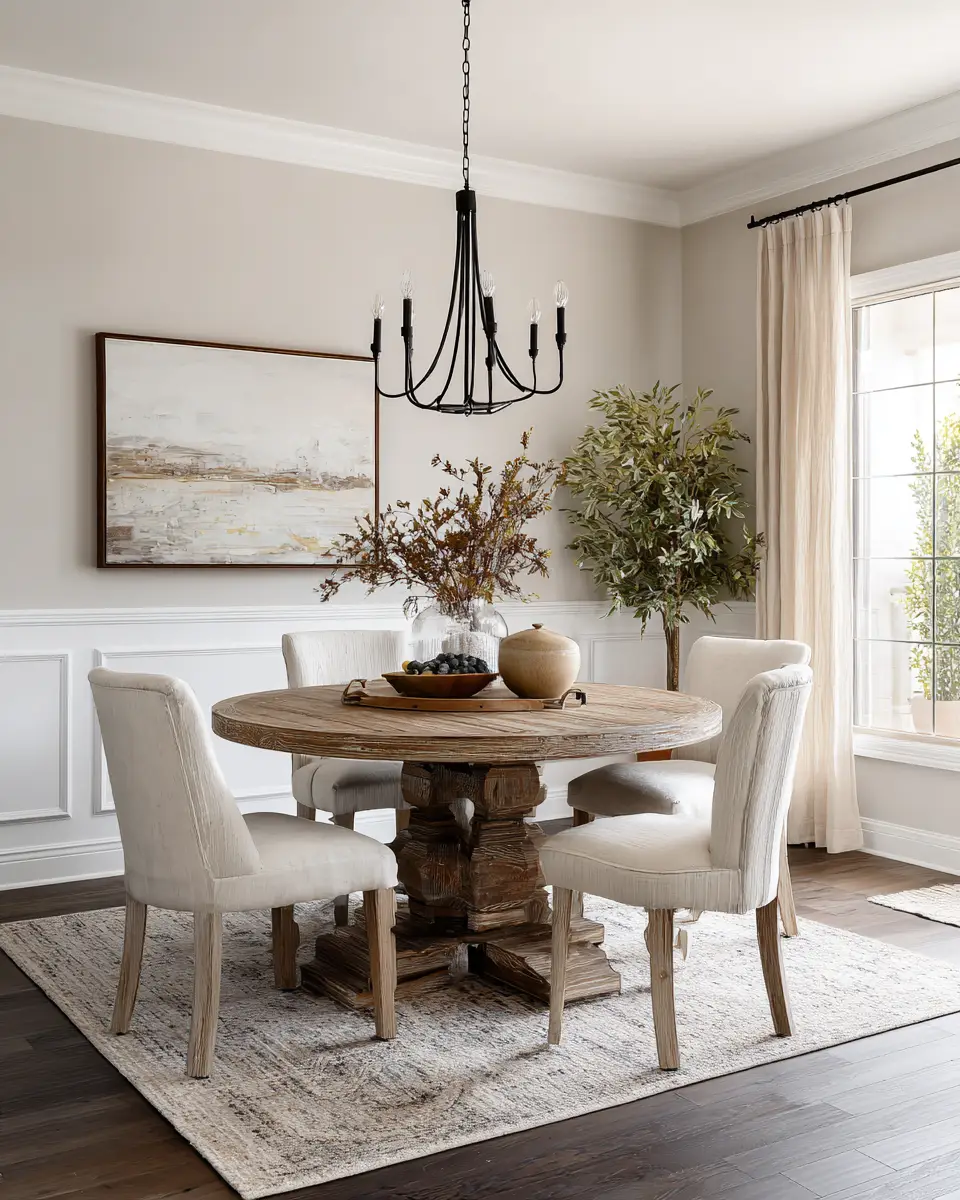
This cohesive color scheme enhances the wood elements while ensuring that the room feels inviting and serene. Consider using these colors in your paint selections, upholstery, and decorative accents to maintain a unified look.
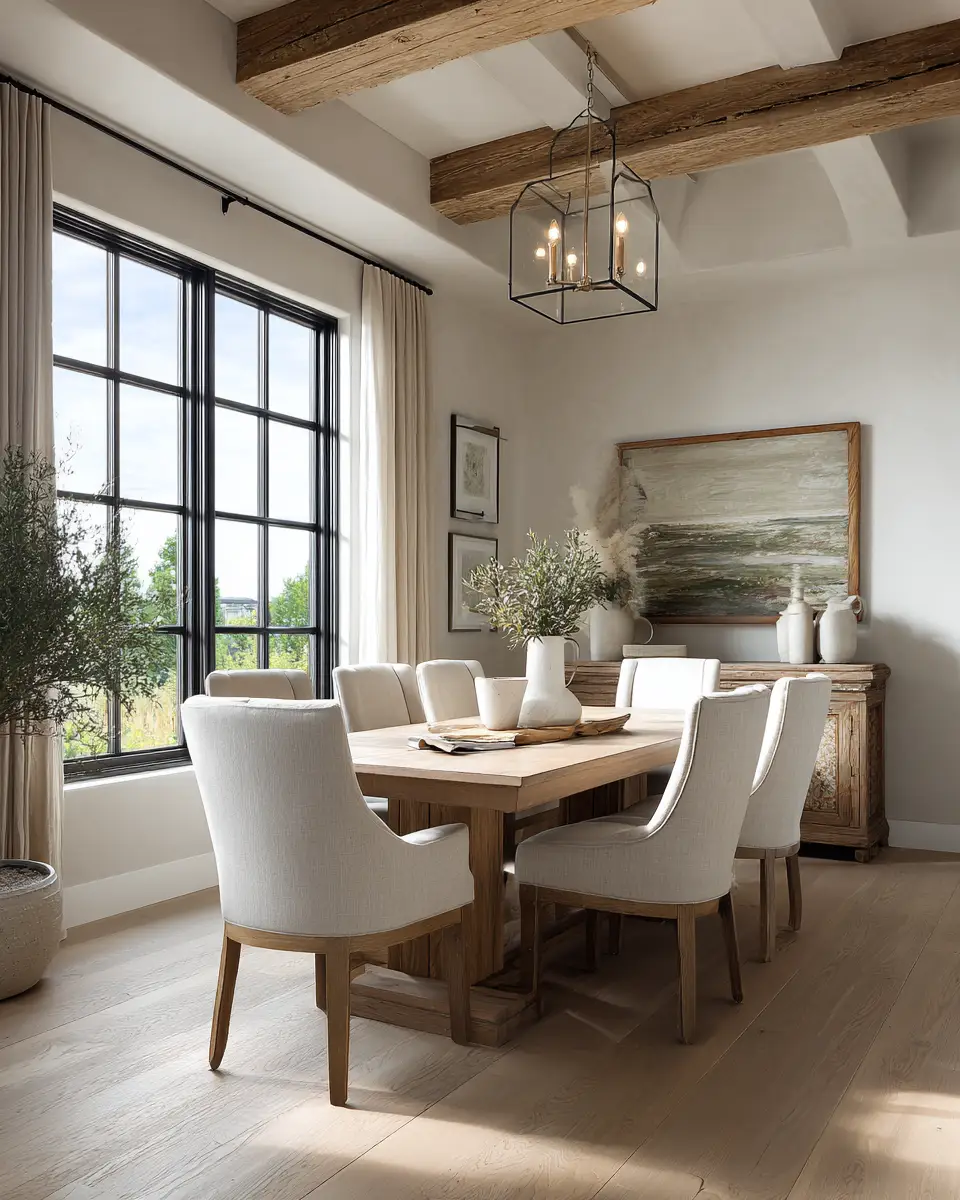
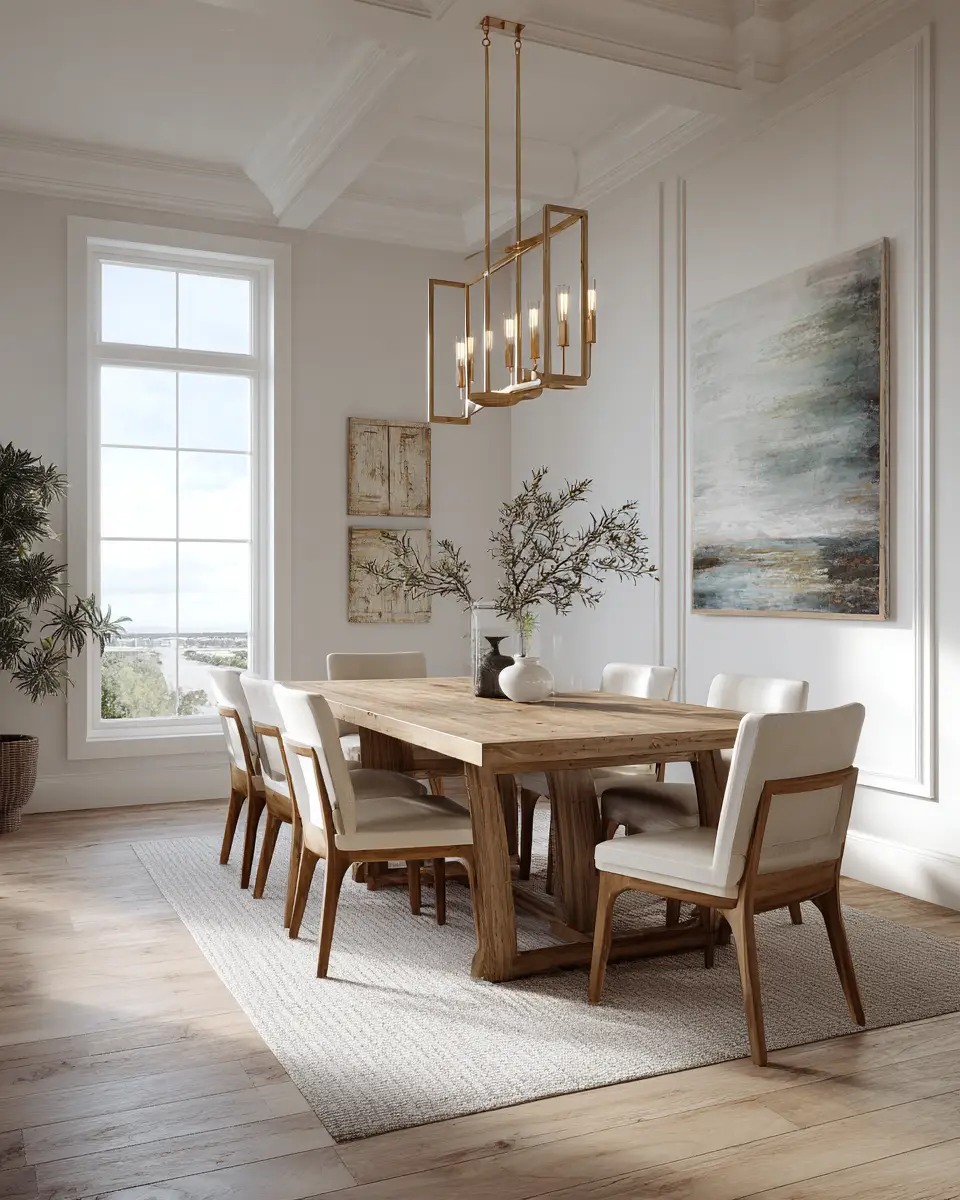
By thoughtfully curating your color palette, you will create a tranquil space that invites relaxation and enjoyment during meals.
Conclusion
Incorporating natural wood into your transitional dining room decor can create a stylish, inviting space that fosters connection and relaxation. From layered textures to artful accents, each idea contributes to an atmosphere that welcomes gatherings and shared experiences.
By blending functionality with aesthetic appeal, you can transform your dining room into a beautiful haven that reflects your personal style while embracing the warmth of natural materials.