52 Neutral Zen Bedroom Decor Ideas
Creating a neutral Zen bedroom is all about fostering a serene atmosphere that promotes relaxation and tranquility. By incorporating soft textures, natural elements, and a calming color palette, you can transform your bedroom into a peaceful retreat. In this article, we will explore a variety of decor ideas that embrace simplicity and mindfulness, allowing you to design a space that nurtures your well-being.
From window treatments that filter soft light to carefully chosen furniture and decor, each element plays a crucial role in establishing a harmonious environment. Let’s delve into some inspiring ideas to help you achieve the perfect neutral Zen bedroom.
Soft Window Treatments
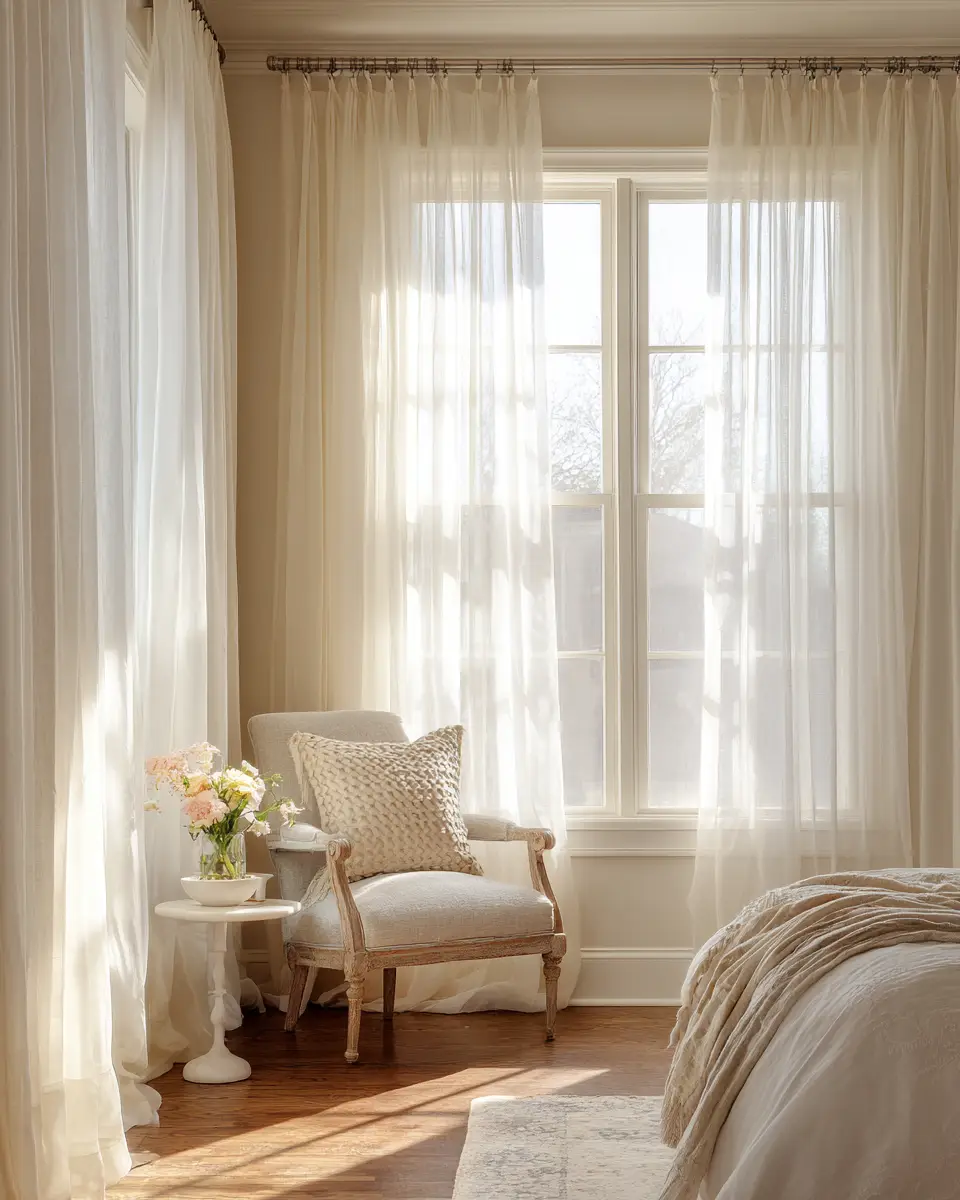
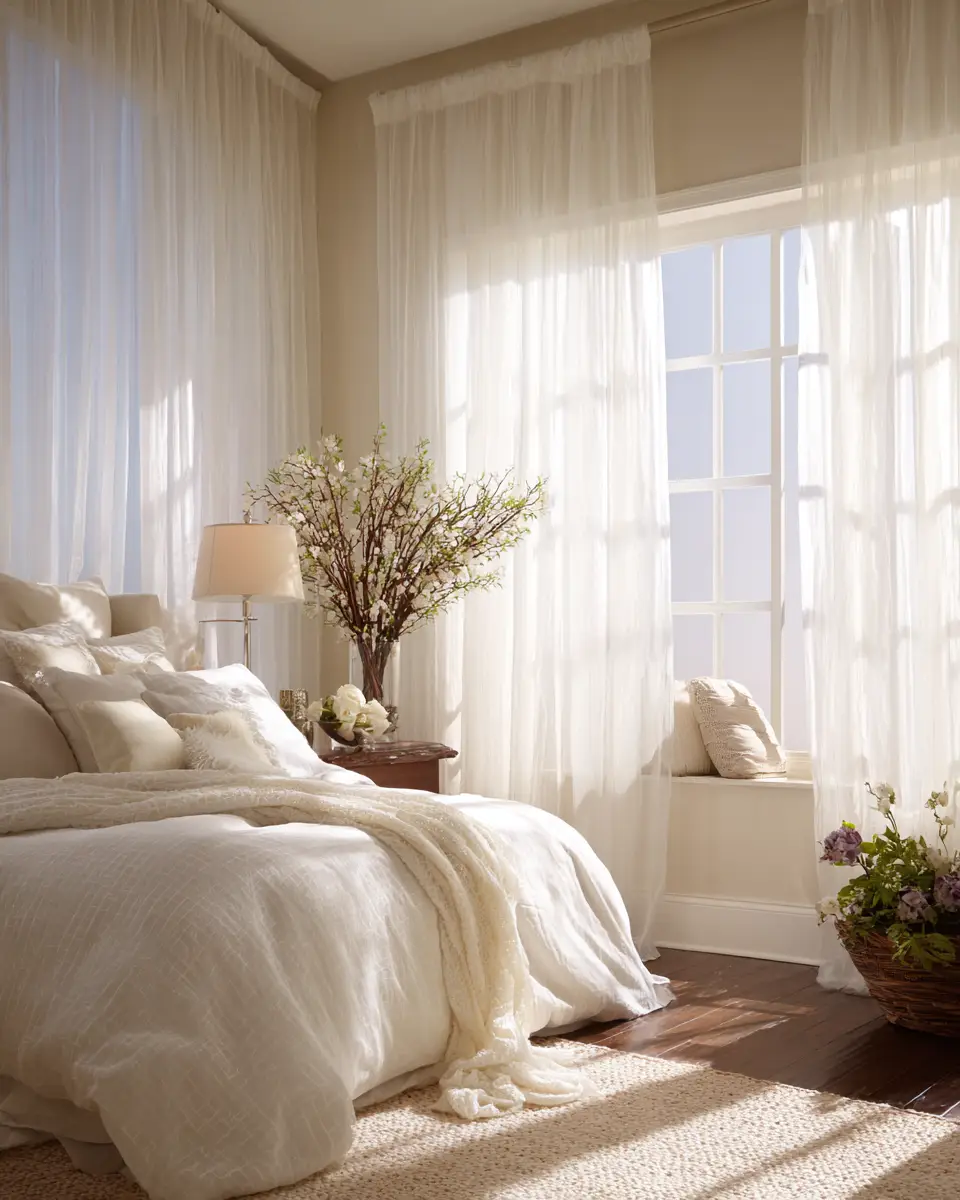
Flowing sheer curtains in neutral tones allow soft light to filter through, creating an ethereal effect. These treatments offer privacy while maintaining the airy quality of the room. Opt for lightweight fabrics that gently sway with the breeze, enhancing the peaceful ambiance.
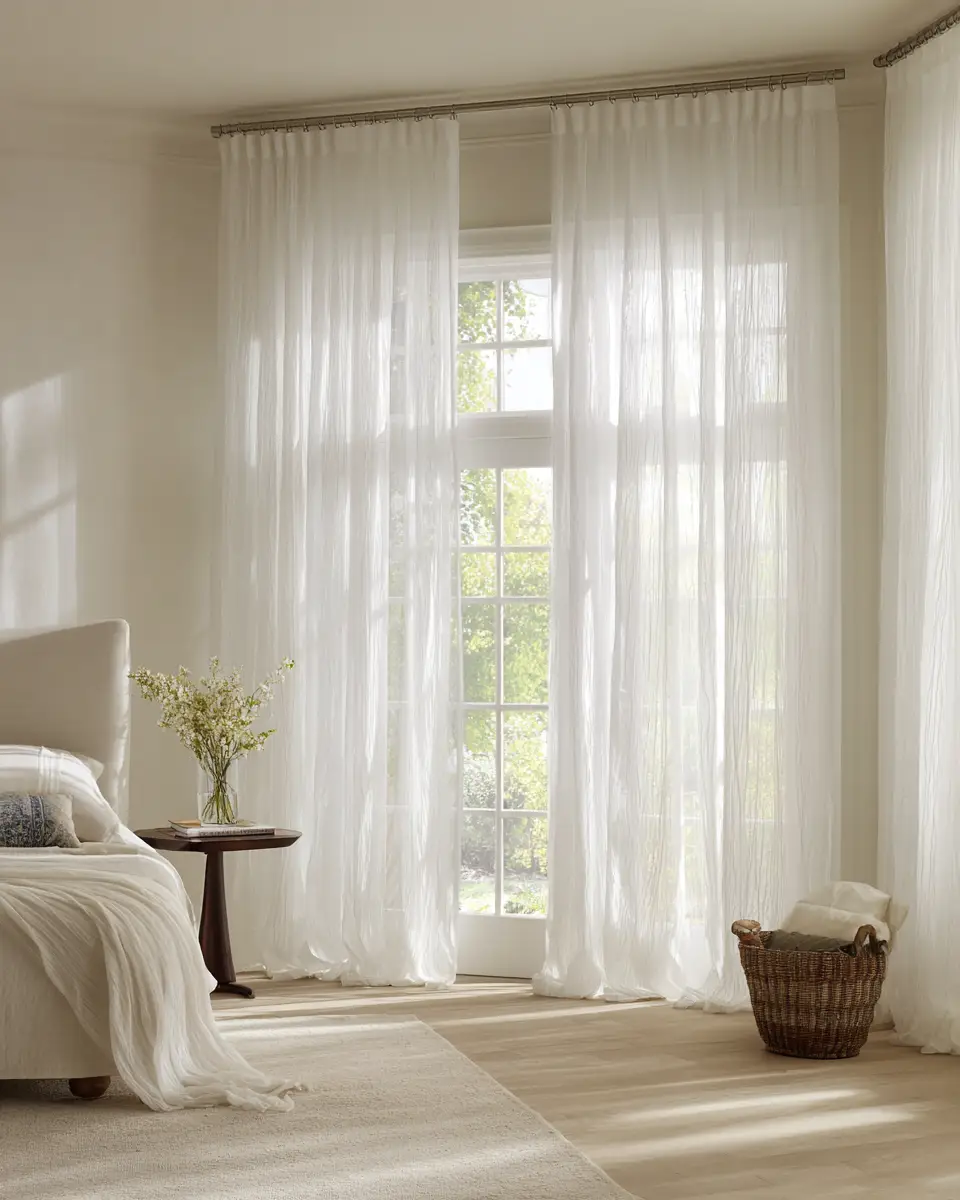
Consider layering your curtains with a blackout option for versatility. This combination allows you to control the light and privacy levels, making it easy to transition from day to night. Choose colors that complement your overall palette to maintain harmony.
Extend your curtains a few inches beyond the window frame to create an illusion of larger windows and a more expansive feel. This simple trick can elevate the look of your space while enhancing the natural light that flows in.
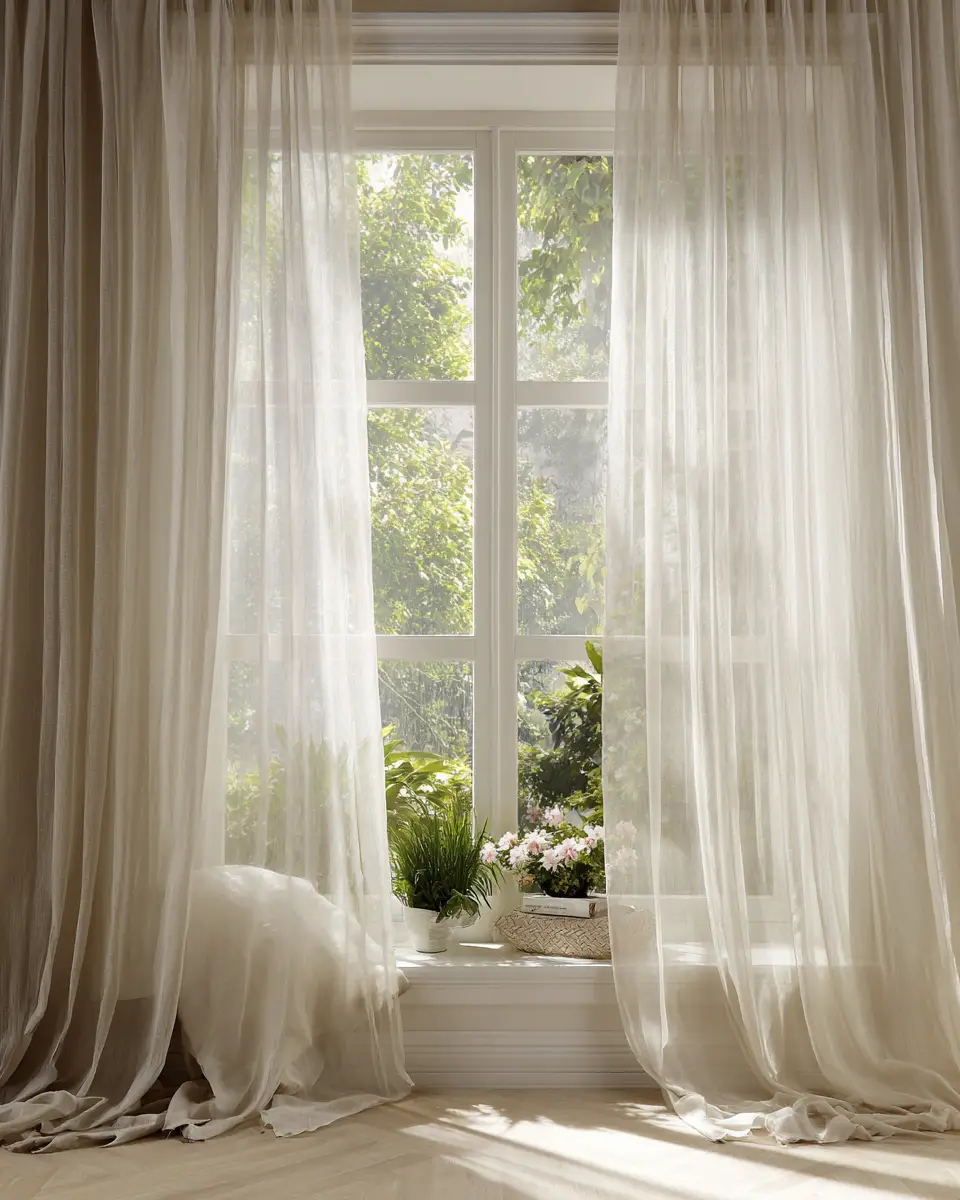
For an added touch, tie-back options can offer a more structured look during the day, allowing you to showcase the view while still enjoying the soft diffusion of light.
Layered Lighting Options
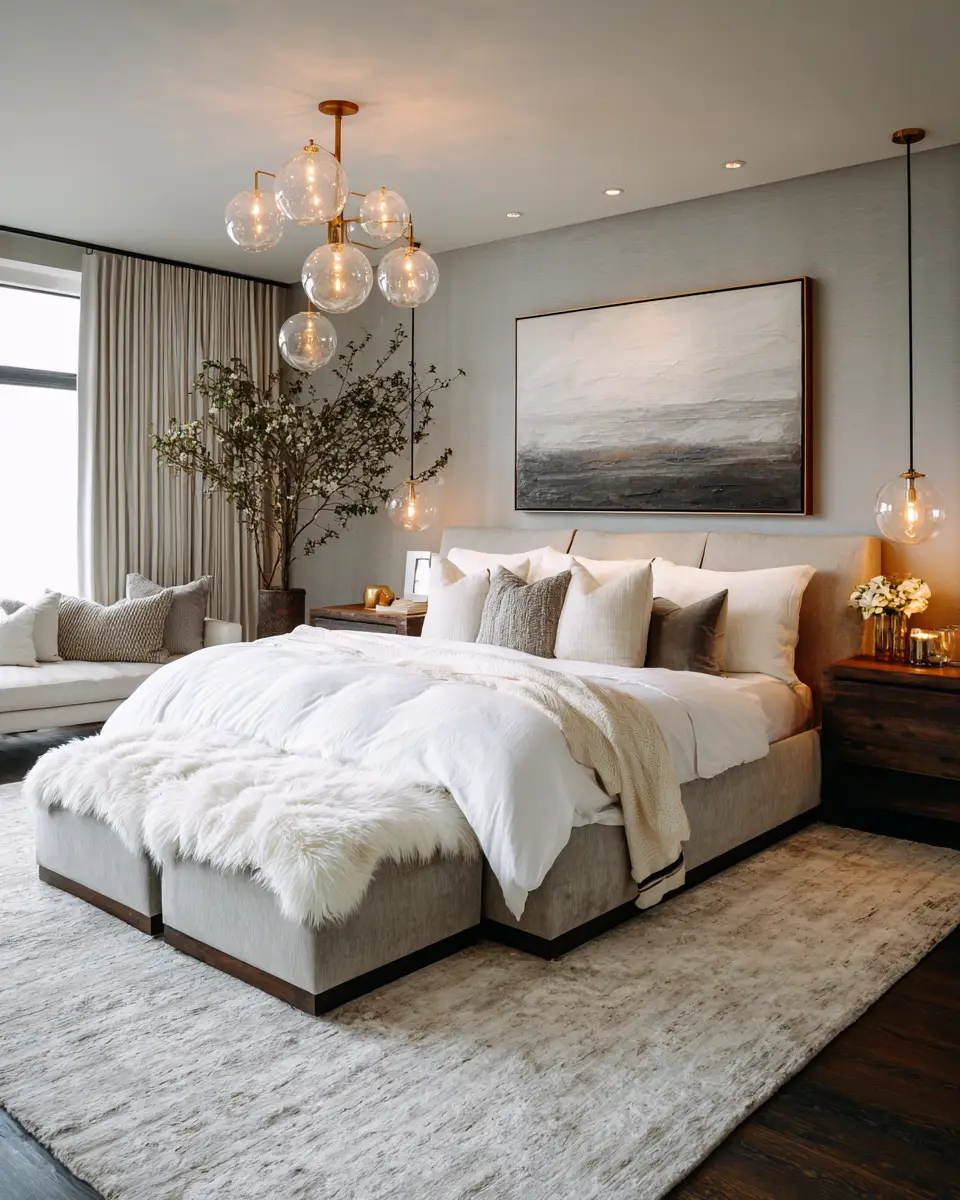
A mix of ambient, task, and accent lighting creates versatility, allowing for various moods. This layered approach ensures the room remains inviting and functional for different activities. Start with overhead fixtures that provide general illumination, then supplement with bedside lamps for reading or relaxing.
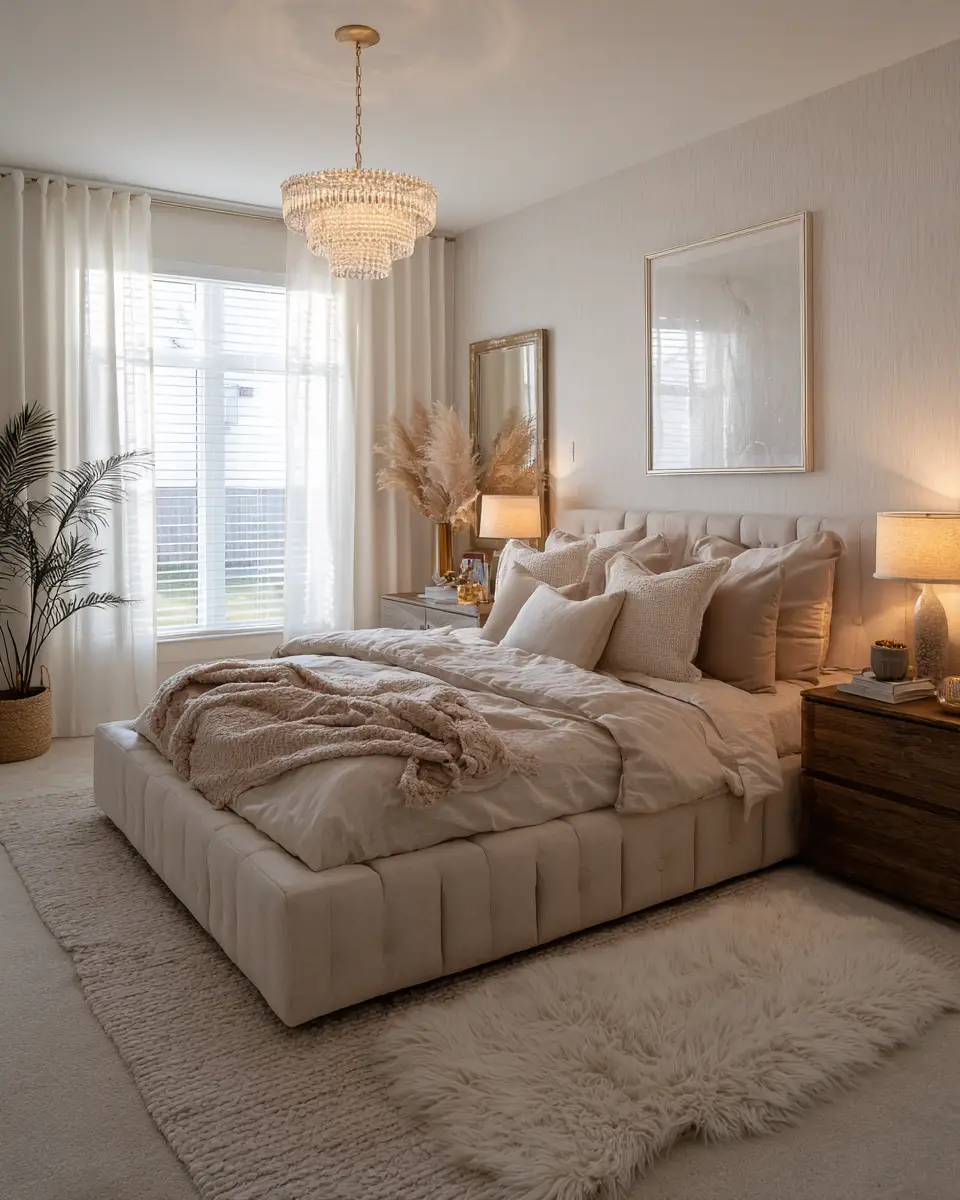
Incorporate dimmers to adjust the brightness according to the time of day or your mood. Soft, warm light is ideal for creating a cozy atmosphere, while brighter settings can be used for tasks or when getting ready.
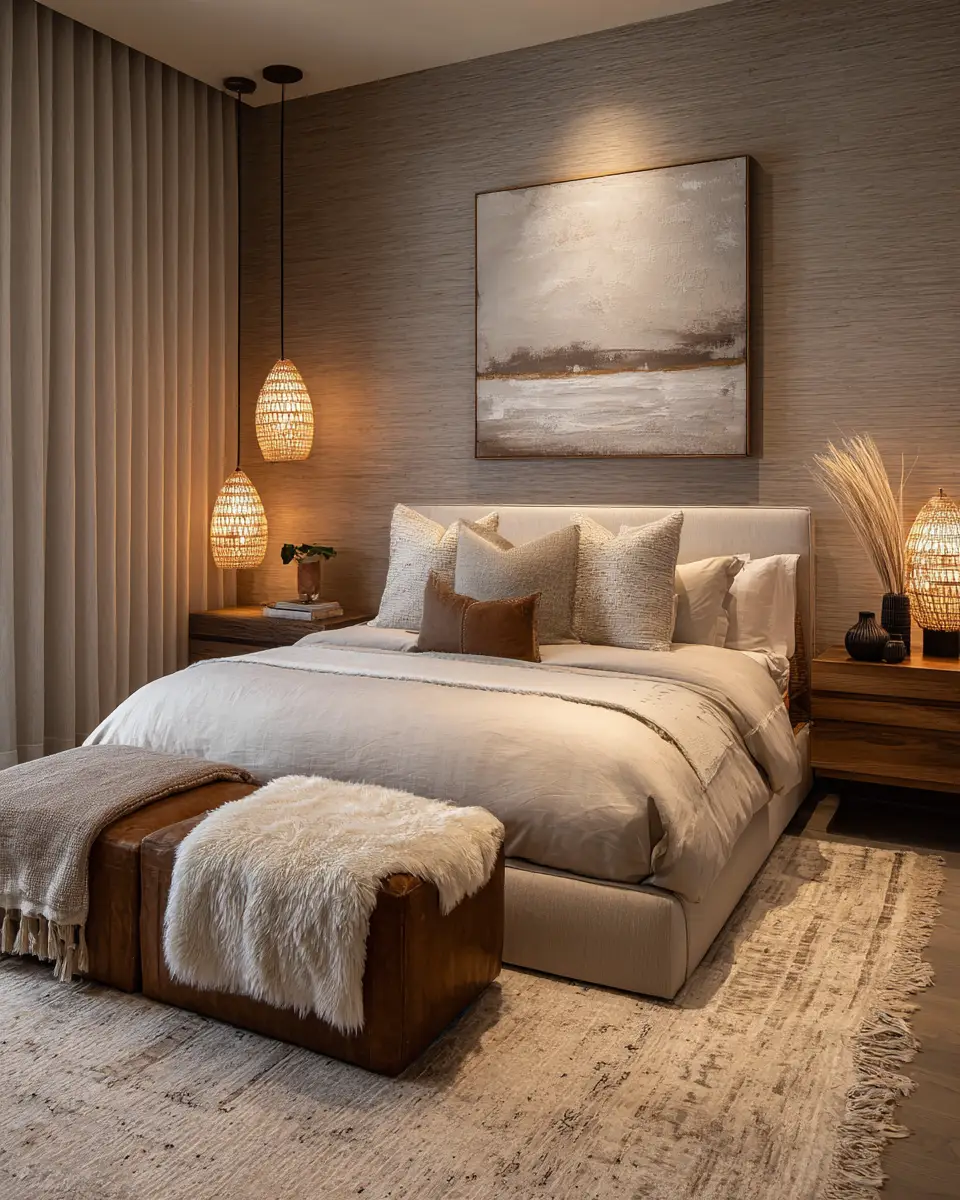
Accent lighting, such as wall sconces or decorative LED strips, can highlight artwork or architectural features, adding depth and interest to the design. Choose fixtures that align with the minimalist aesthetic to maintain a cohesive look.
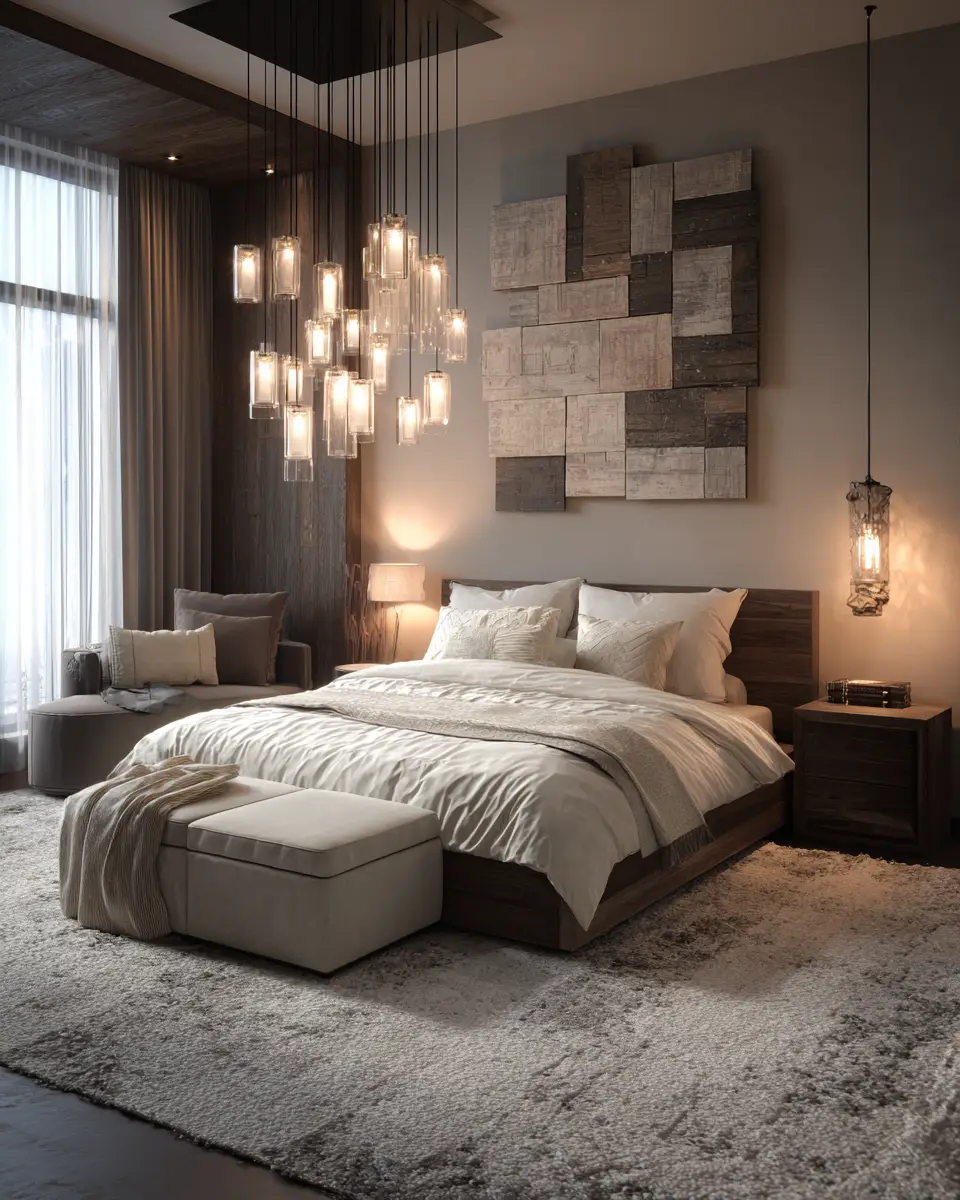
Don’t forget about natural light; mirrors can reflect sunlight and enhance the brightness of the room, further contributing to the layered lighting effect.
Indoor Plants
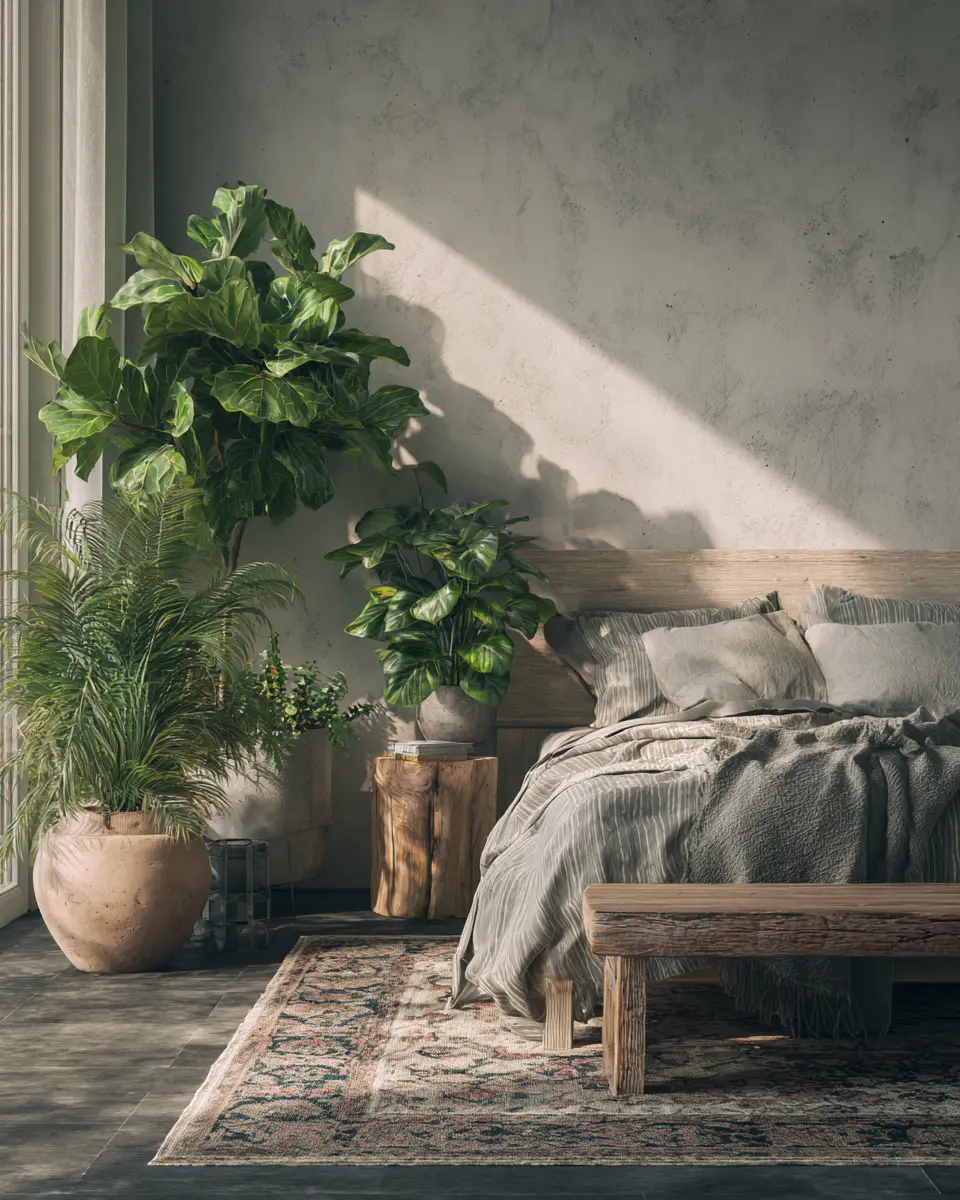
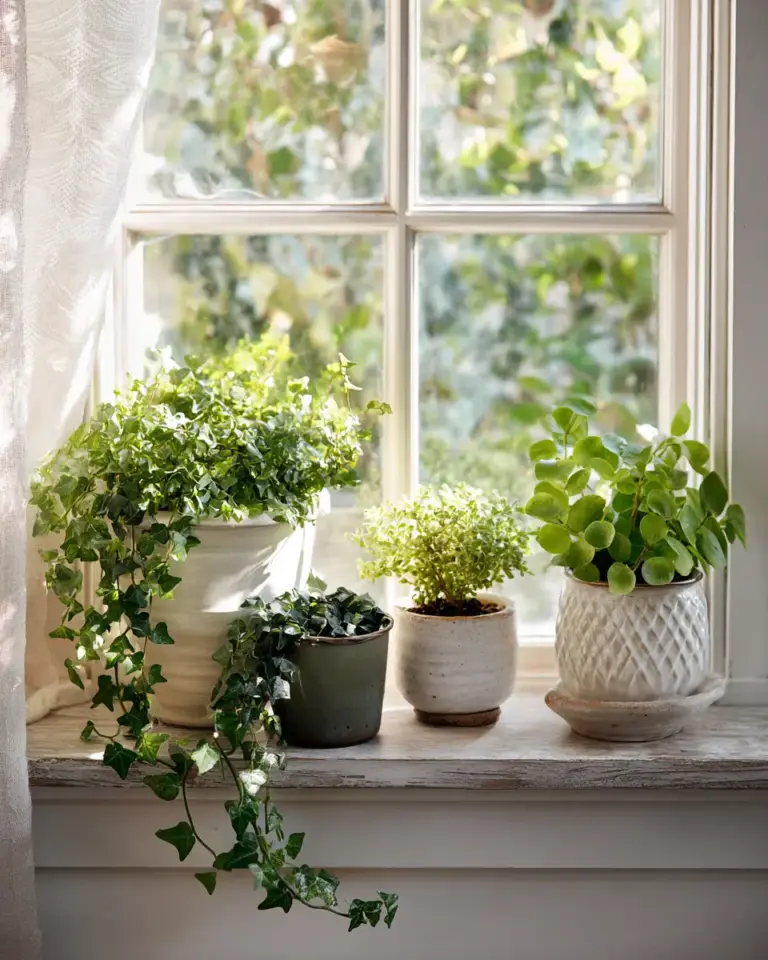
Lush greenery in minimalist pots adds a refreshing touch, purifying the air and bringing life into the space. The natural elements create a soothing atmosphere that fosters relaxation and well-being. Choose low-maintenance plants like snake plants or pothos that thrive in various lighting conditions.
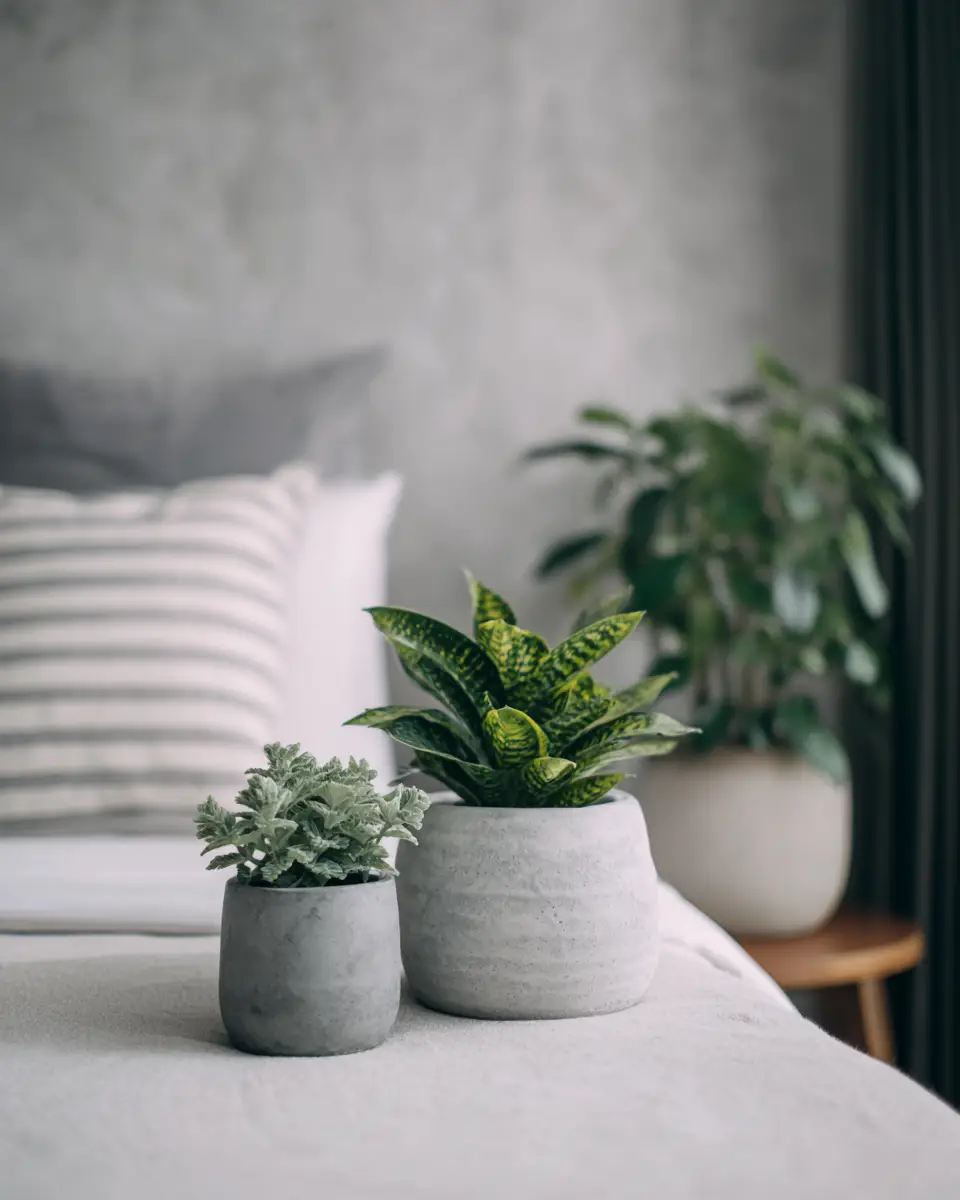
Group plants of varying heights and textures to create visual interest while keeping within your neutral color scheme. Use pots in natural materials like terracotta or ceramic to enhance the organic feel of the room.
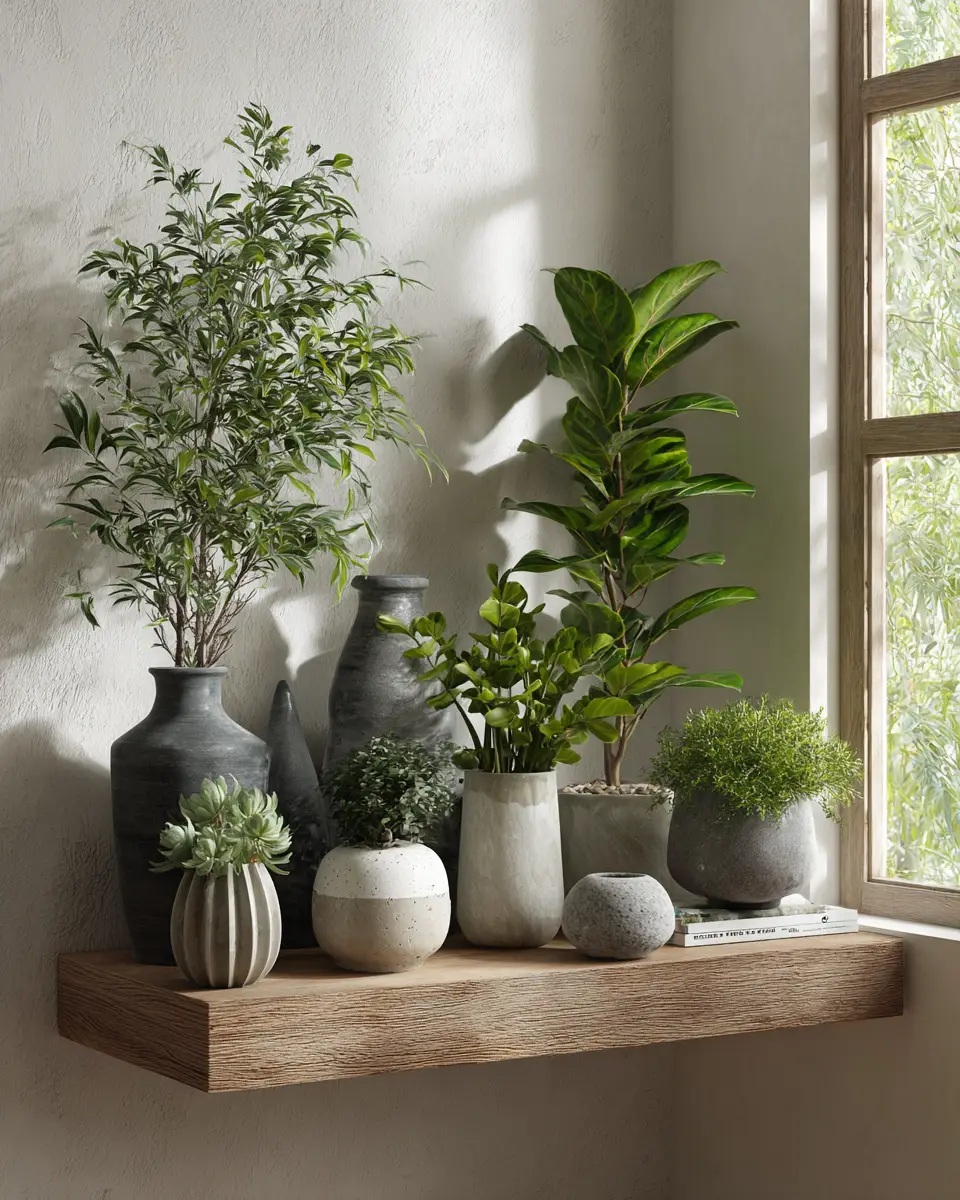
Consider creating a small plant corner by a window to enjoy both the aesthetic and health benefits of indoor greenery. Alternatively, hanging plants can free up floor space while adding a unique visual element.
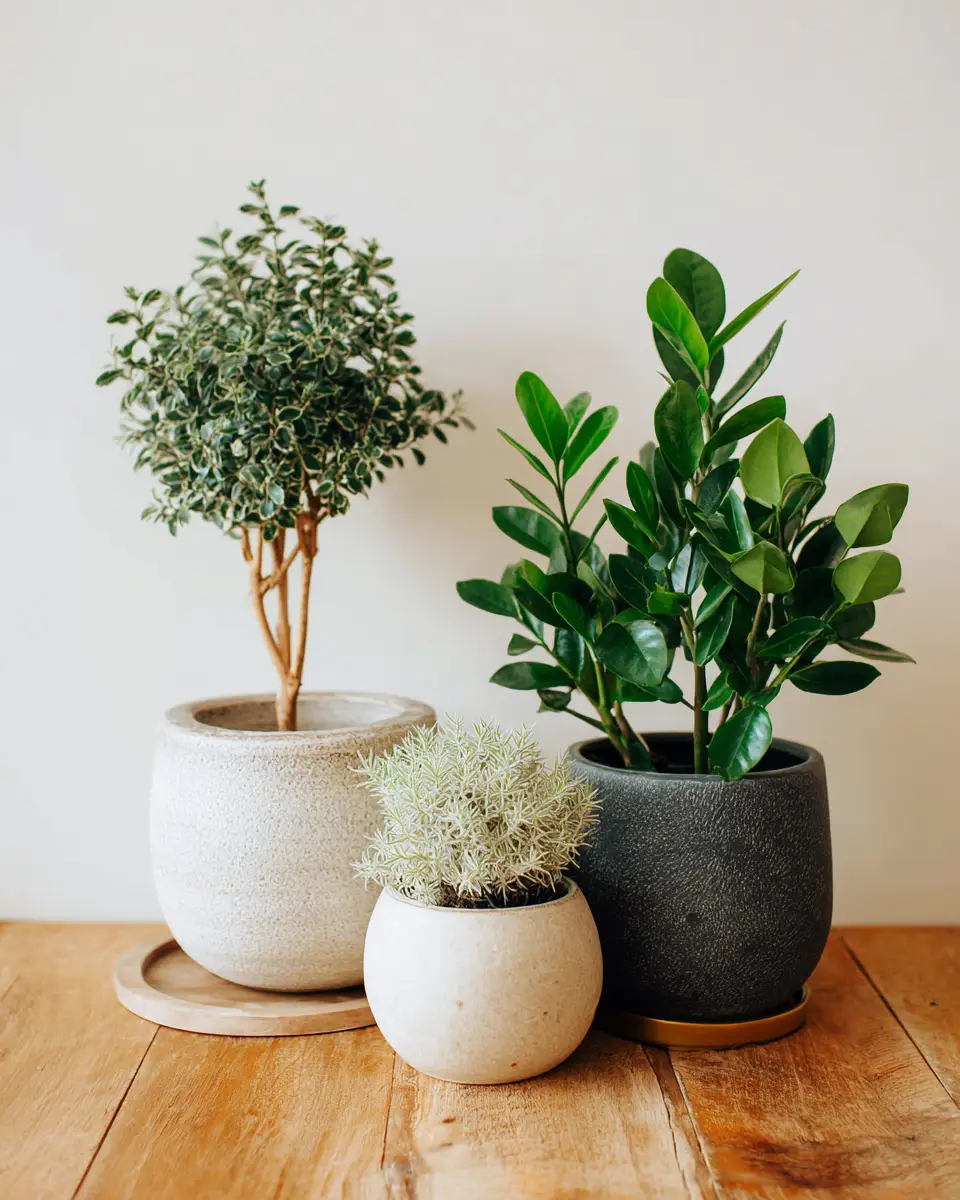
Regularly rotate your plants to ensure even light exposure, promoting healthy growth and maintaining their vibrant appearance.
Minimalist Furniture
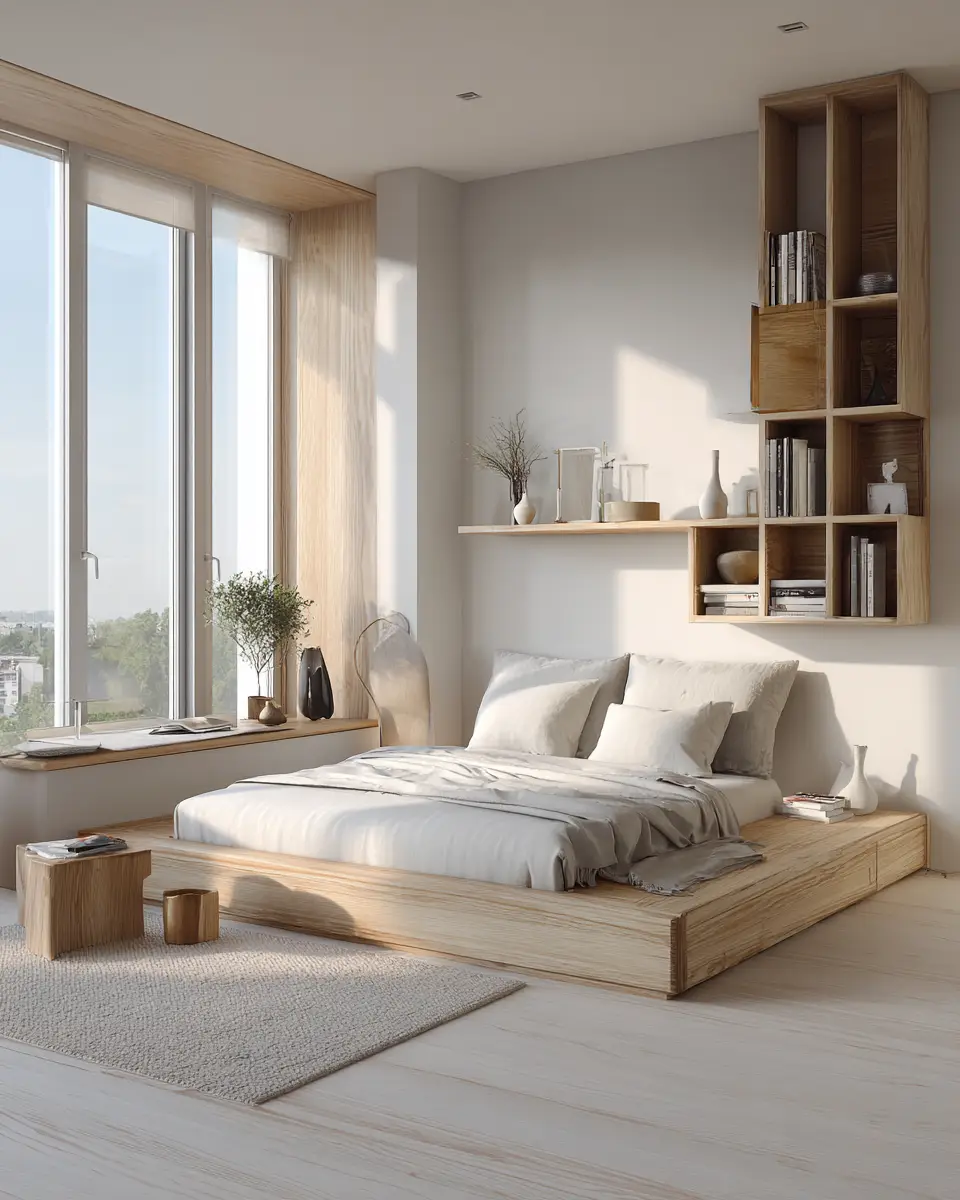
Sleek, low-profile furniture in light wood finishes offers a spacious feel, emphasizing a clutter-free environment. The simplicity of design encourages mindfulness and tranquility, essential for a Zen space. Look for pieces that have clean lines and functional designs to maintain a minimalist approach.
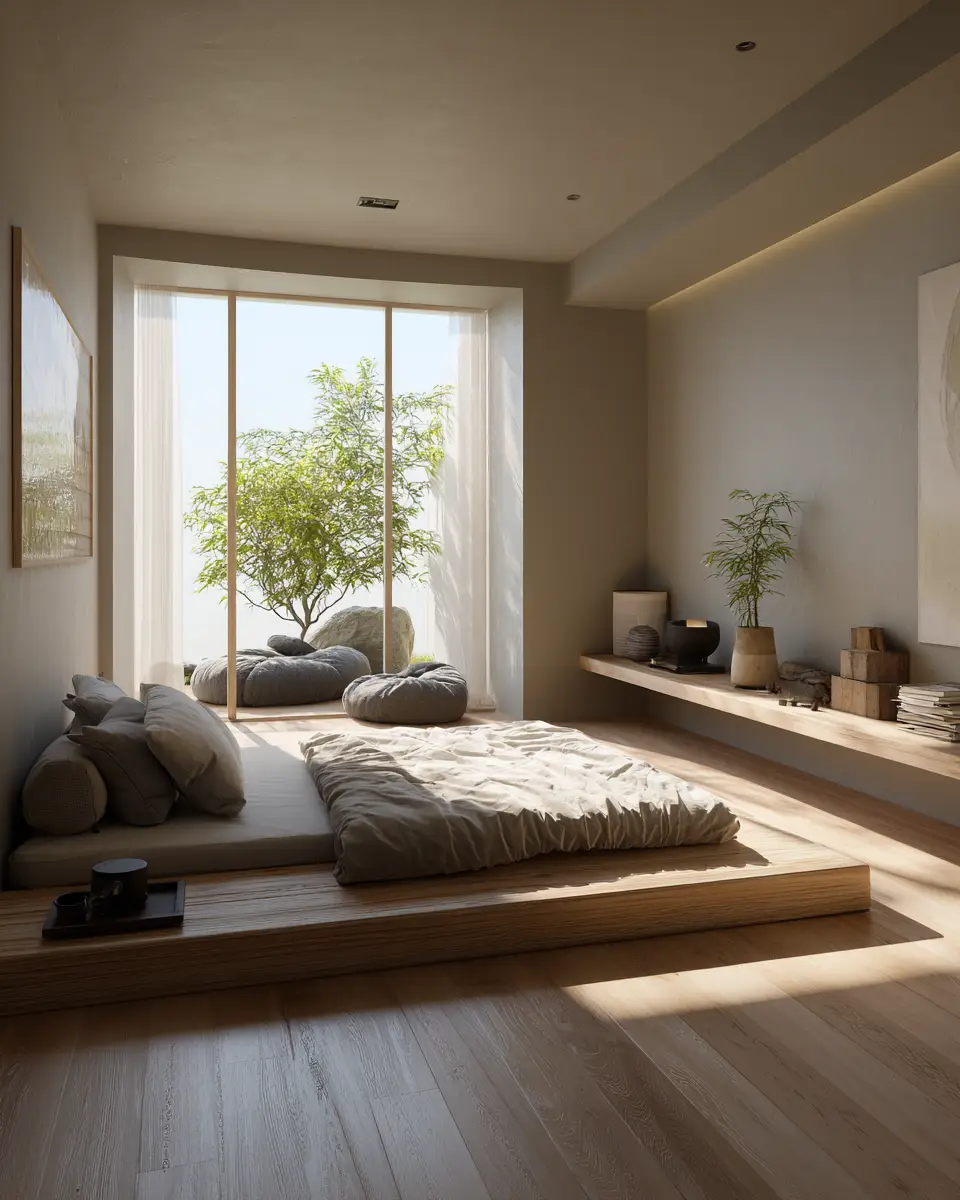
Choose a platform bed with a low height to create an open and airy feel. Complement it with bedside tables that have a simple silhouette, avoiding ornate details that can disrupt the peaceful vibe.
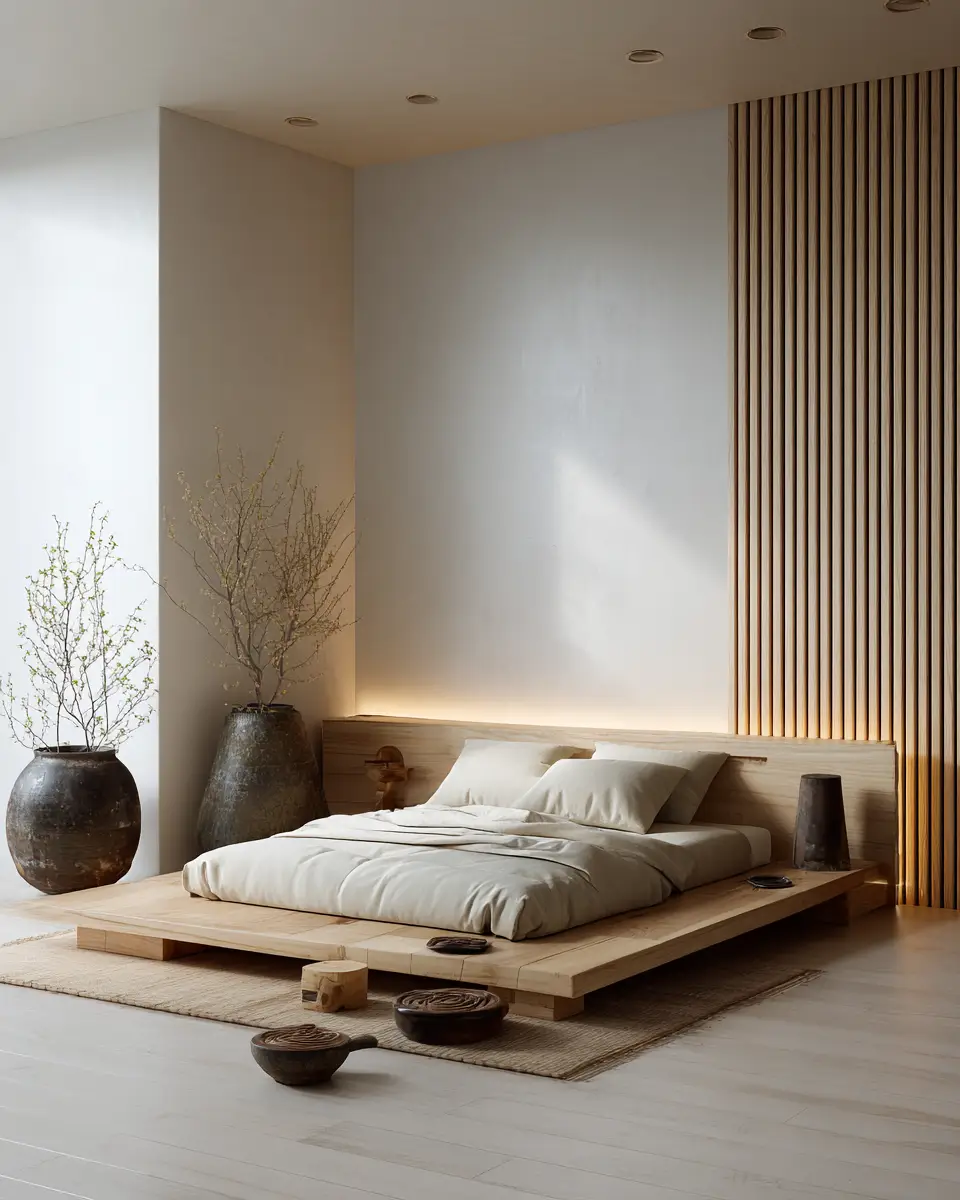
Incorporate multifunctional furniture, such as a bench with storage or an ottoman that can serve as both seating and a table. This versatility helps keep the space organized and free from unnecessary clutter.
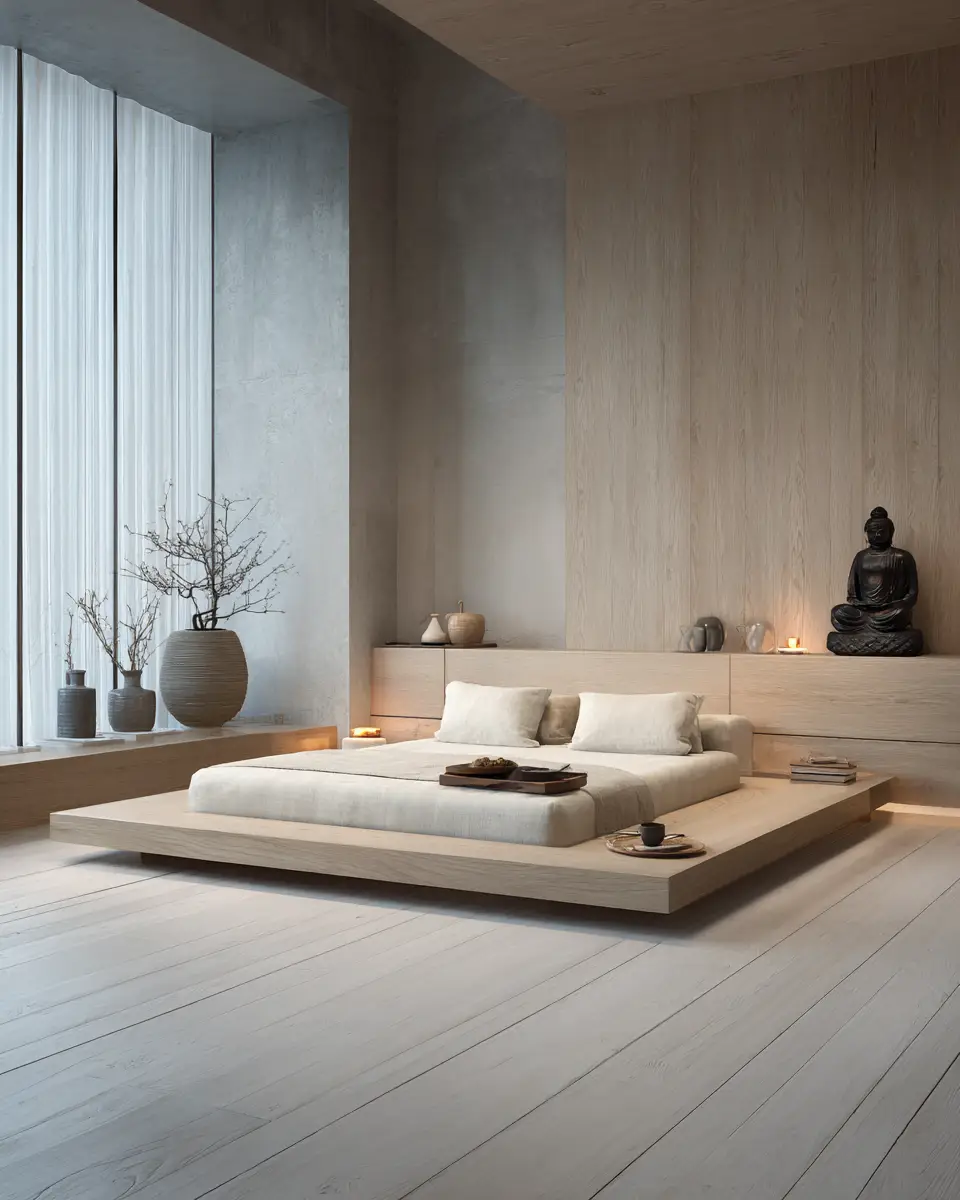
Arranging furniture to create clear pathways is crucial for maintaining a sense of openness. Keep furniture away from walls to encourage a cozy, inviting atmosphere while allowing for easy movement within the space.
Soft Lighting
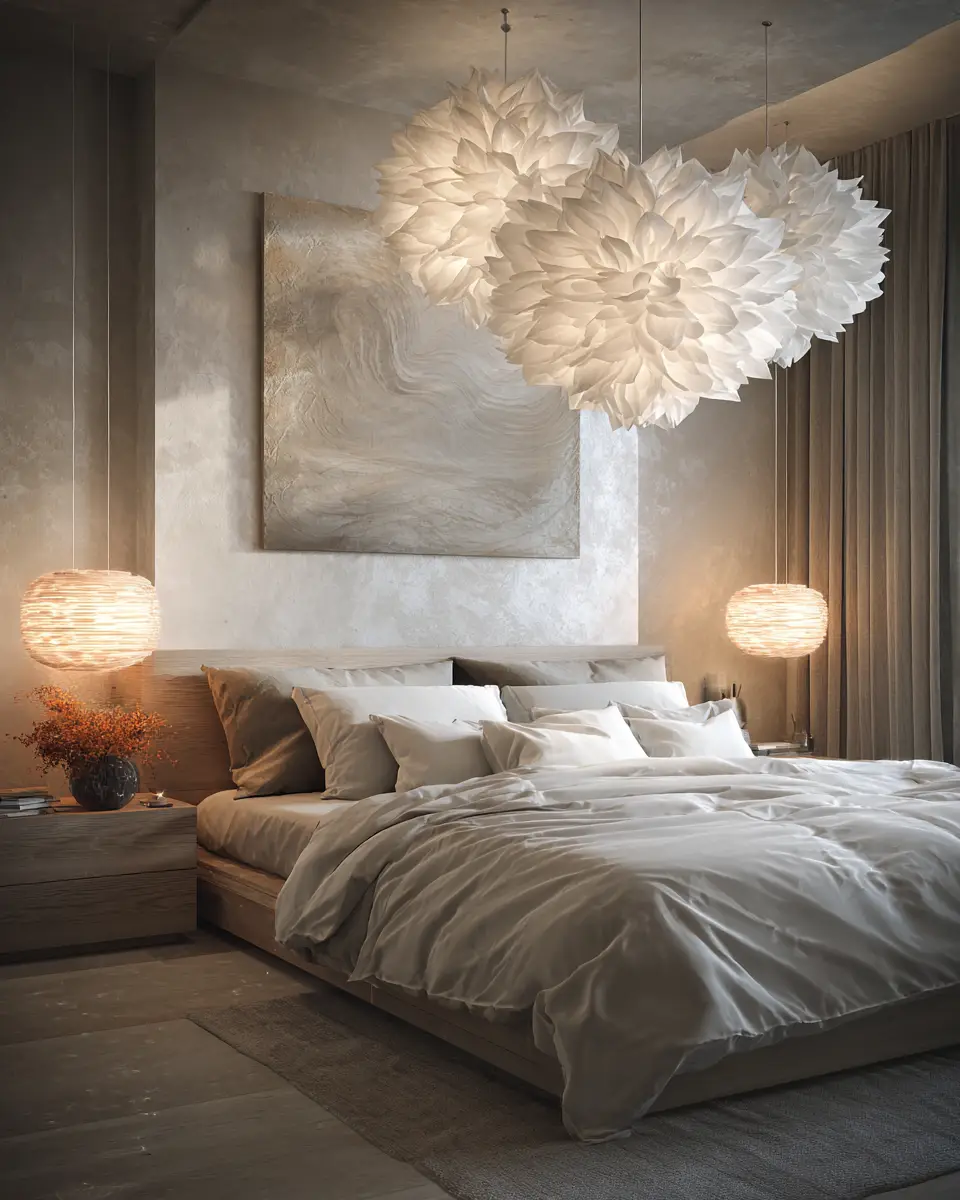
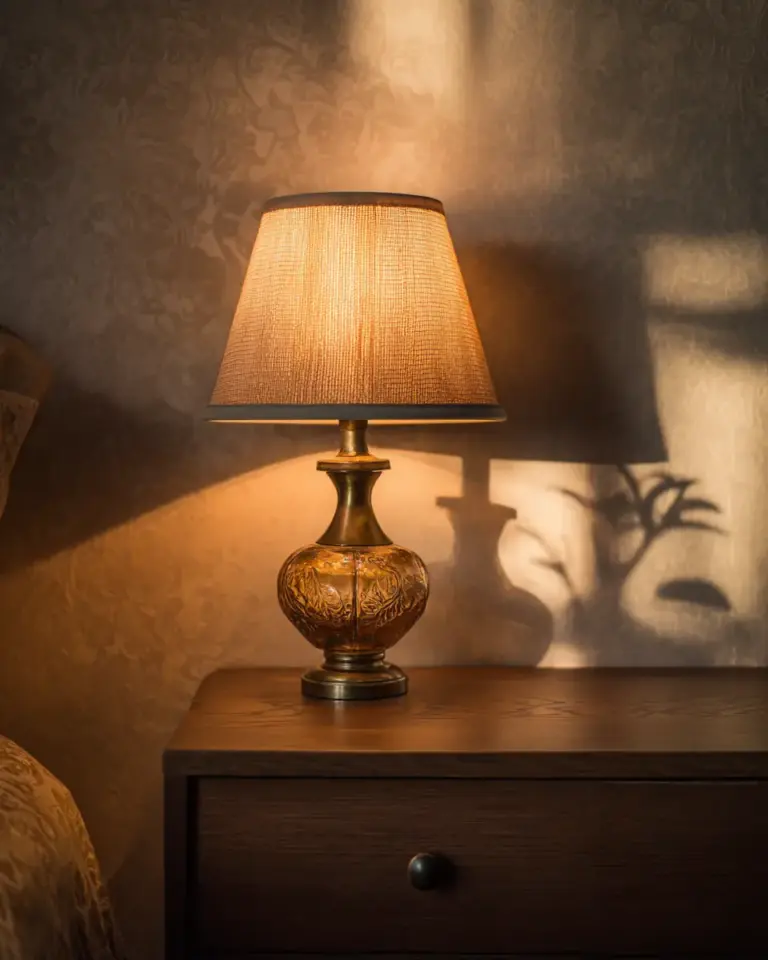
Warm, diffused lighting from elegant pendant fixtures and bedside lamps creates an inviting ambiance. The gentle glow minimizes harsh contrasts, enhancing the peaceful vibe of the room. Opt for fixtures with soft, rounded shapes to contribute to the calming aesthetic.
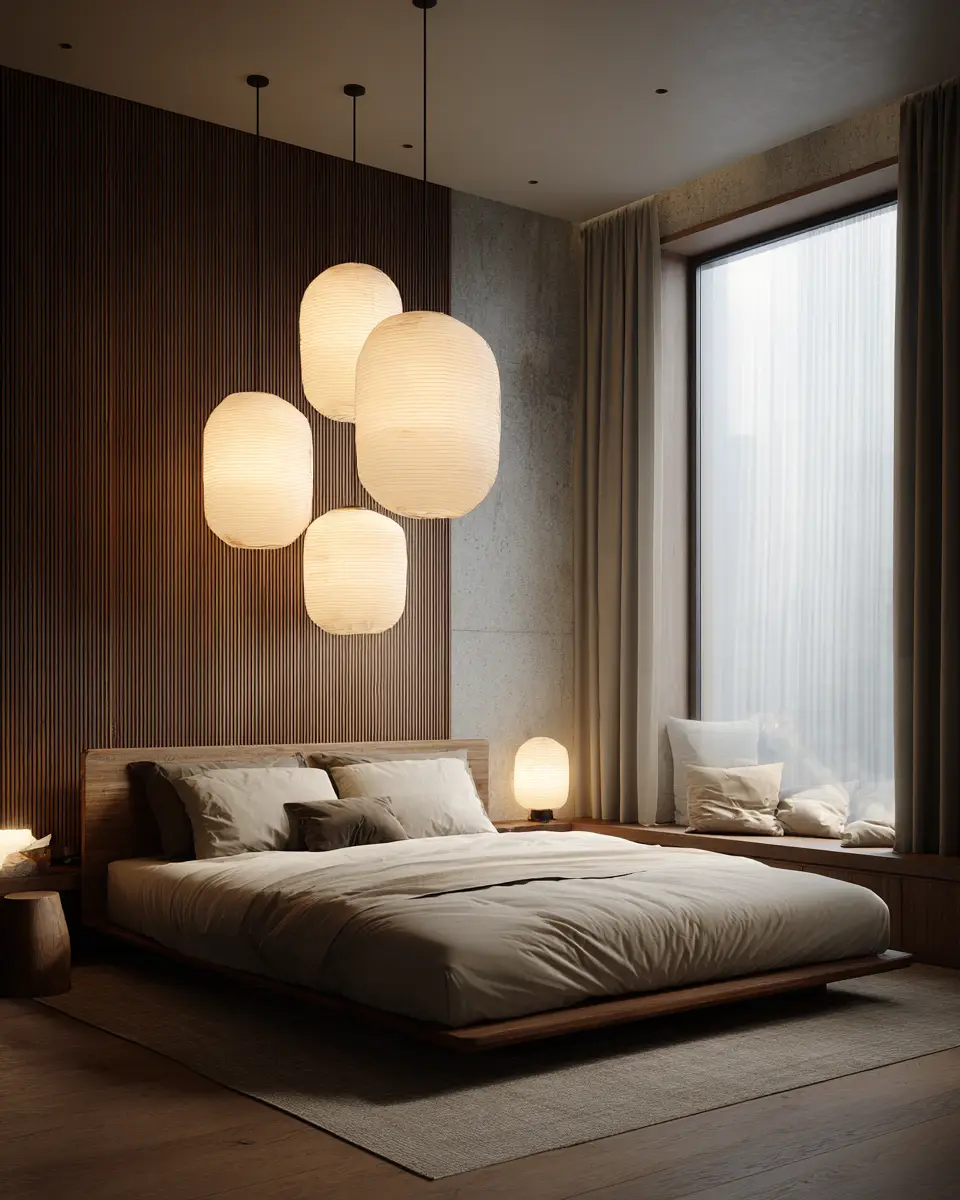
Incorporate adjustable lamps that allow you to control the intensity of light, making it easy to create a cozy nook for reading or unwinding. Use warm-toned bulbs to enhance the tranquil atmosphere.
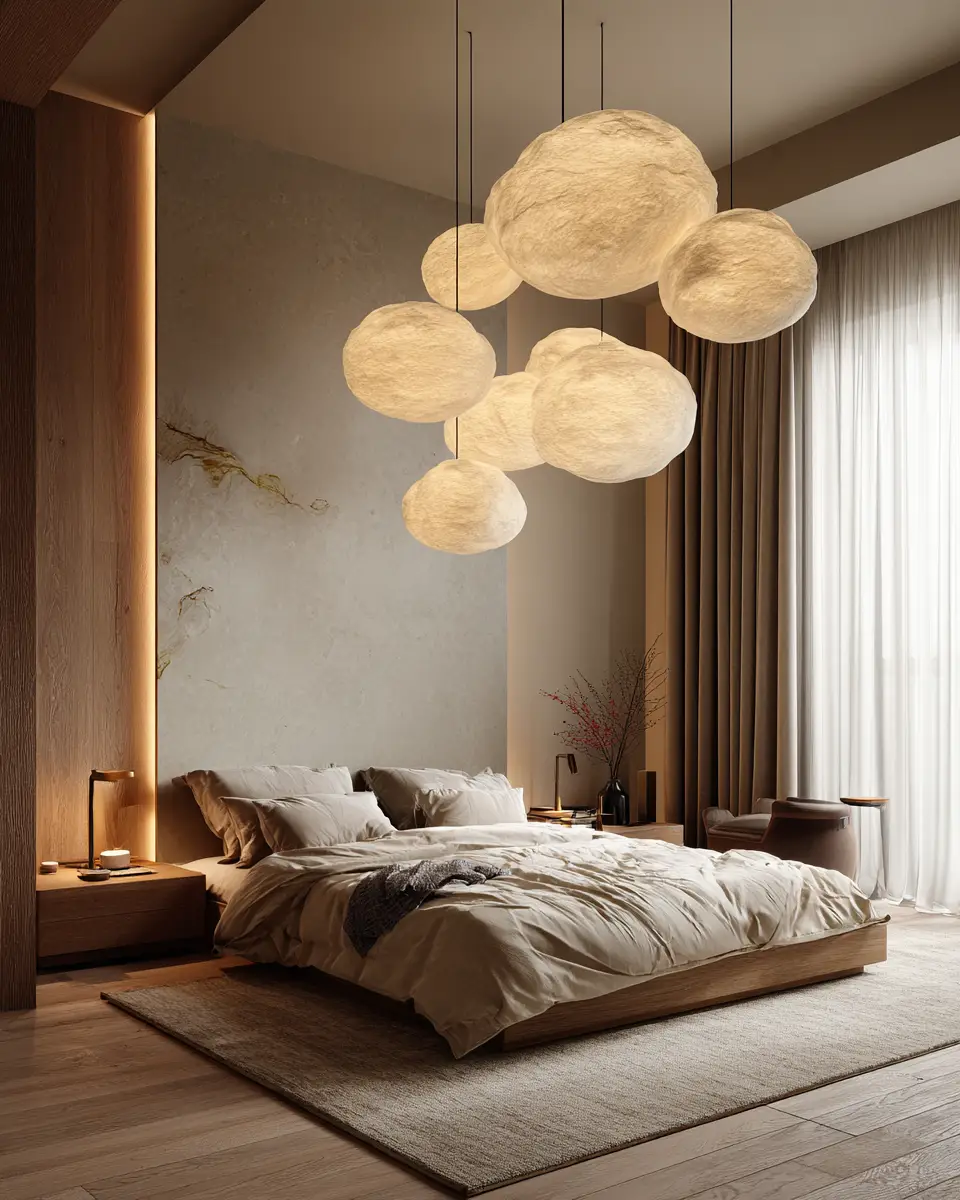
Consider adding candles or lanterns for a soft, flickering light that adds warmth and charm. Placing them strategically around the room can create a soothing environment, perfect for relaxation.
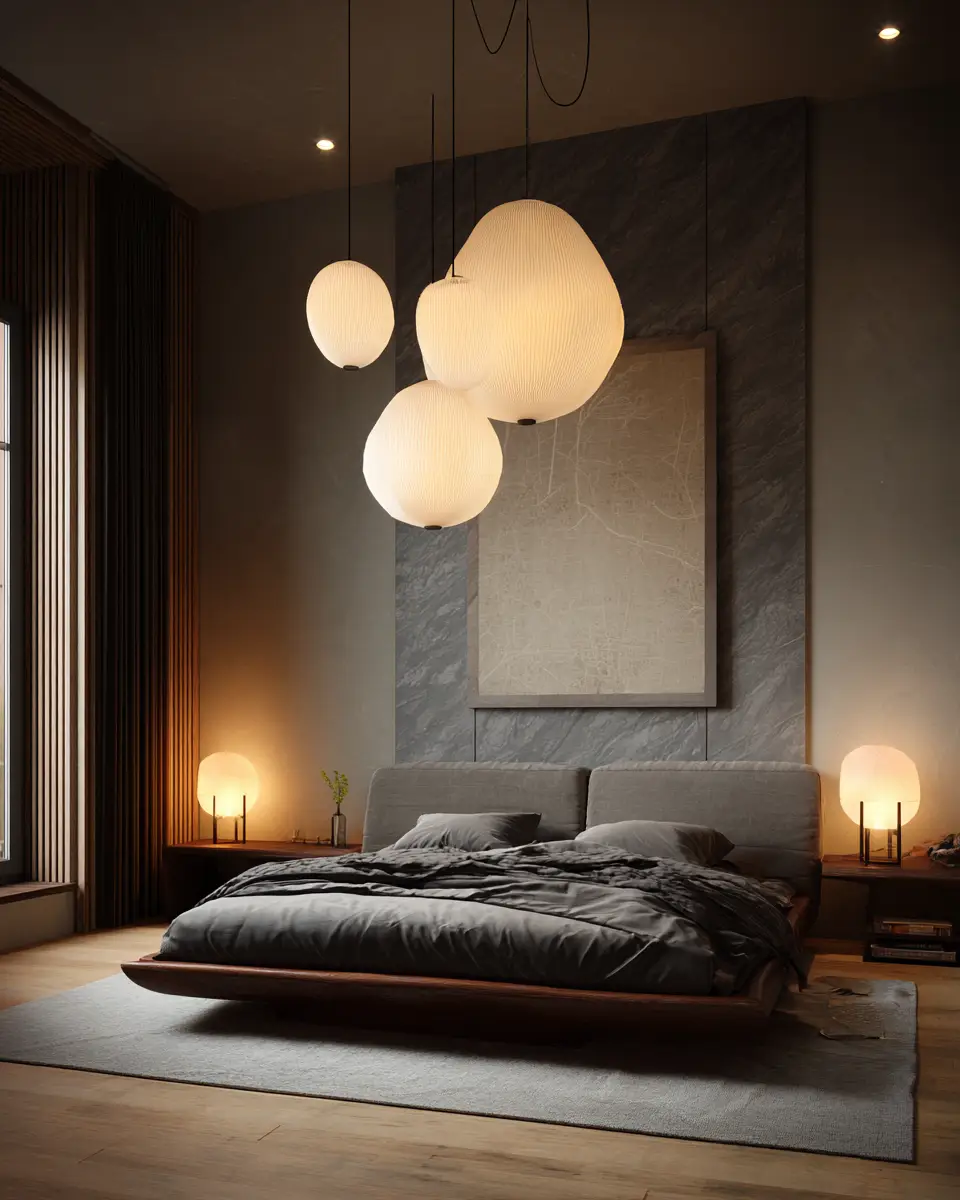
Layer your lighting sources to ensure a balanced glow that envelops the room in comfort. This approach not only enhances the decor but also elevates the overall mood of the space.
Natural Textiles
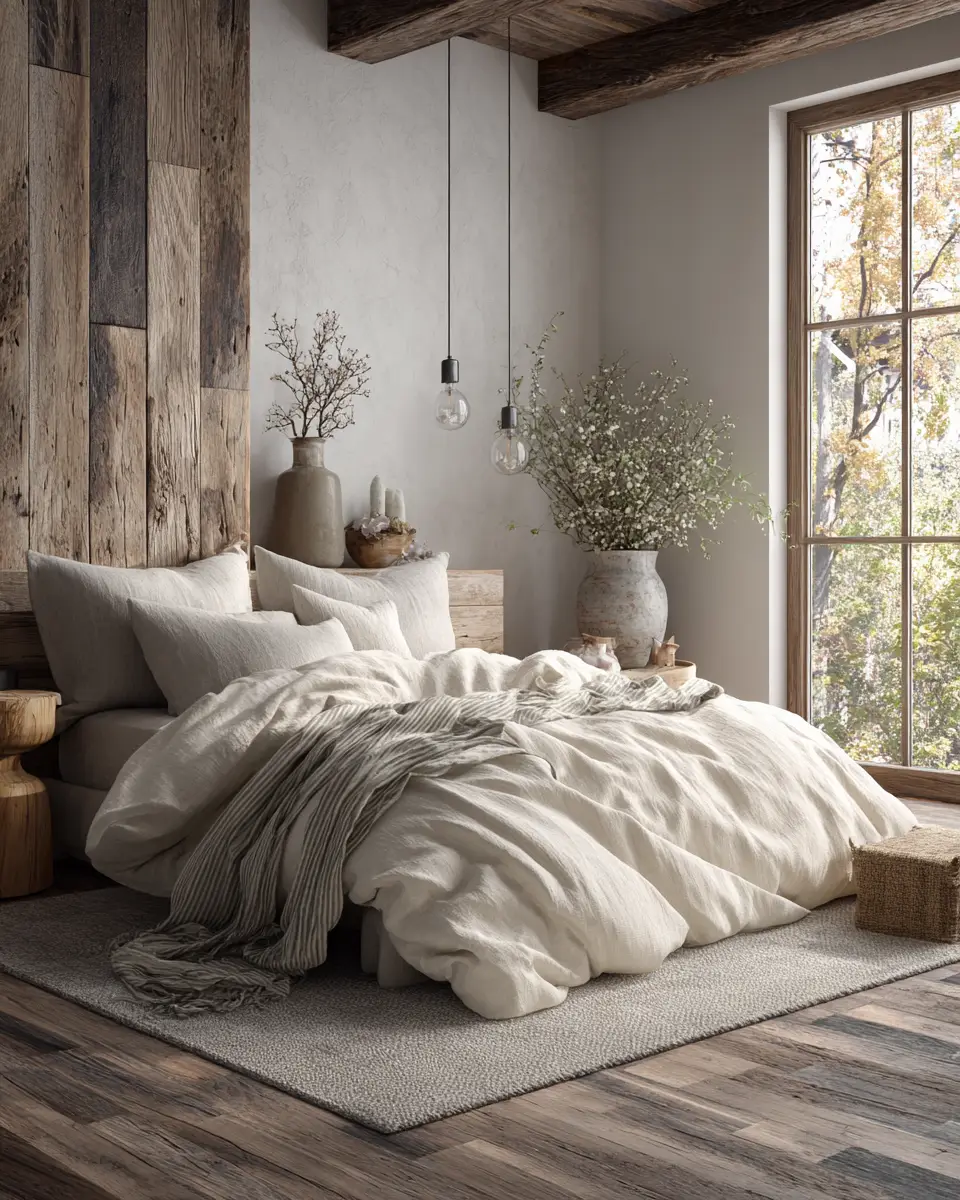
Organic cotton and linen bedding in soft taupes and creams provide a luxurious yet calming tactile experience. These materials enhance the room’s comfort while promoting a connection to nature. Choose bedding with simple patterns or solid colors to maintain a serene environment.
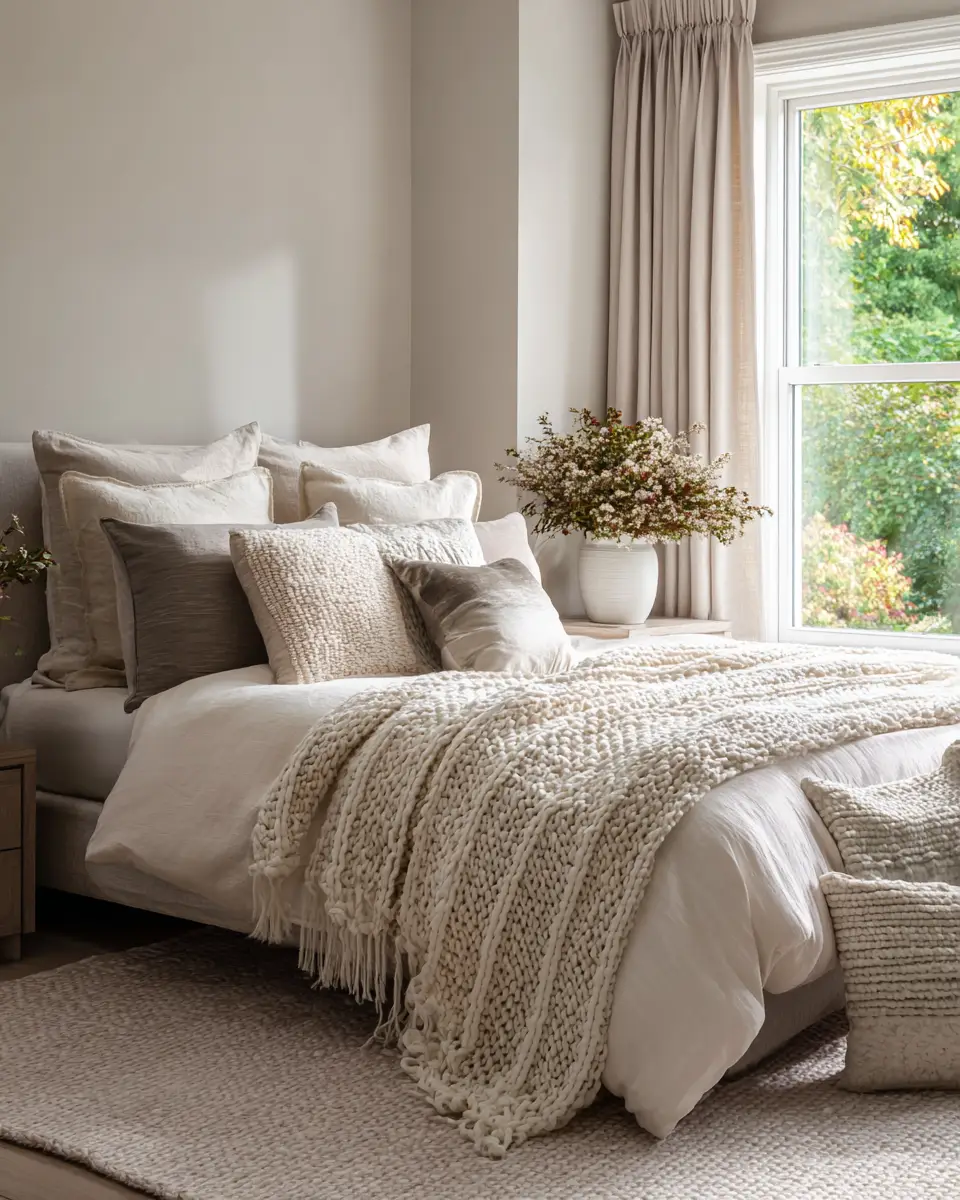
Incorporate a variety of textures through throws and cushions, selecting natural fibers that add warmth without overwhelming the space. A knitted throw or a linen pillow can enhance comfort and invite relaxation.
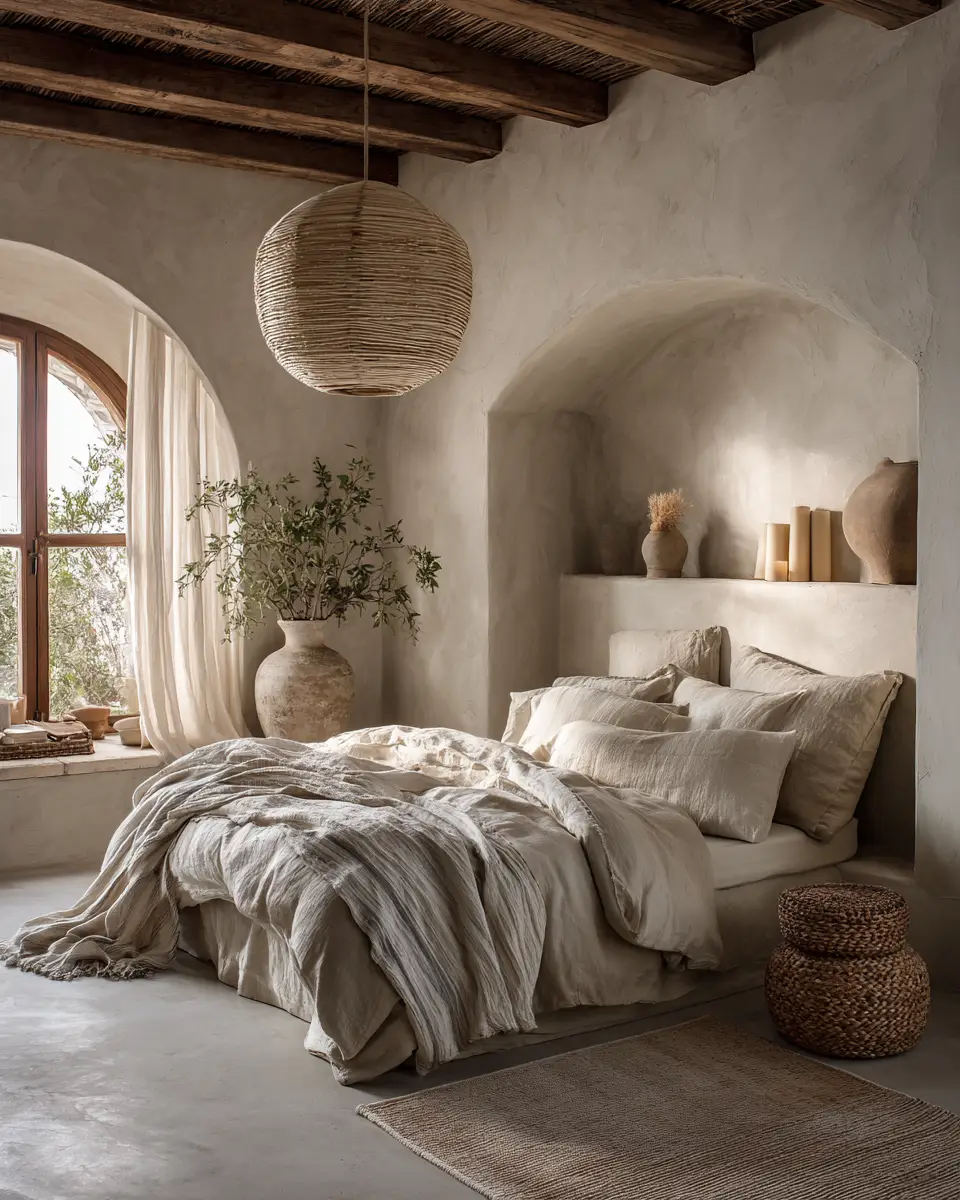
Layering textiles can also create visual interest while maintaining the neutral theme. Consider mixing different shades of cream and beige to add depth without straying from the calming aesthetic.
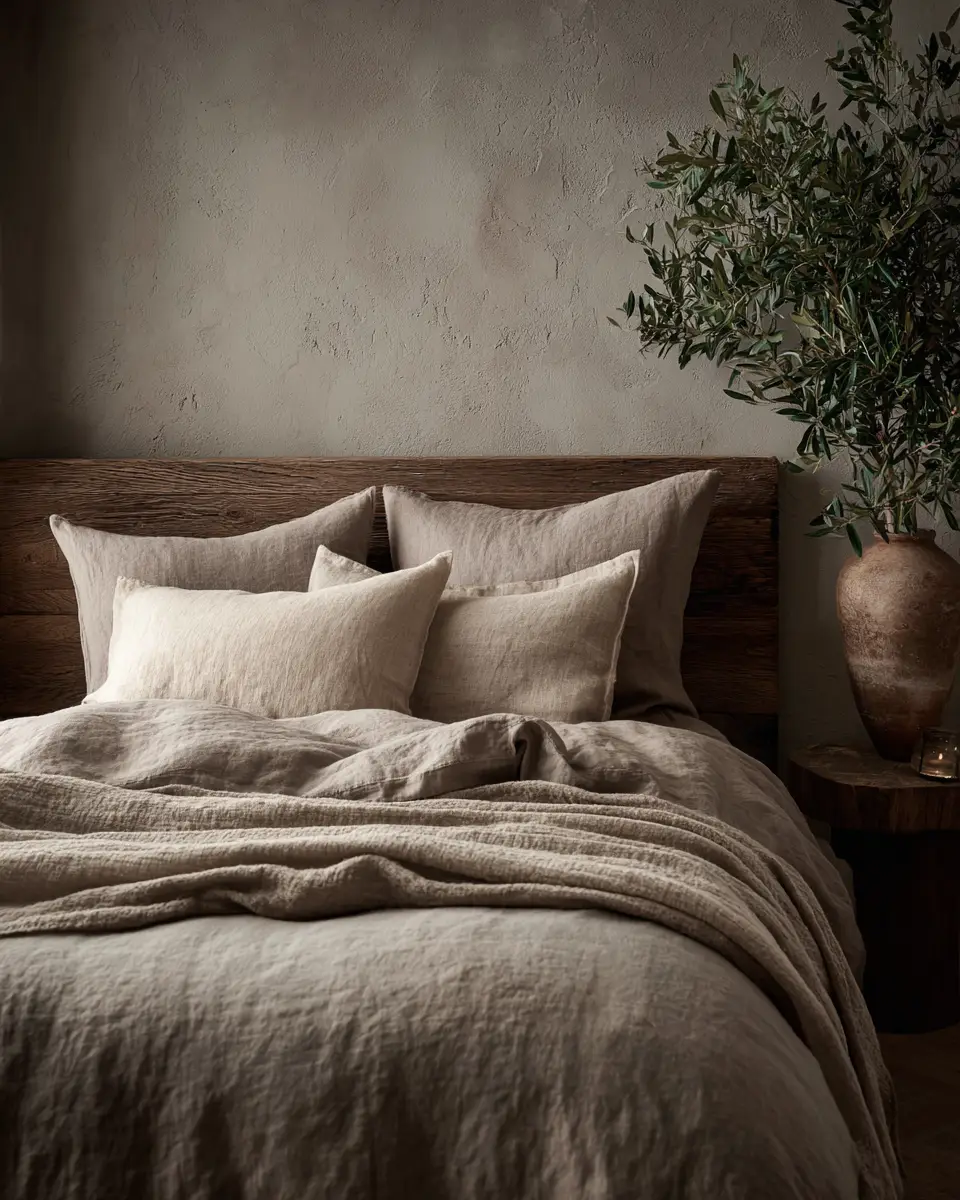
When selecting rugs, opt for natural fibers like jute or wool that feel soft underfoot and contribute to the organic feel of the room. These elements work together to create a cozy yet tranquil atmosphere.
Artwork and Decor
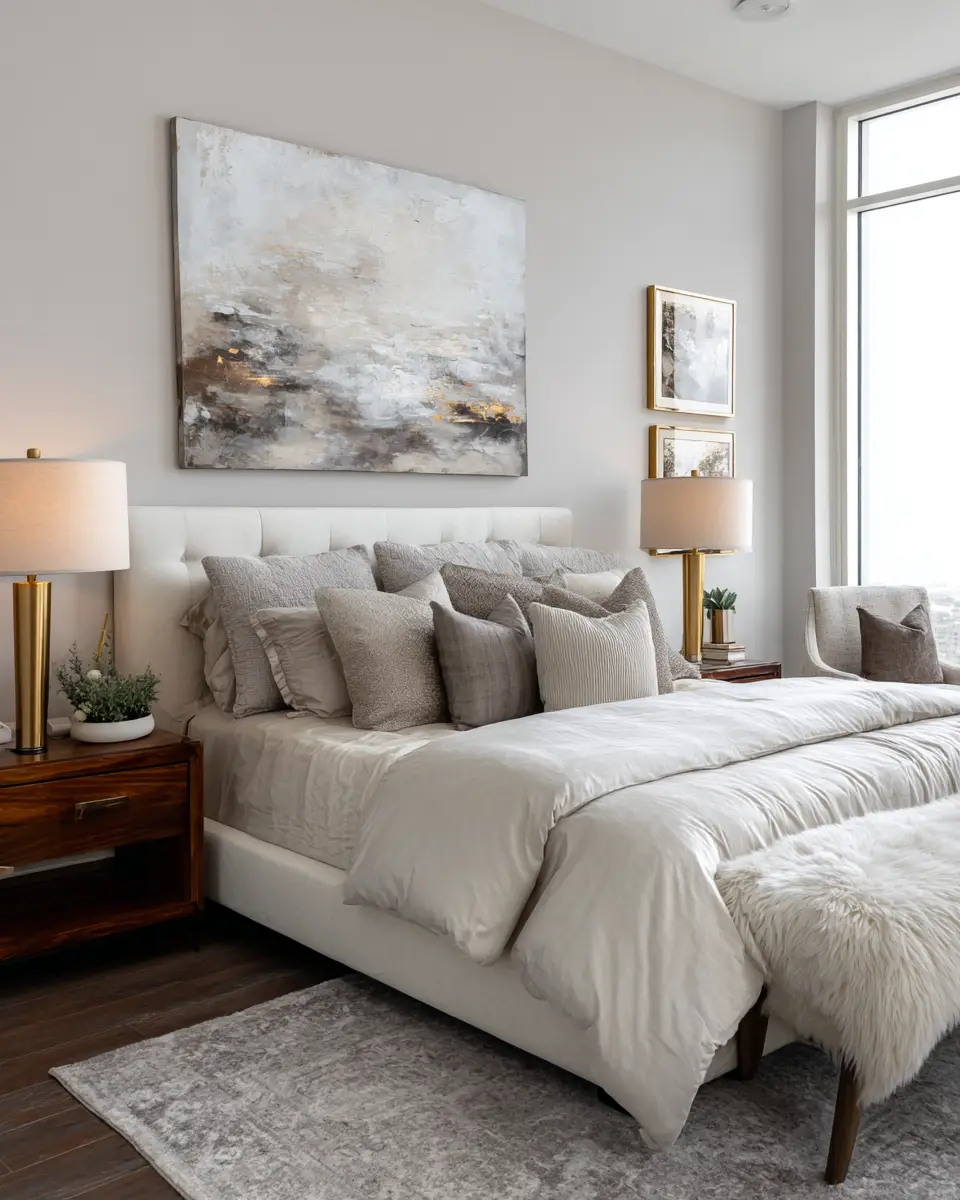
Simple, abstract wall art in monochromatic tones complements the room’s color scheme, promoting a sense of harmony. Art pieces serve as focal points without overwhelming the serene atmosphere. Choose artworks that evoke calm feelings, such as landscapes or minimalist designs.
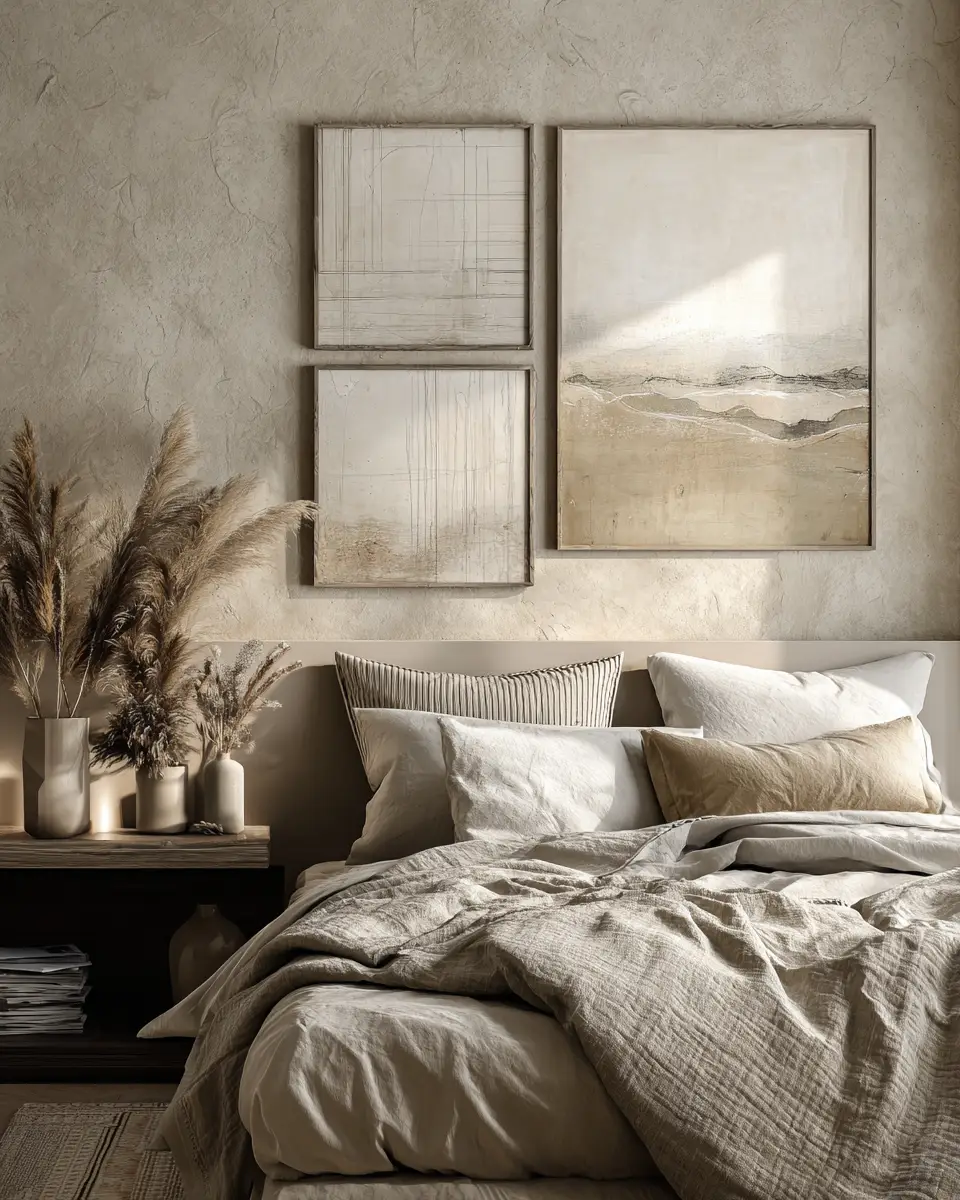
Consider creating a gallery wall with a few selected pieces, allowing the negative space to breathe and maintain the overall tranquility of the room. The arrangement should feel balanced and intentional.
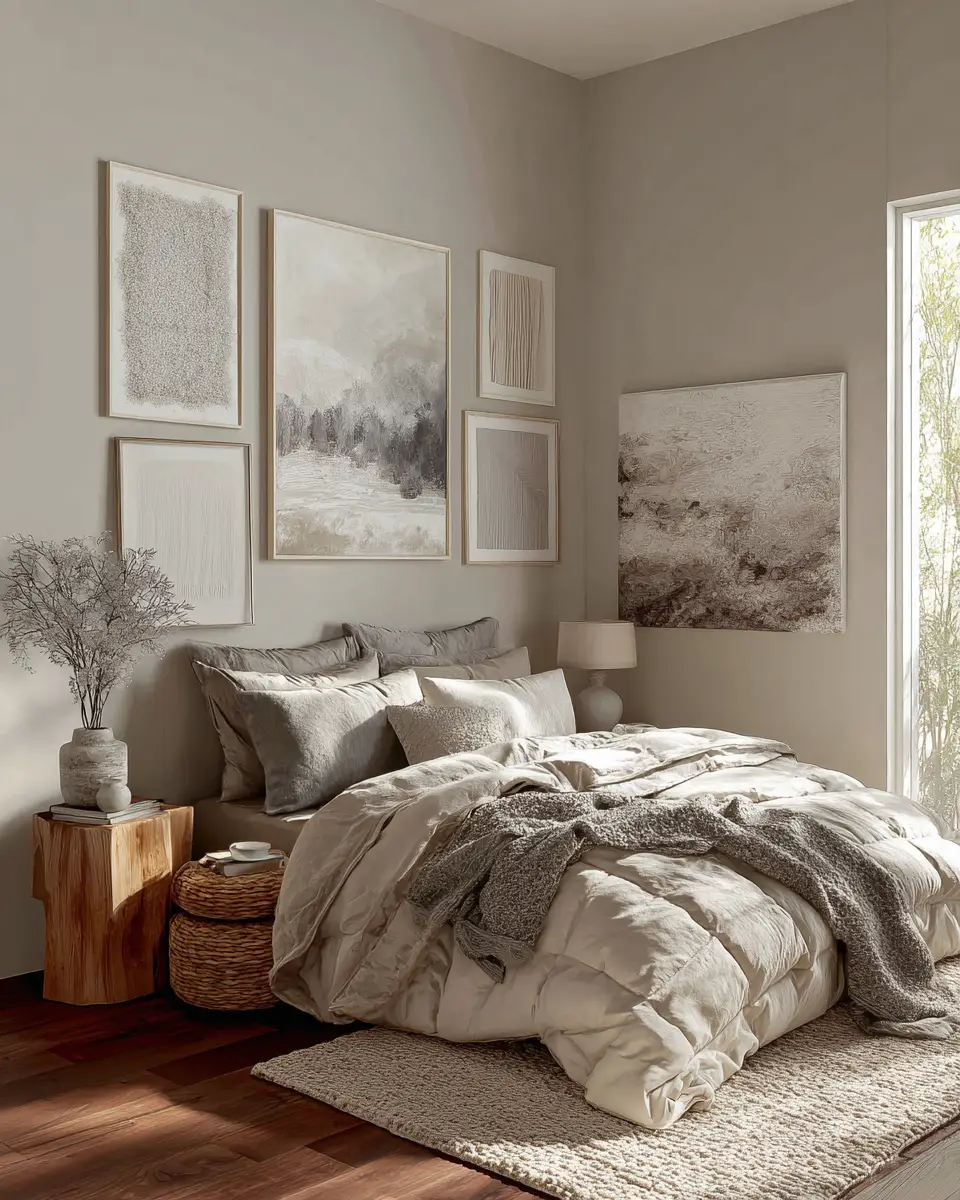
Incorporate decorative accents like ceramic vases or sculptural pieces that align with the neutral palette. These can serve as conversation starters while enhancing the aesthetic of the space.
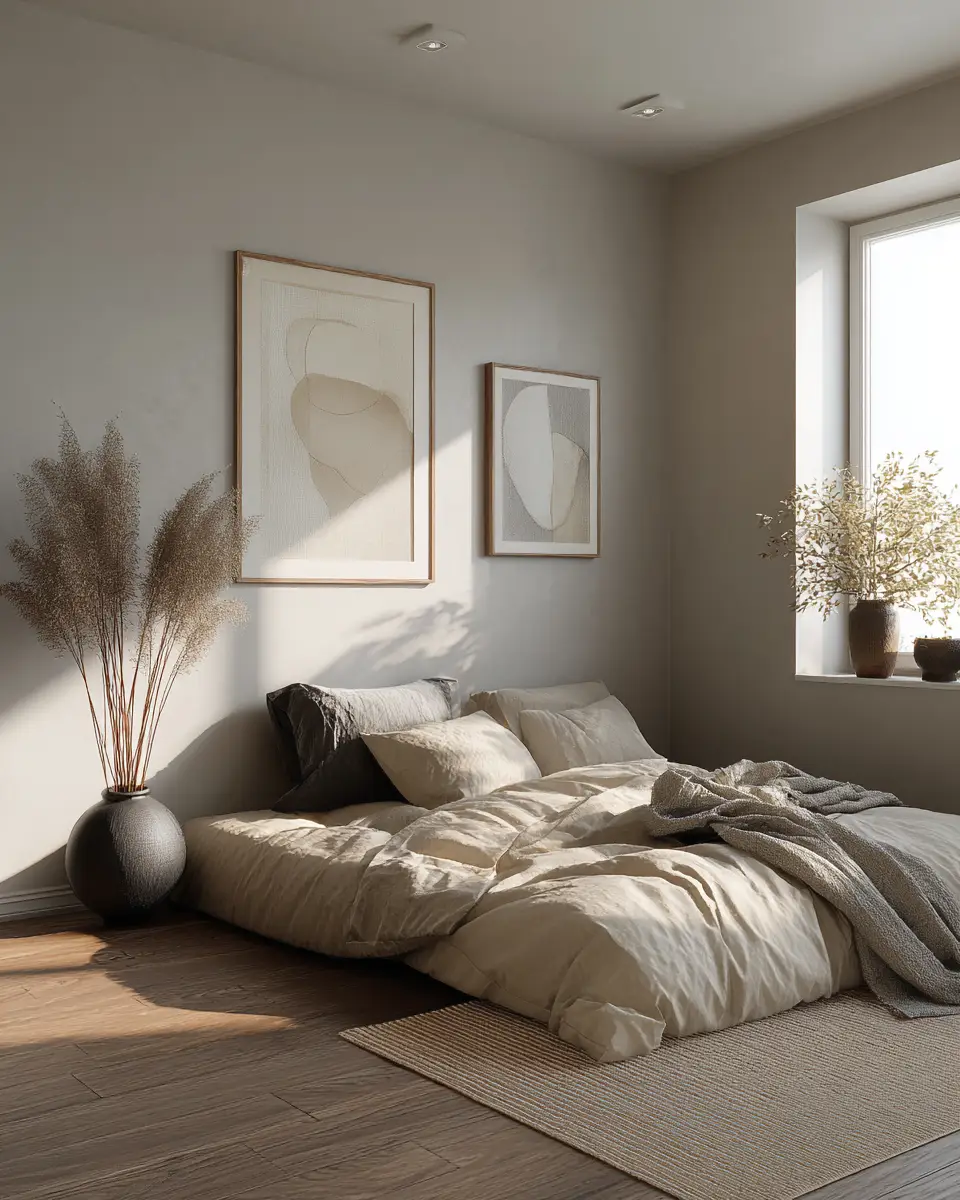
Be mindful of the placement of art and decor. Hang pieces at eye level to create a cohesive look that draws the eye without creating visual clutter.
Textured Accents
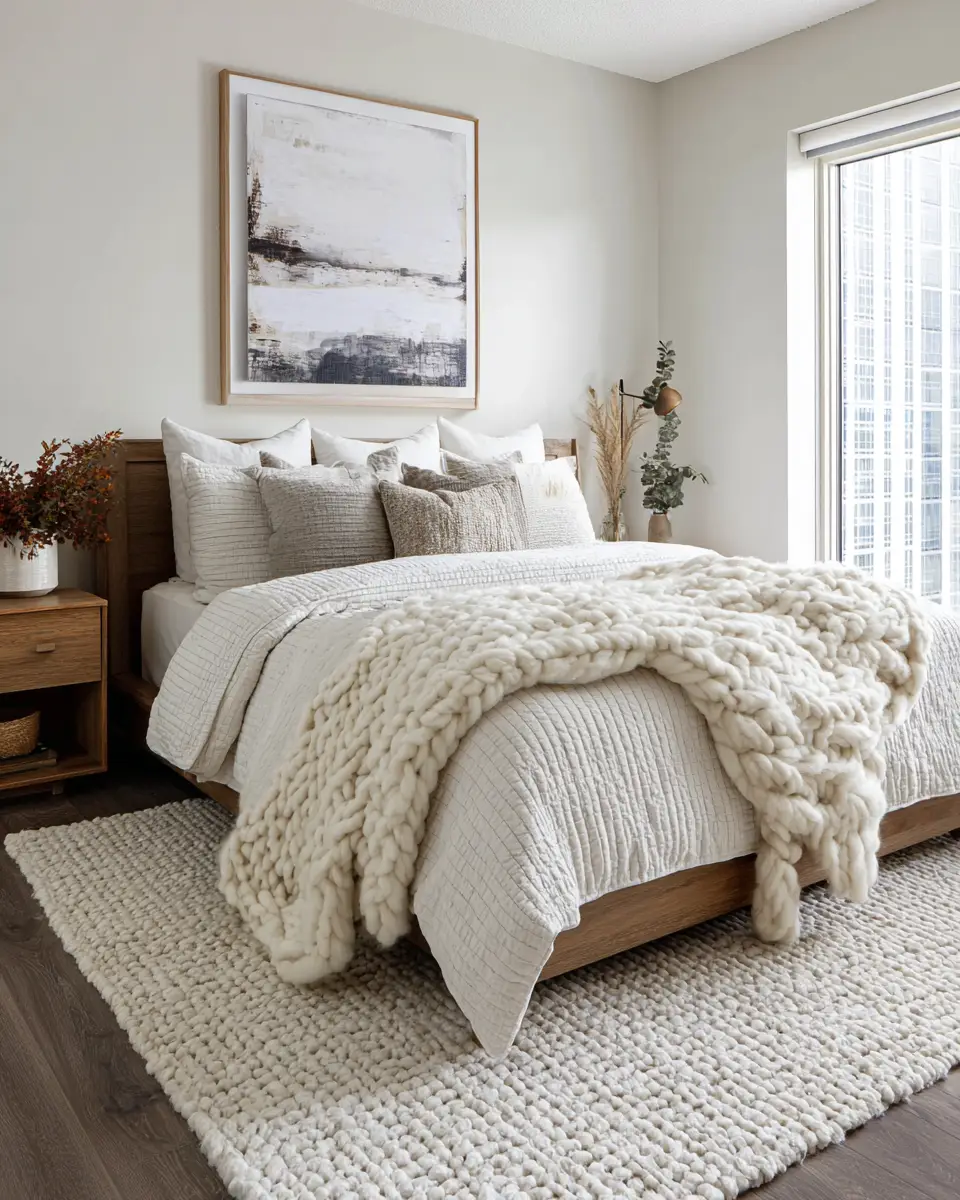
A soft area rug with subtle patterns underfoot adds warmth and coziness, inviting relaxation. Textured elements create visual interest while maintaining a serene aesthetic that invites calm. Choose rugs in natural fibers that feel plush yet understated, enhancing the overall comfort of the room.
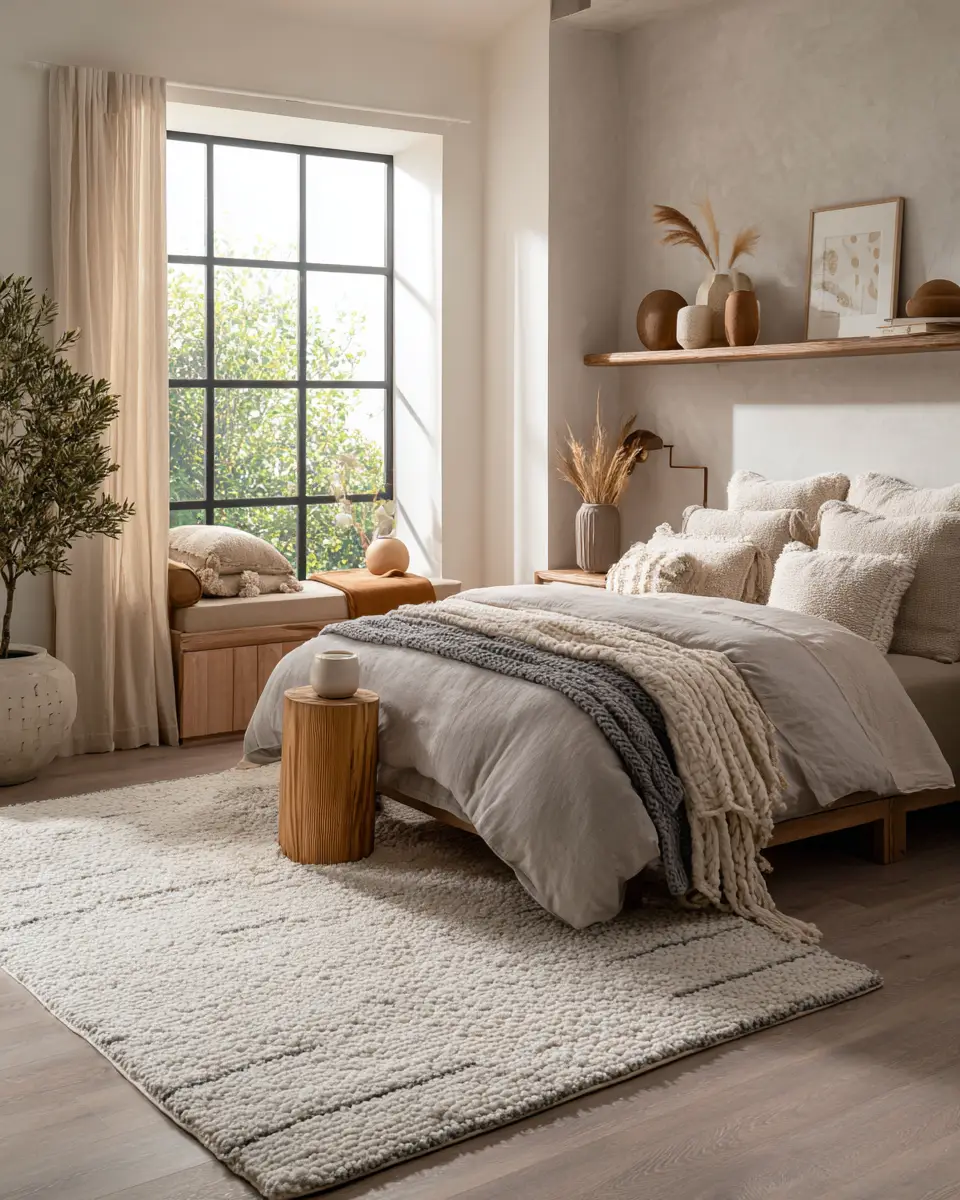
Incorporate textured throw blankets and cushions to add layers of softness. Mixing textures like knits, wovens, and smooth fabrics can create a rich and inviting feel without being overwhelming.
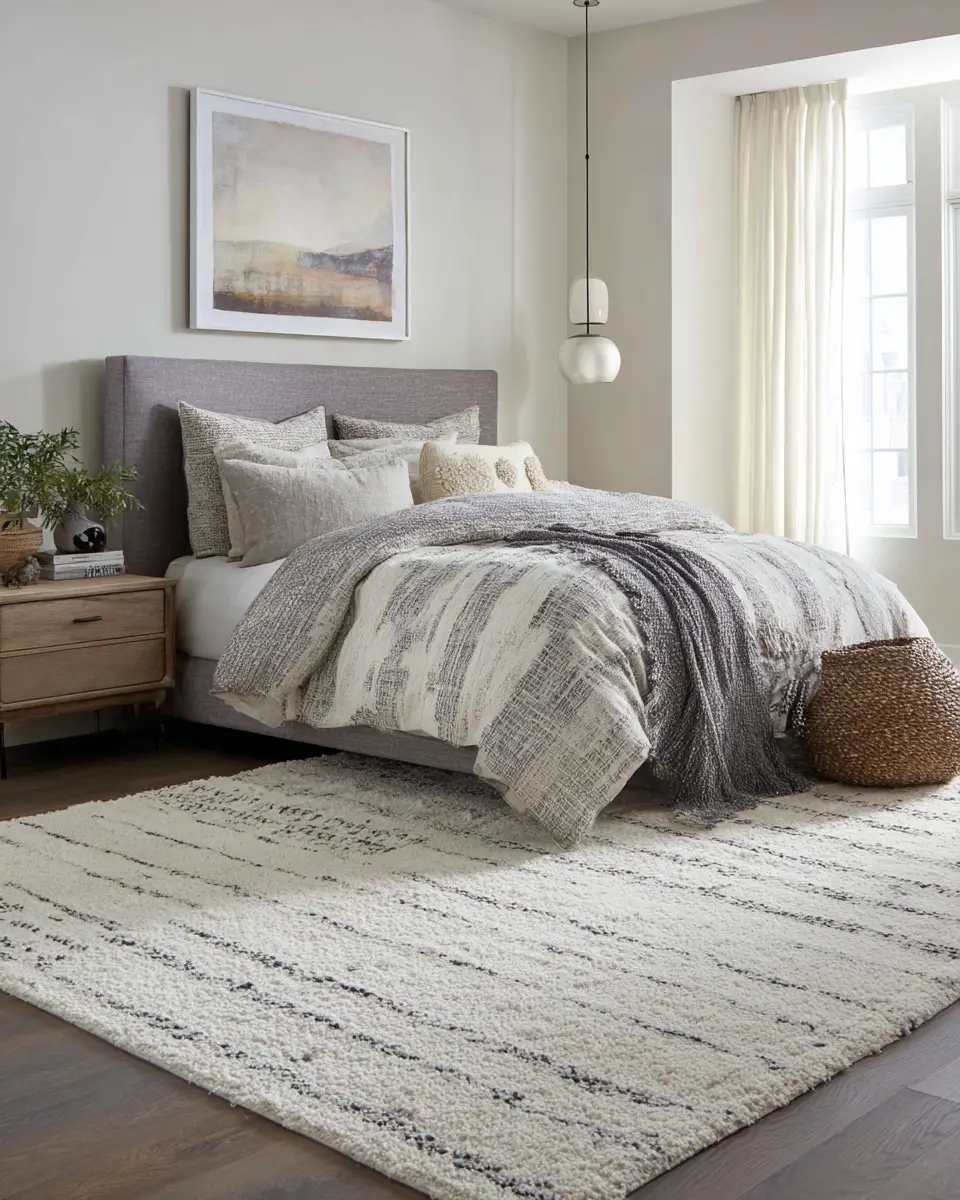
Consider adding textured wall hangings or woven baskets to introduce organic shapes and materials. These accents contribute to a tactile experience, reinforcing the Zen philosophy of the space.
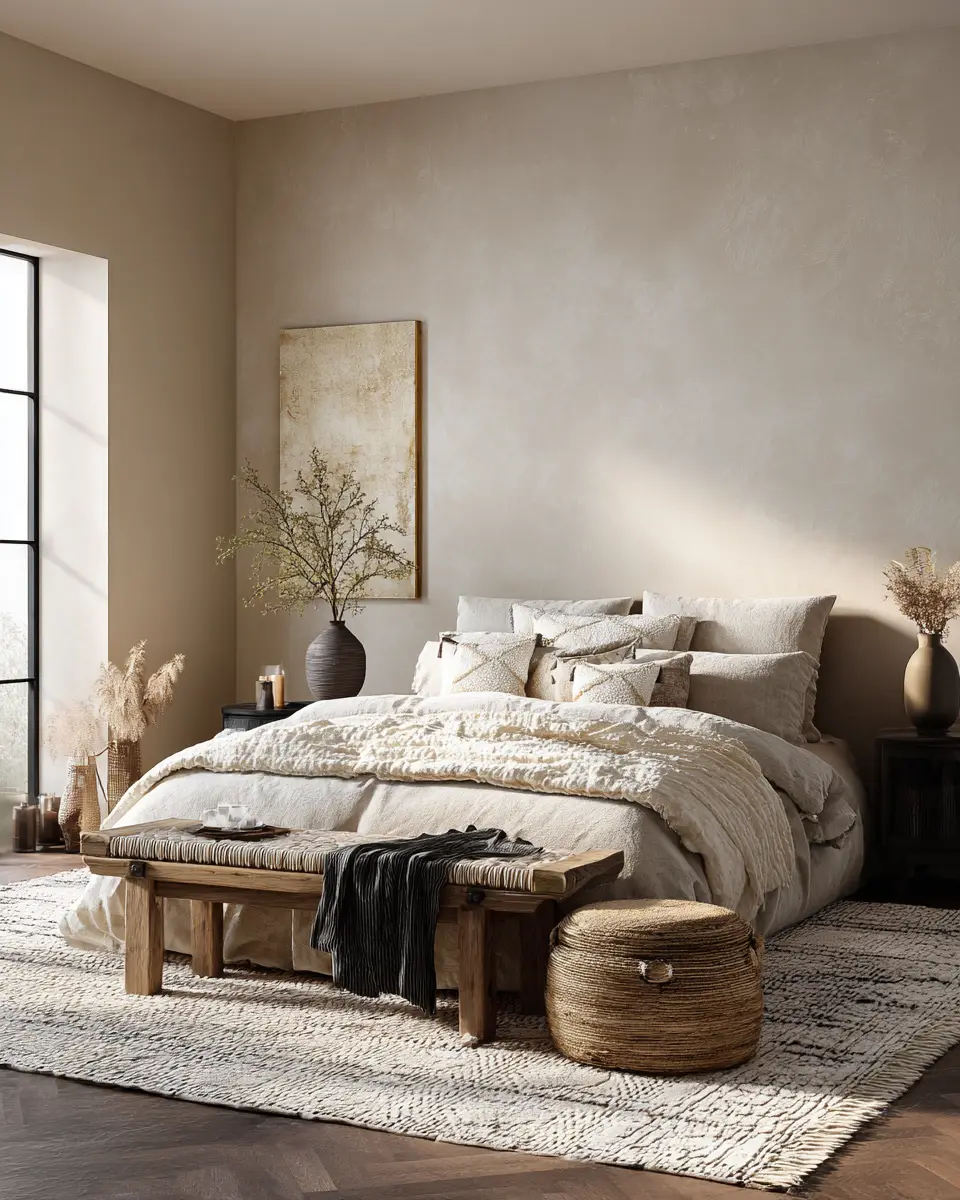
Strategically placing textured elements can soften hard surfaces and create a more inviting atmosphere, encouraging a sense of peace and relaxation throughout the room.
Functional Storage Solutions
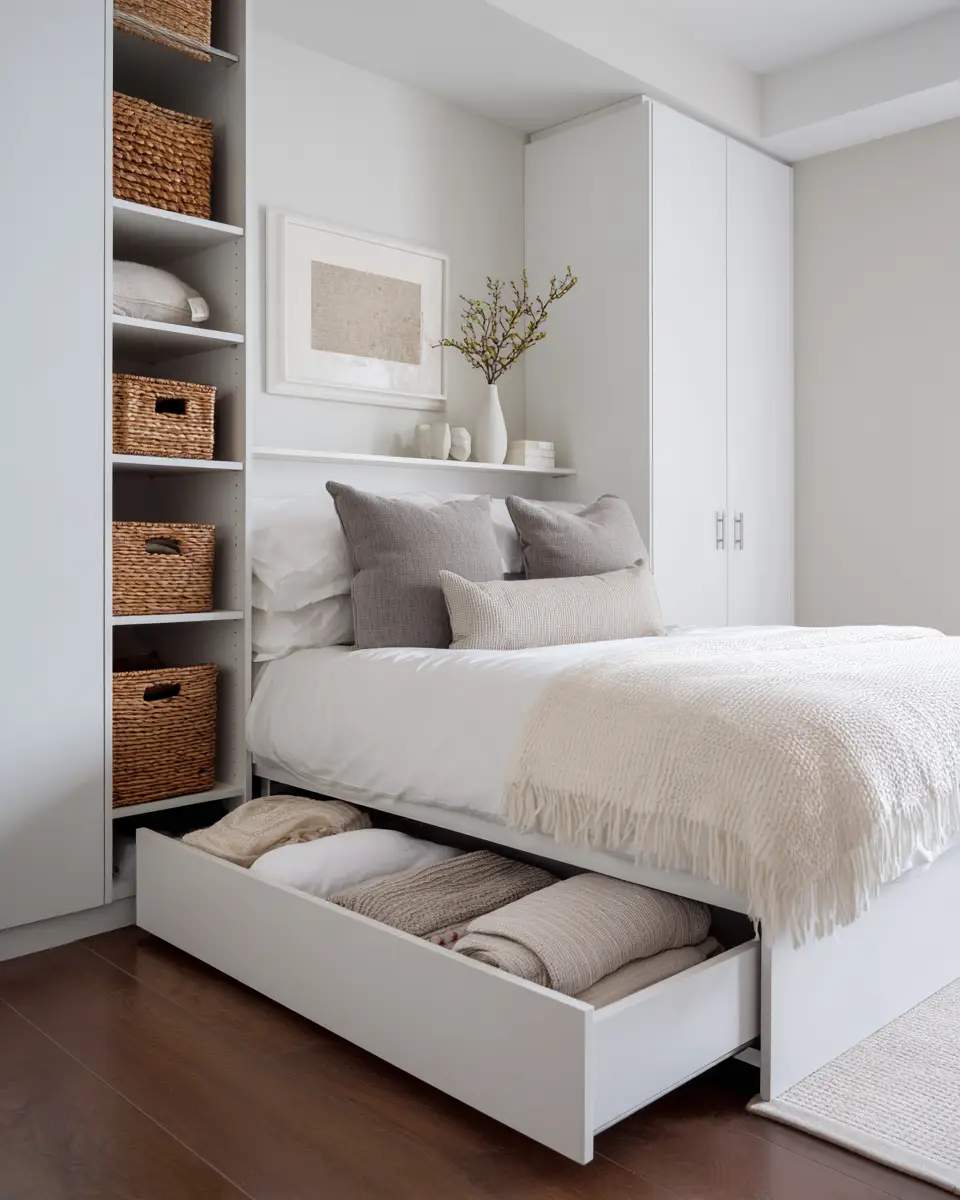
Hidden storage options, like under-bed drawers or minimalist cabinets, maintain the room’s clean lines. This organization fosters a serene environment, allowing for a clutter-free mindset. Choose furniture that doubles as storage to maximize space while minimizing visual clutter.

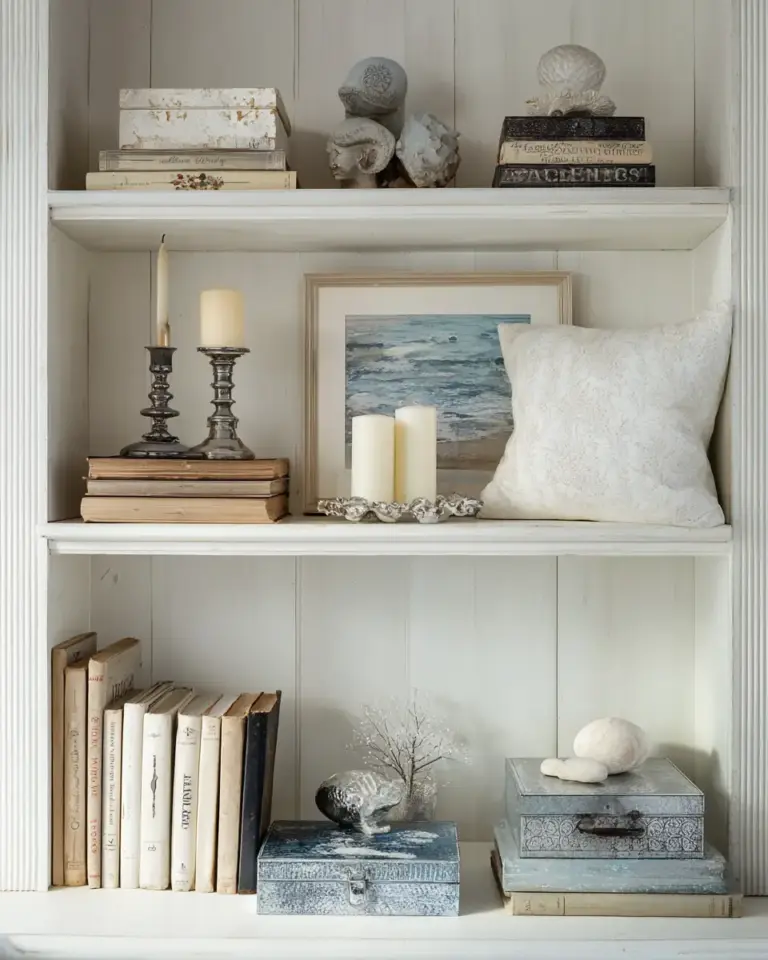
Incorporate simple shelving units that blend seamlessly with the decor. Use them to display a few curated items, keeping excess clutter at bay. This approach helps maintain a focus on tranquility while providing functional storage.
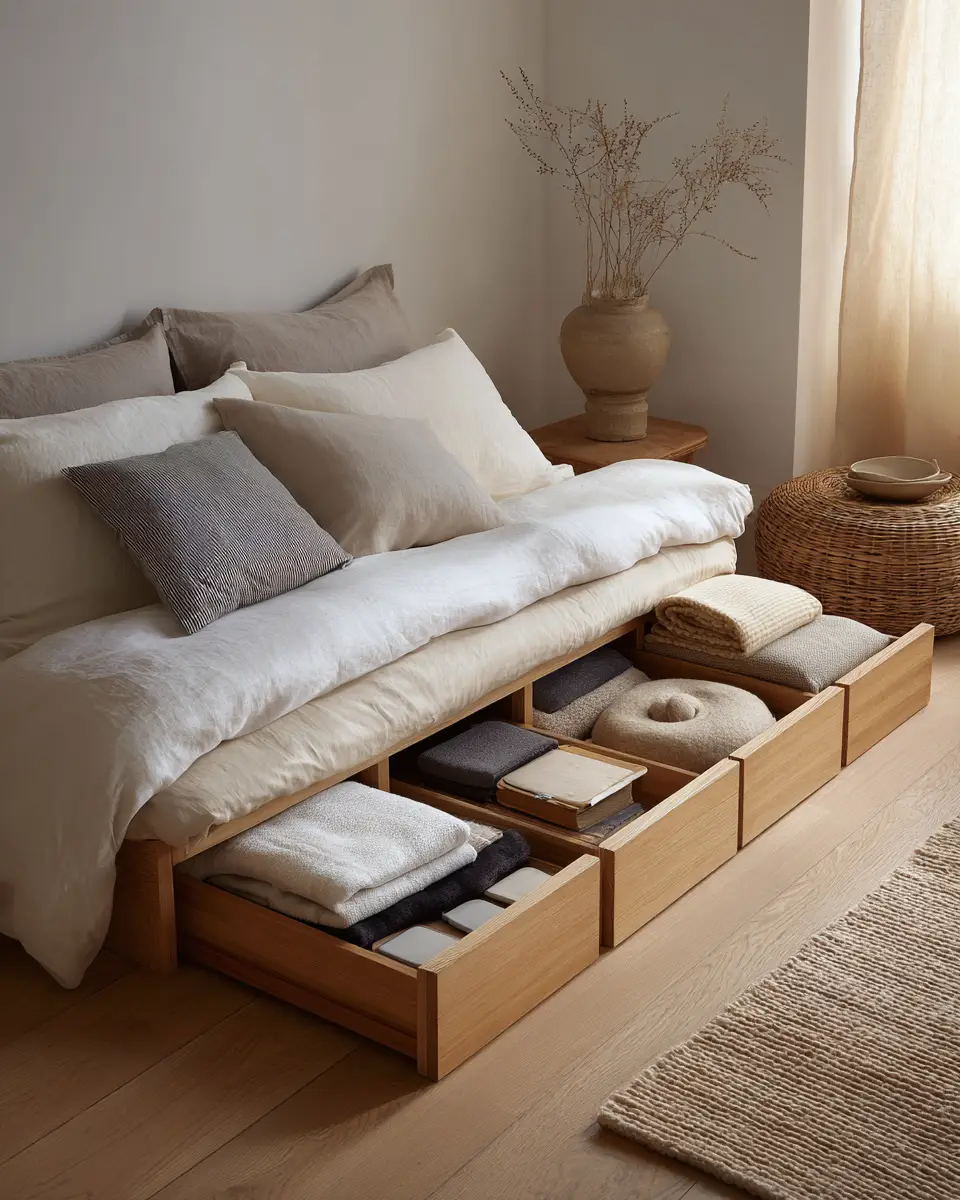
Invest in decorative boxes or baskets that can be tucked away, adding to the room’s aesthetic while keeping belongings organized. These can serve both practical and decorative purposes.

Regularly declutter your space to ensure that it remains a calm and peaceful retreat. A tidy environment enhances the Zen experience, allowing you to unwind and recharge.
Incorporating Natural Elements
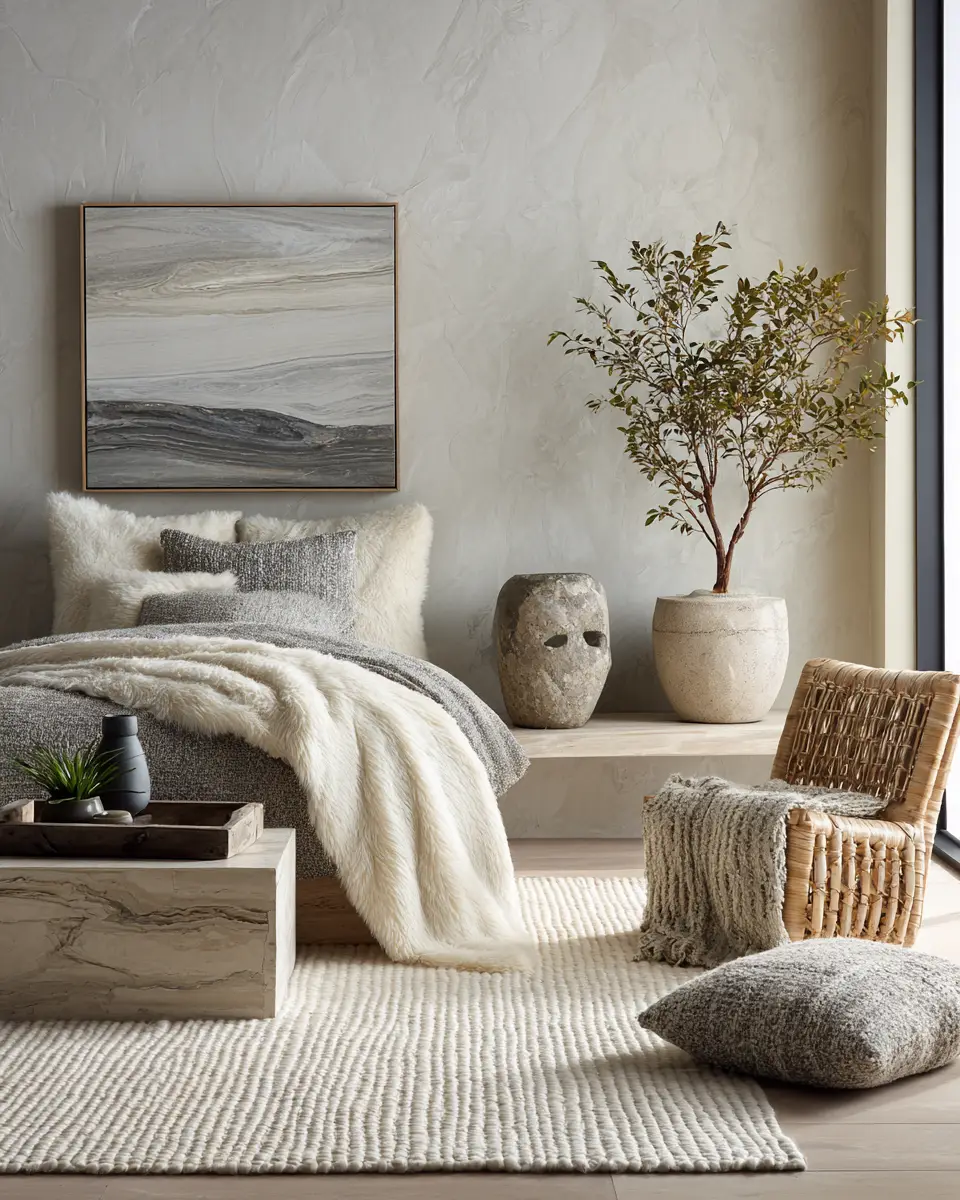
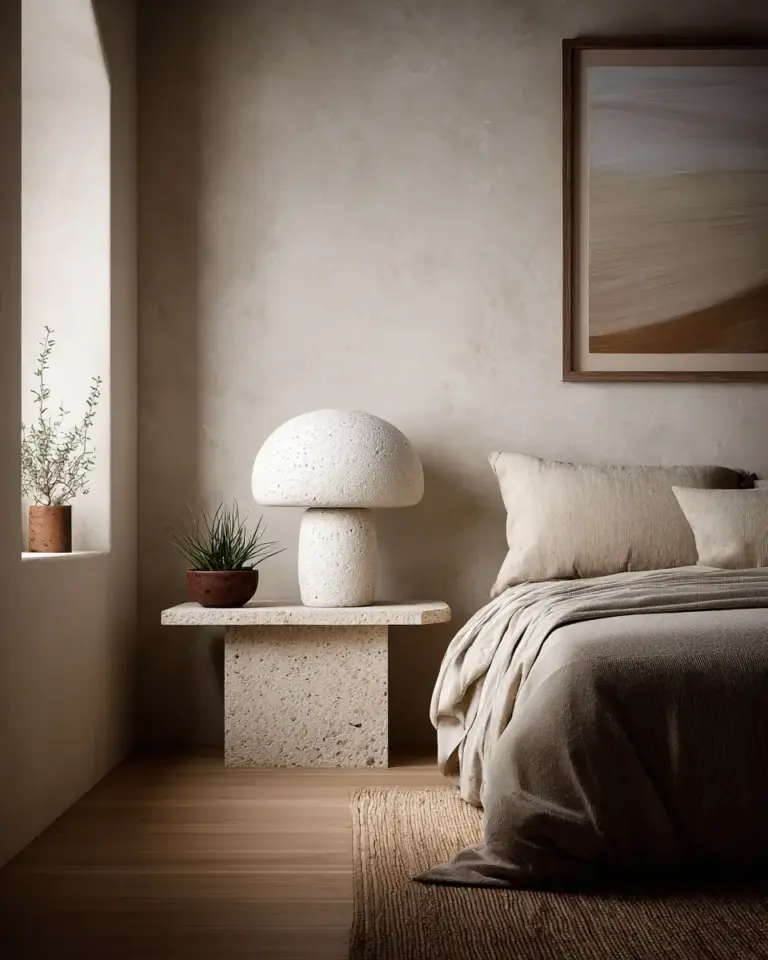
Stone or bamboo accents, like decorative trays or sculptures, bring a sense of tranquility. These materials enhance the natural aesthetic while grounding the overall design. Consider incorporating items made from reclaimed wood or stone to reinforce the connection to nature.
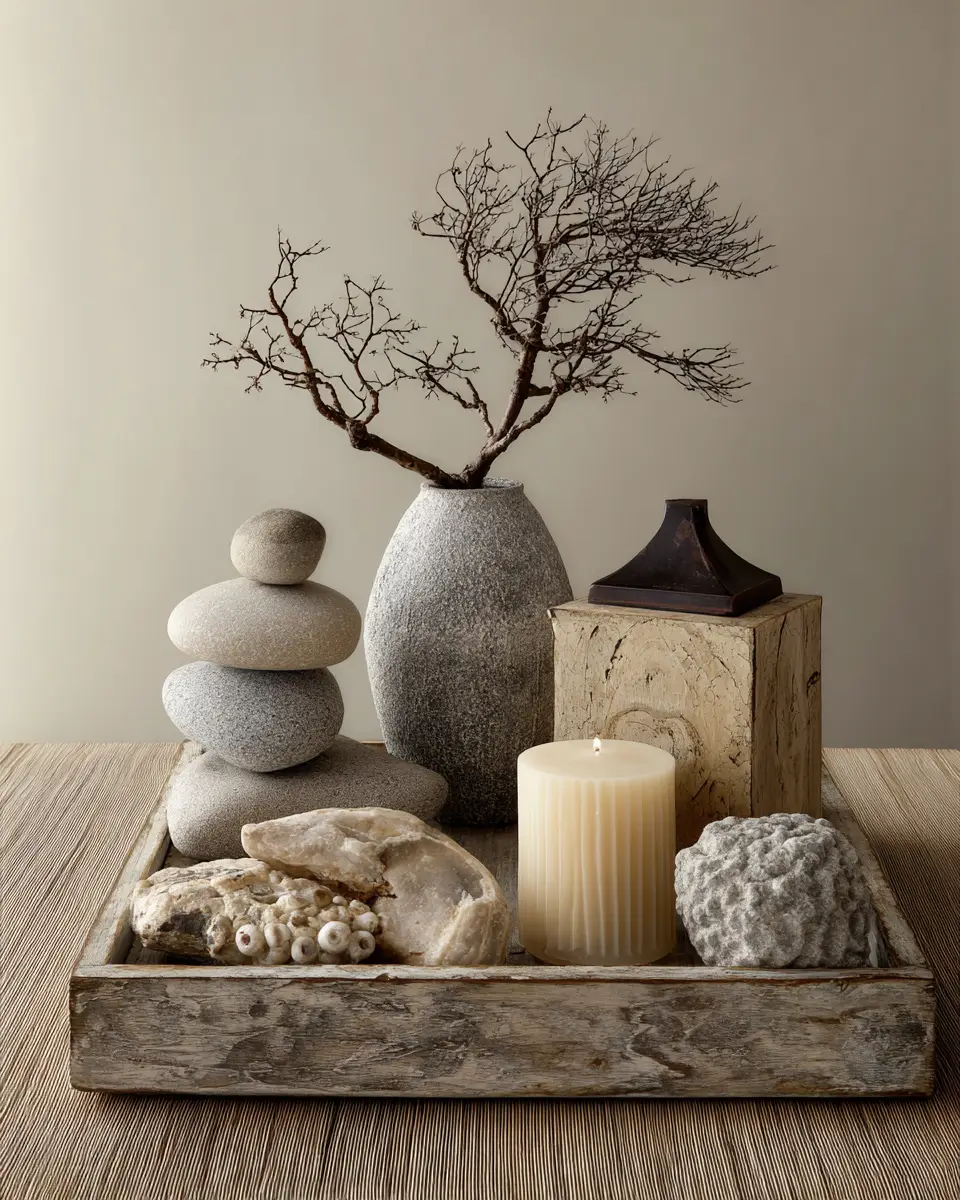
Use natural elements in your decor to create focal points that draw the eye without overwhelming the senses. A simple stone sculpture or a bamboo vase can add character while maintaining a minimalist feel.
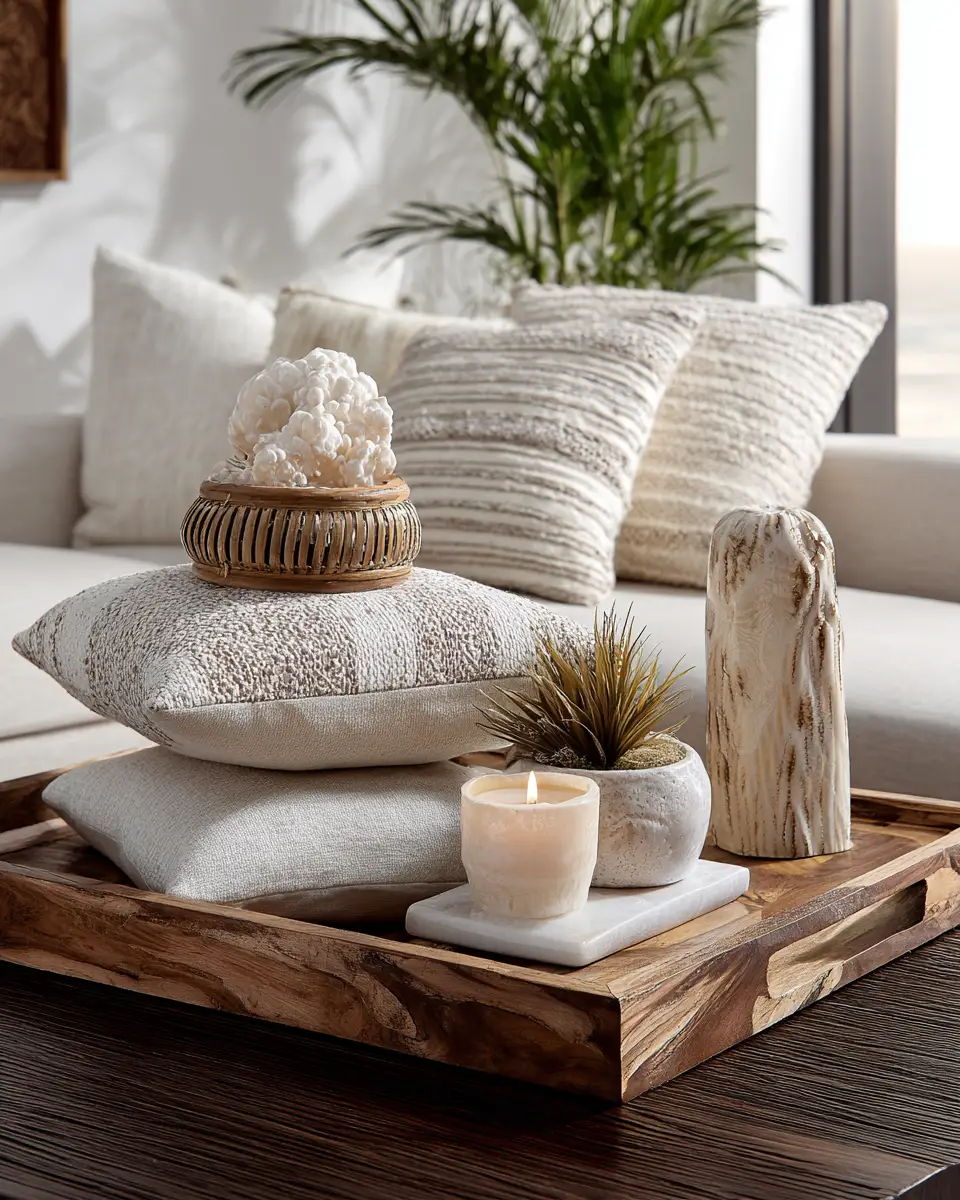
Incorporate natural materials in your furniture choices as well. Pieces with organic finishes can enhance the warmth and serenity of the space, promoting a calming atmosphere.
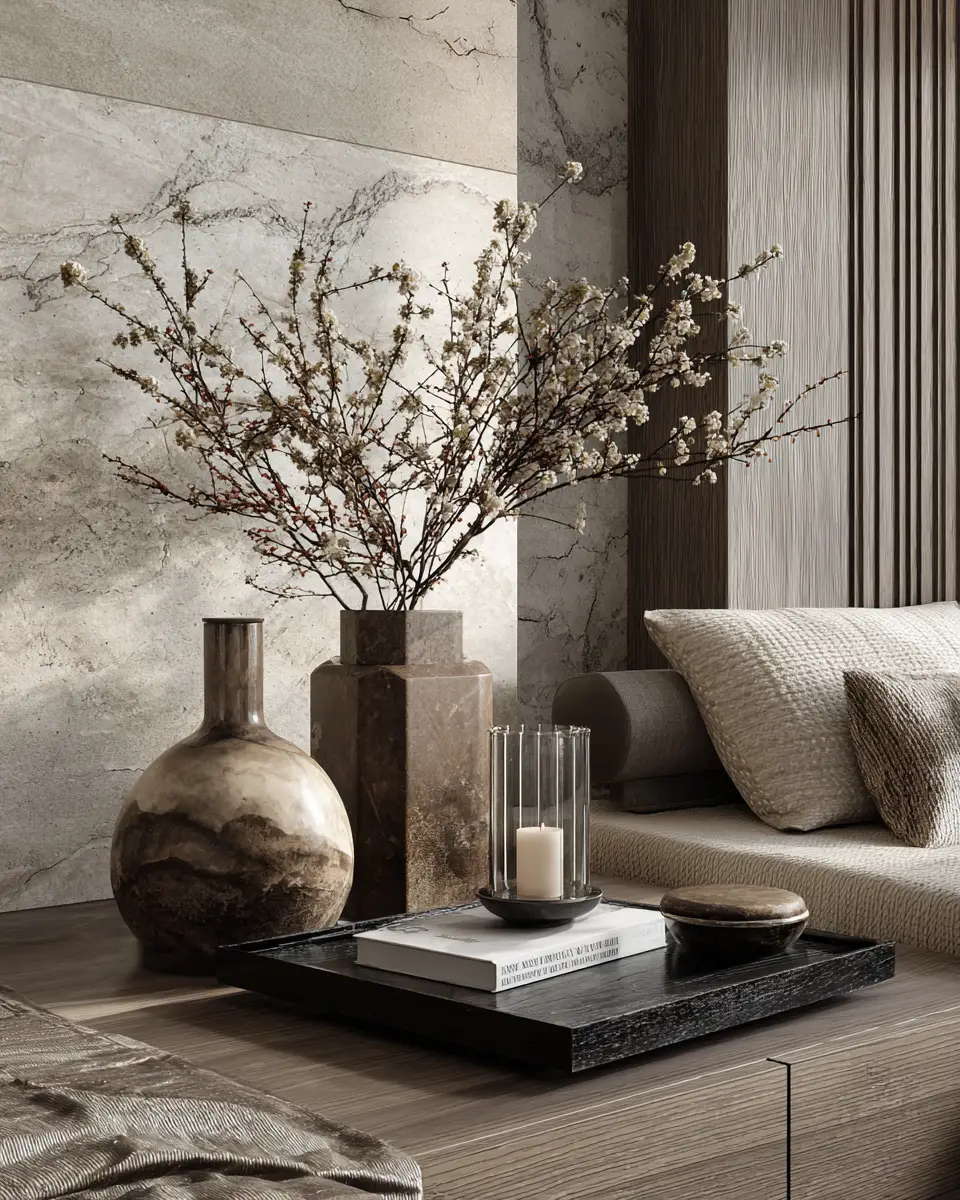
Arranging natural elements strategically throughout the room can create a balanced and harmonious look, contributing to the overall Zen-inspired design.
Calming Color Palette
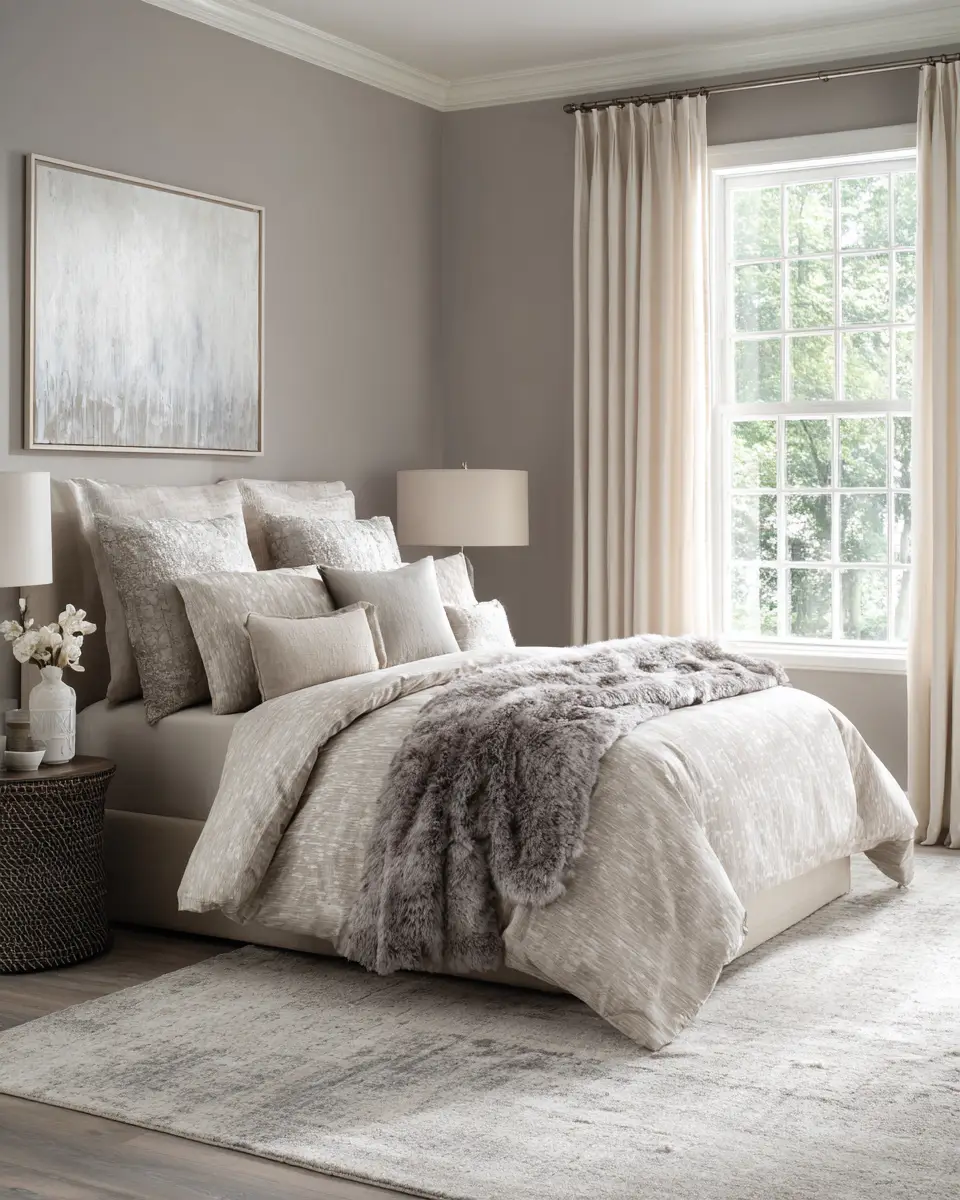
A serene blend of soft beige, muted whites, and gentle greys envelops the room, creating a tranquil atmosphere that promotes relaxation and peace. The subtle colors harmonize with natural light, enhancing the calming effect. This palette encourages a soothing environment that invites rest and reflection.
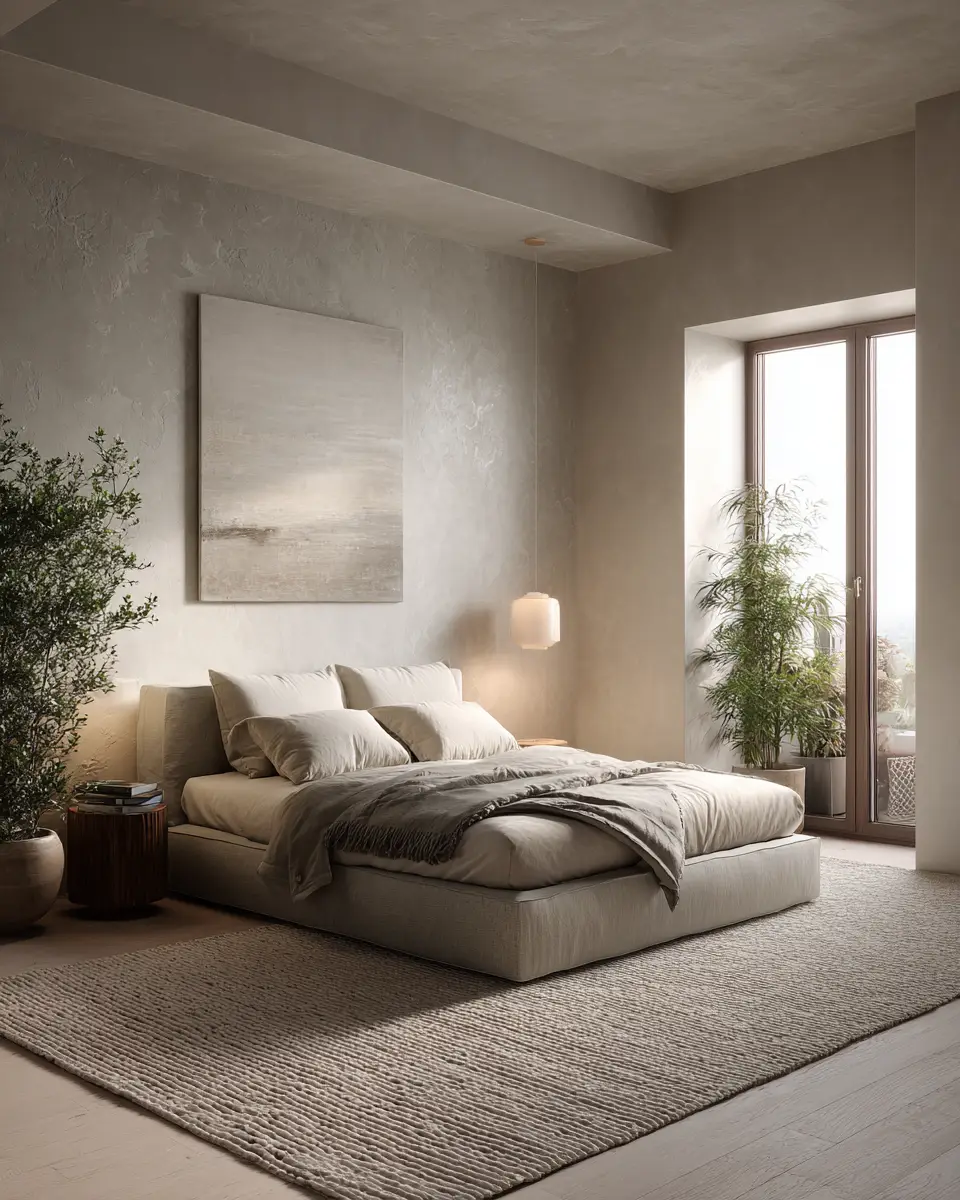
When selecting paint colors or decor items, opt for shades that evoke a sense of calm. Light tones can make a space feel more expansive, while darker neutrals can add depth without feeling oppressive.
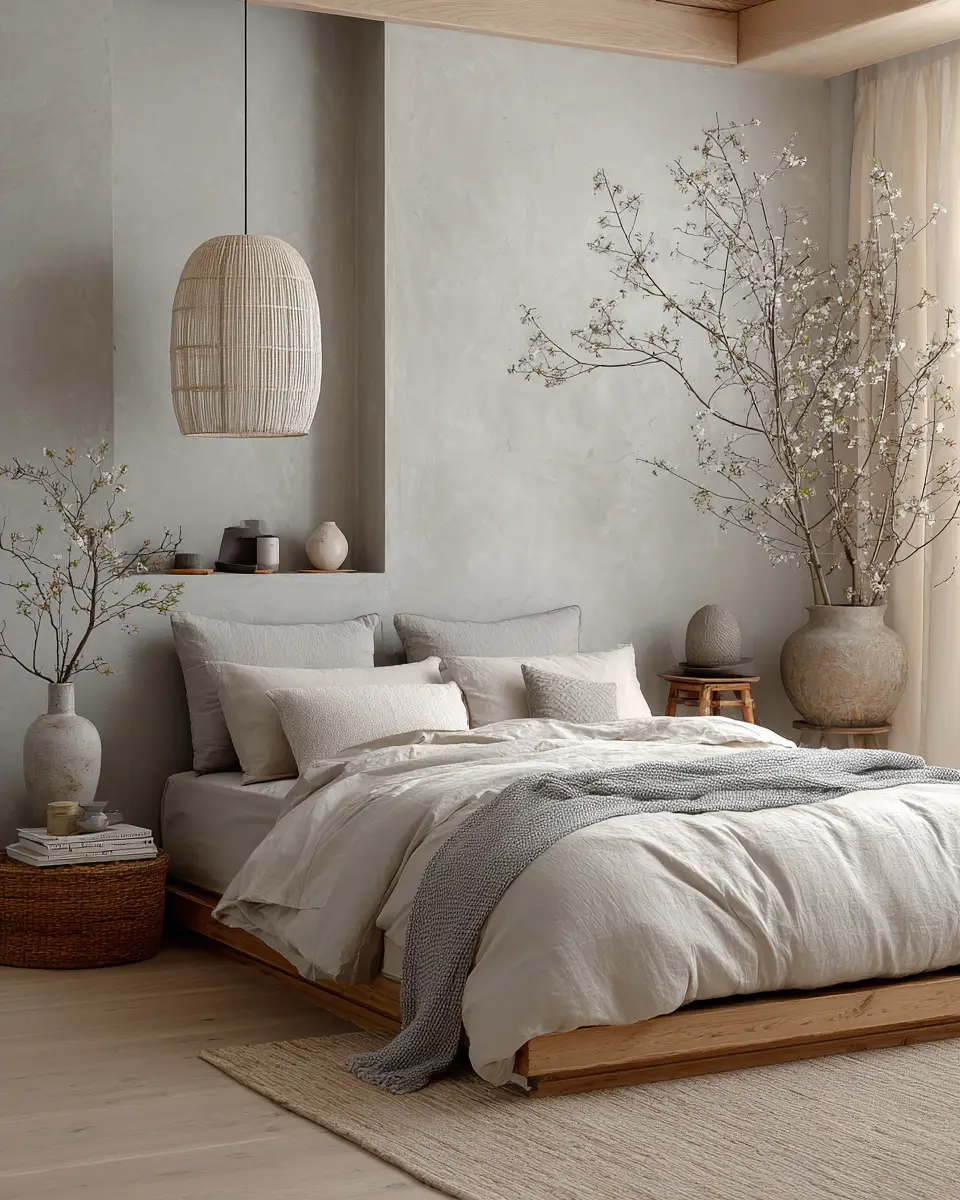
Consider using an accent wall to introduce a slightly darker shade, providing visual interest while keeping the overall feel serene and balanced. This can serve as a backdrop for artwork or decor pieces.
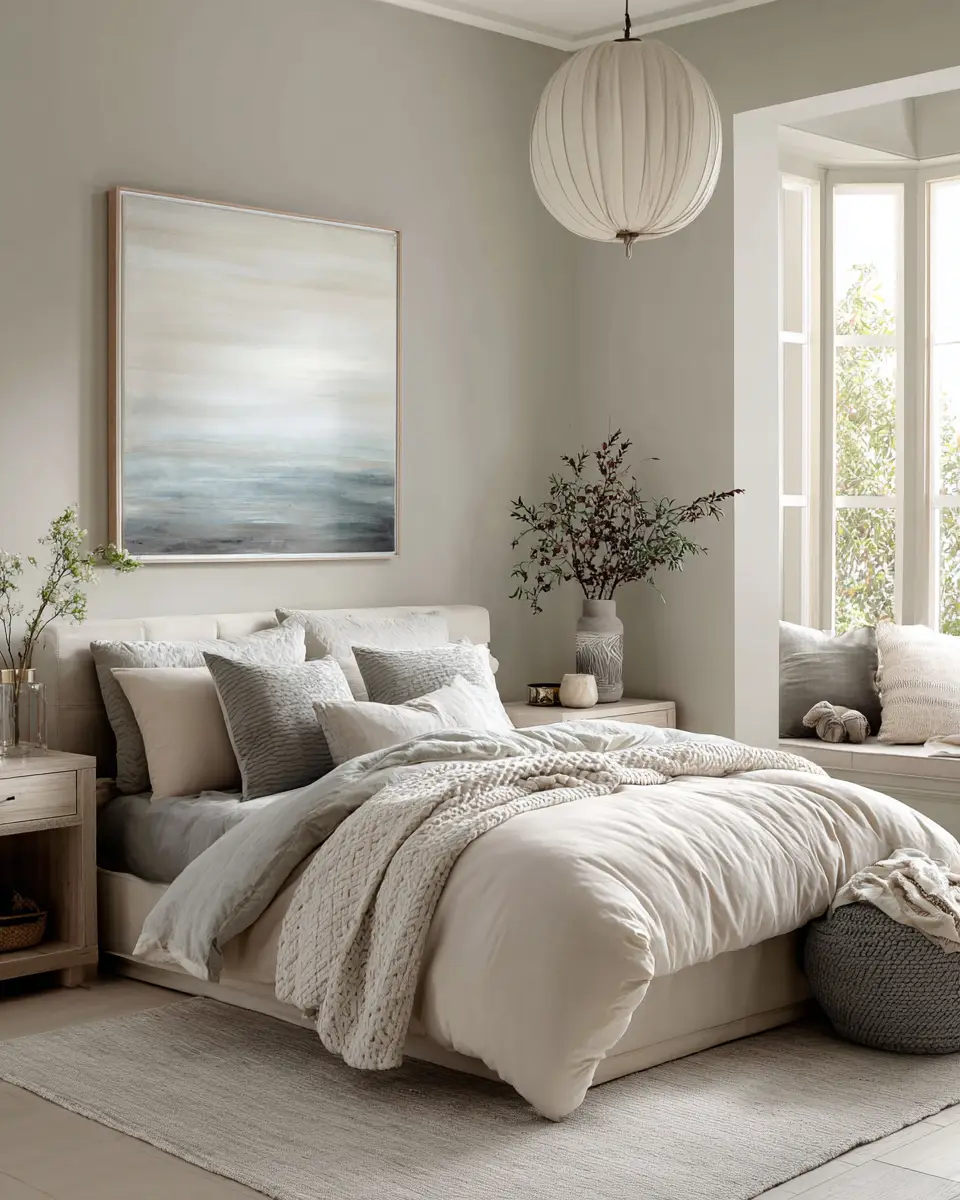
Mixing different neutral shades throughout the space can create a cohesive look that feels intentional and well-designed, reinforcing the Zen philosophy of simplicity and tranquility.
Natural Wood Elements
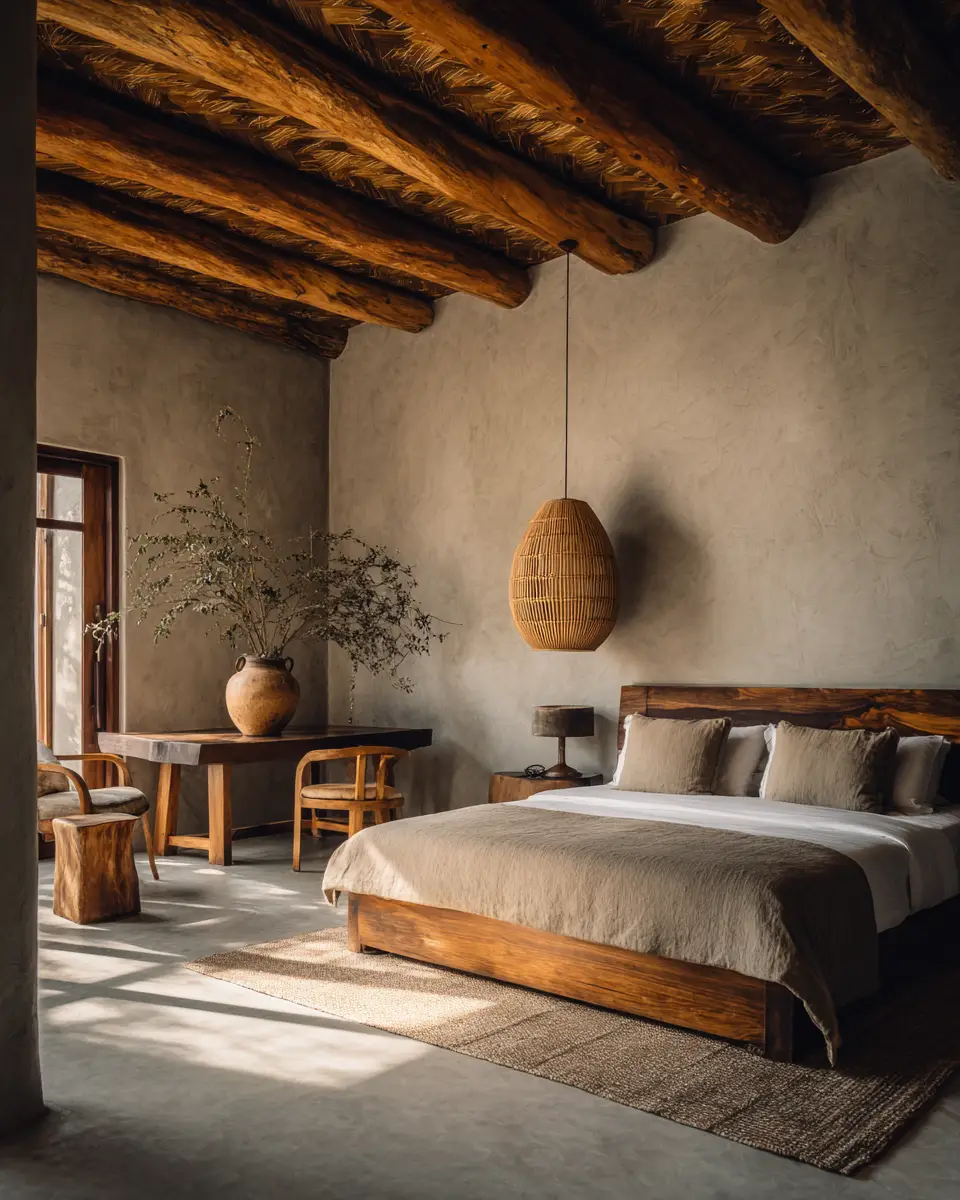
Exposed wooden beams and furniture pieces introduce warmth and organic texture, grounding the space. The natural wood enhances the connection to nature, essential for a Zen-inspired design. Consider incorporating reclaimed wood for a sustainable touch that tells a story.
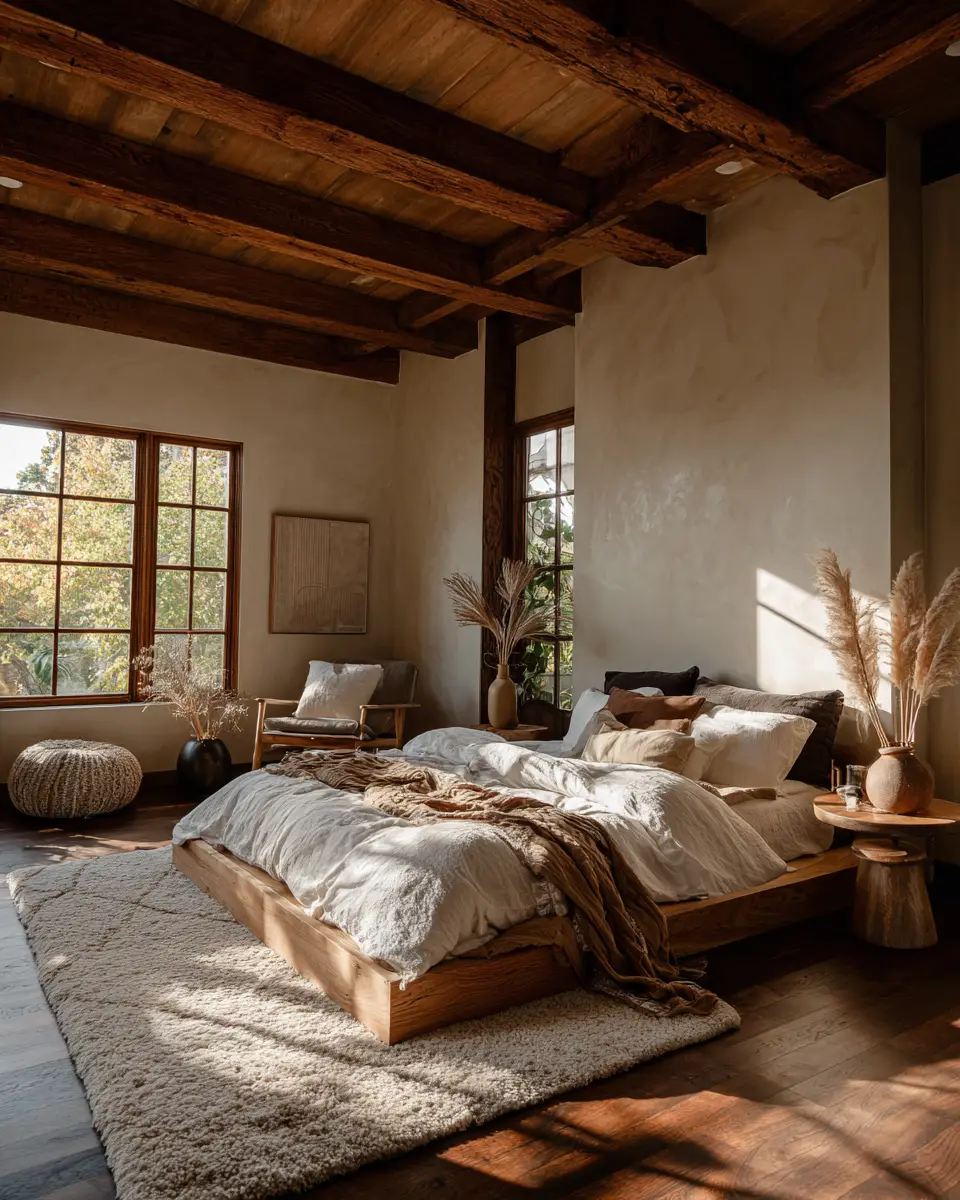
Wooden furniture in light finishes can help maintain an airy feel while providing a sense of stability and comfort. Look for pieces with clean lines to keep the minimalist aesthetic intact.
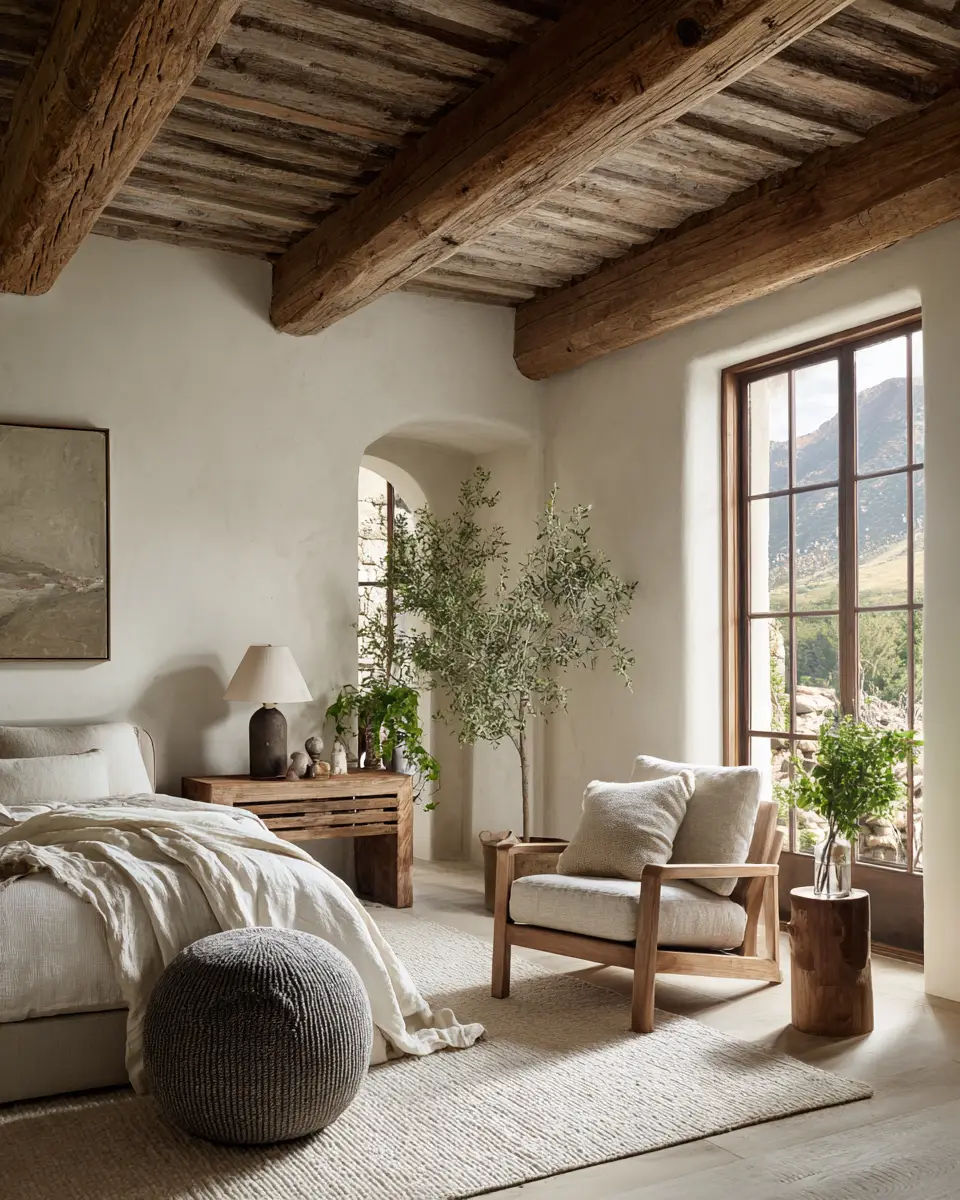
Incorporate wooden accents in decor items, such as picture frames or trays, to create a cohesive look that ties in with the natural elements of the room. These details can enhance the overall tranquility of the space.

Highlighting wood elements through thoughtful placement can create focal points that enhance the serene atmosphere while maintaining a connection to the outdoors.
Meditation Nook
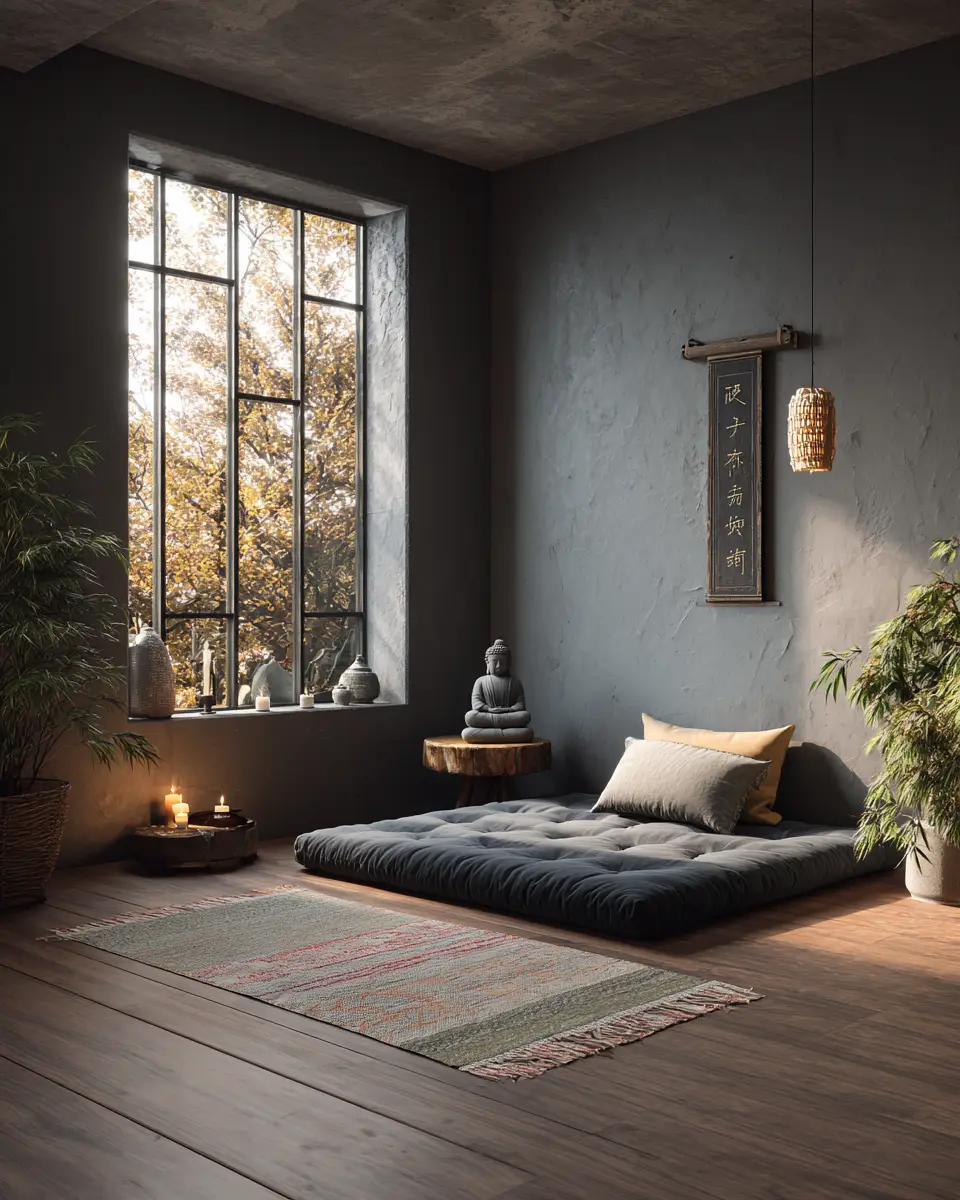
A small corner with a comfortable mat and cushions invites mindfulness practices. This dedicated space reinforces the Zen philosophy, encouraging daily moments of reflection and calm. Choose a quiet spot in the room where you can create a serene environment free from distractions.
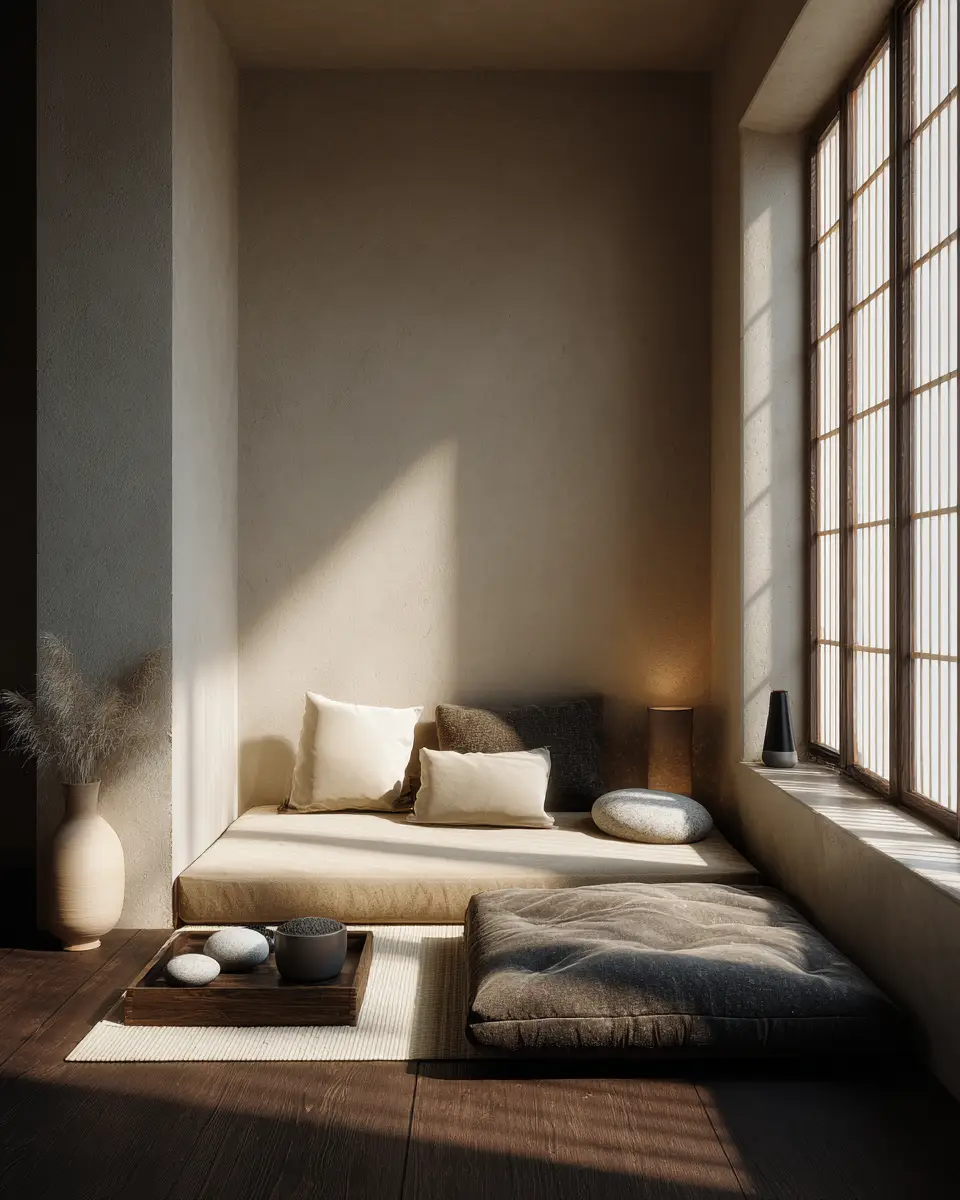
Incorporate soft cushions or a meditation bench for added comfort, allowing you to fully immerse yourself in your practice. Surround the area with calming elements like plants or candles to enhance the atmosphere.
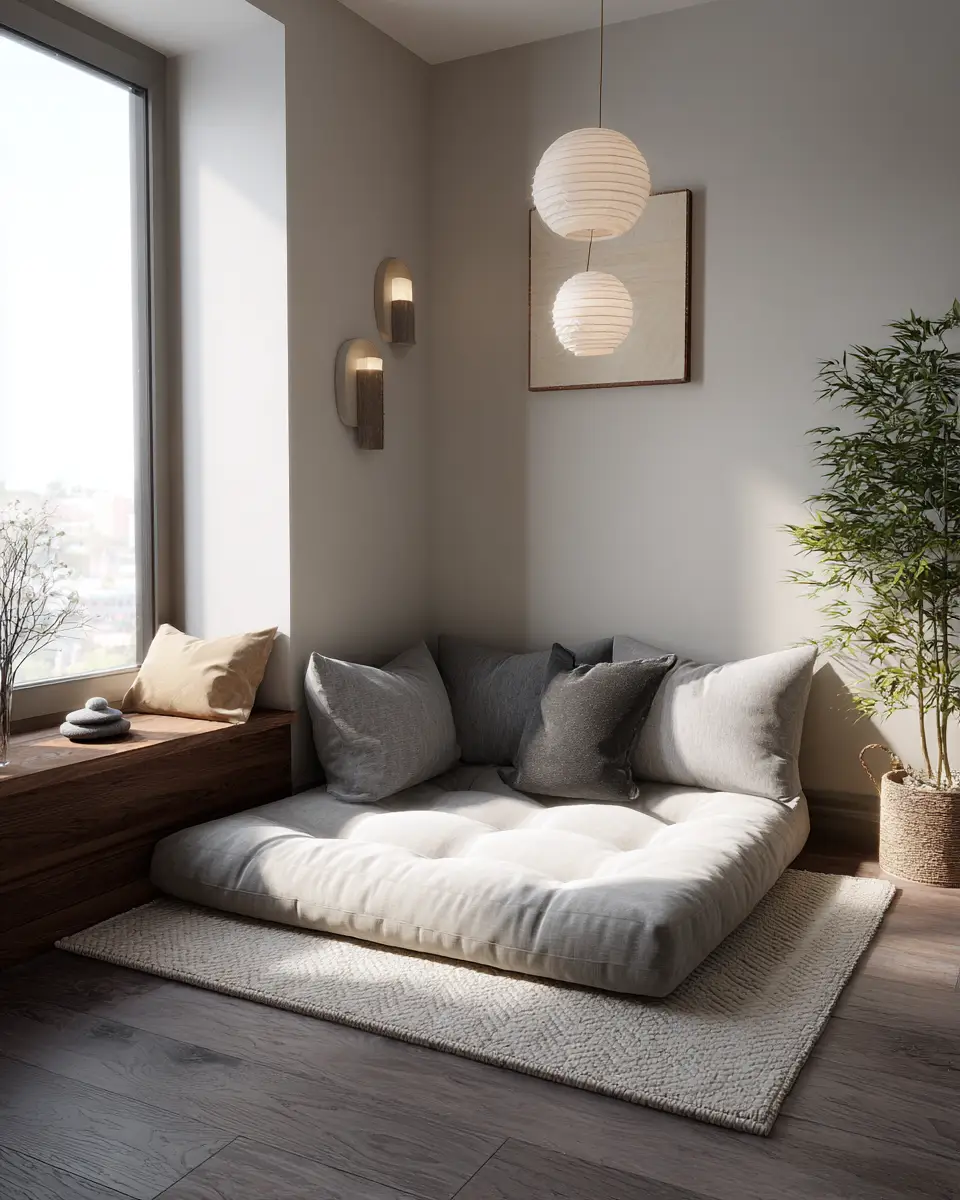
Consider using a lightweight screen or plants to delineate this space, creating a sense of privacy and focus. This helps in reinforcing the idea of a personal retreat within your bedroom.
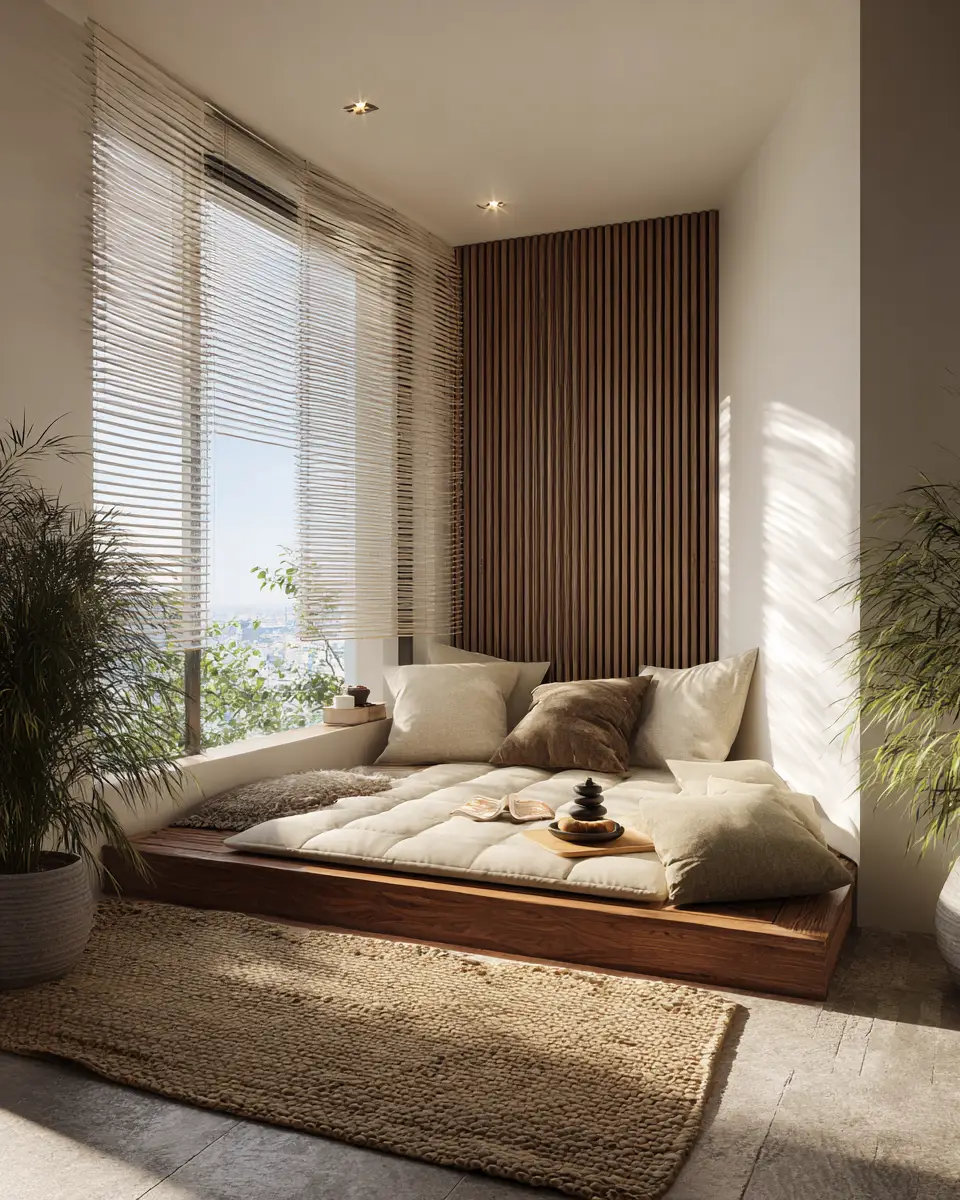
Regularly refresh the nook with new elements, like a journal or inspirational quotes, to keep the space inviting and encourage daily use for meditation or quiet reflection.
Conclusion
Transforming your bedroom into a neutral Zen sanctuary requires thoughtful consideration of each element, from color and texture to lighting and decor. By incorporating natural materials, soft textiles, and functional designs, you can create a space that nurtures relaxation and mindfulness.
Embrace the principles of simplicity and tranquility as you curate your decor, allowing your bedroom to become a peaceful retreat where you can unwind and rejuvenate. With these ideas, you’ll be well on your way to achieving your dream Zen bedroom.